



Más información sobre el libro
More than two decades ago, the women's movement opened workplace doors, sparking controversy but widely believed to enhance families' financial situations. However, this book reveals that today's middle-class parents face an unprecedented economic crisis. Despite two-income families earning 75% more than single-income households from a generation ago, they actually have less discretionary income after paying fixed monthly bills. Warren and Tyagi argue that the issue isn't "overconsumption," as some critics suggest, but rather a fierce competition for housing and education that has taken hold in America's suburbs. The shift of mothers into the workforce, once a source of financial security for families, has left them more vulnerable than ever. The authors contend that traditional solutions—such as child-support enforcement, subsidized daycare, and higher salaries for women—will not address the root of the problem. Instead, they propose innovative solutions, including rate caps on credit cards and open-access public schools, to restore financial security for the middle class.
Compra de libros
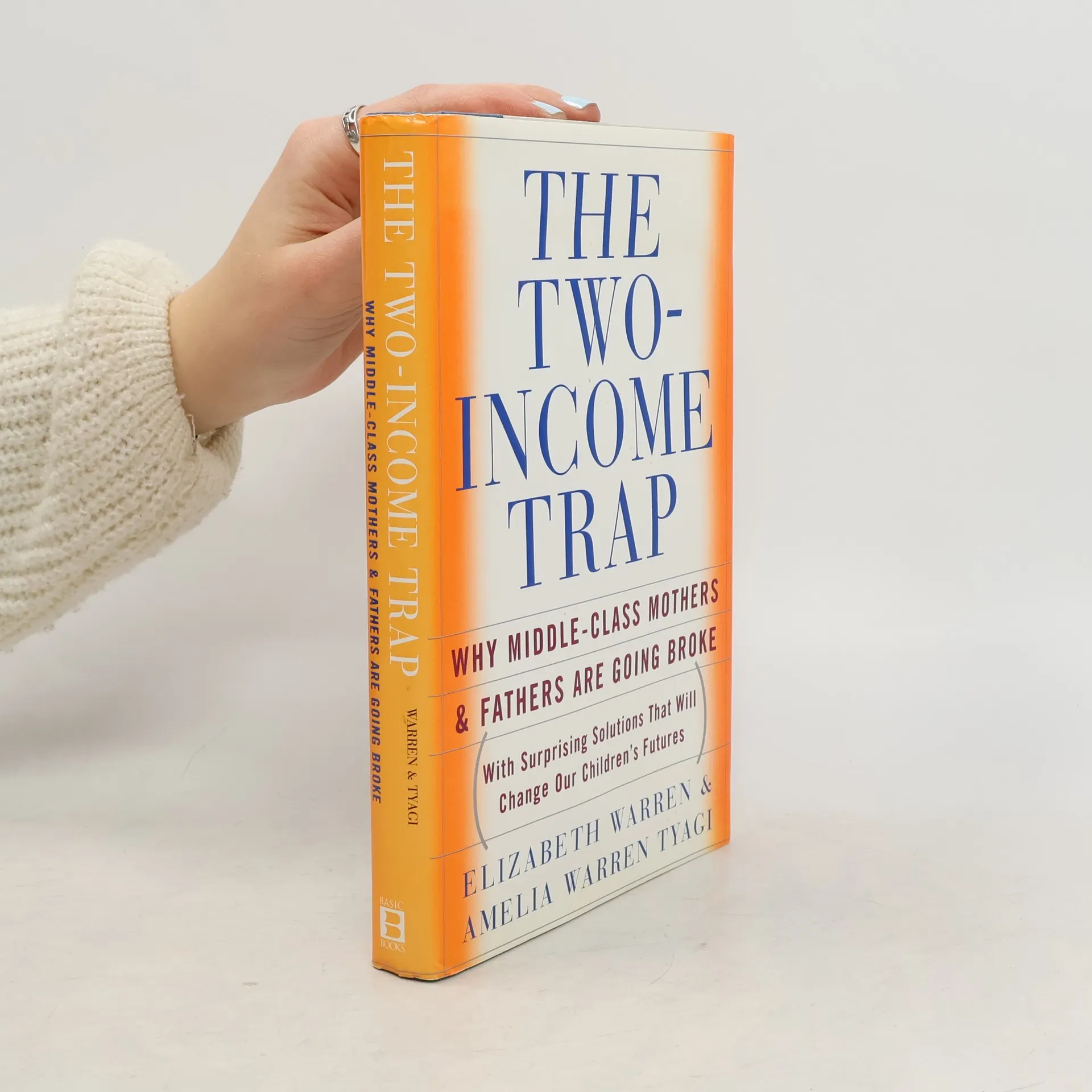
The Two-Income Trap, Elizabeth Warren, Amelia Warren Tyagi
- Idioma

- Publicado en
- 2003
- Encuadernación
- (Tapa dura)
Métodos de pago
Nos falta tu reseña aquí
- Título
- The Two-Income Trap
- Subtítulo
- Why Middle-Class Mothers and Fathers Are Going Broke
- Idioma
- Inglés
- Autores
- Elizabeth Warren, Amelia Warren Tyagi
- Editorial
- Basic Books
- Publicado en
- 2003
- Formato
- Tapa dura
- Páginas
- 272
- ISBN10
- 0465090826
- ISBN13
- 9780465090822
- Serie
- Calificación
- 3,85 de 5
- Descripción
- More than two decades ago, the women's movement opened workplace doors, sparking controversy but widely believed to enhance families' financial situations. However, this book reveals that today's middle-class parents face an unprecedented economic crisis. Despite two-income families earning 75% more than single-income households from a generation ago, they actually have less discretionary income after paying fixed monthly bills. Warren and Tyagi argue that the issue isn't "overconsumption," as some critics suggest, but rather a fierce competition for housing and education that has taken hold in America's suburbs. The shift of mothers into the workforce, once a source of financial security for families, has left them more vulnerable than ever. The authors contend that traditional solutions—such as child-support enforcement, subsidized daycare, and higher salaries for women—will not address the root of the problem. Instead, they propose innovative solutions, including rate caps on credit cards and open-access public schools, to restore financial security for the middle class.