


Parámetros
- 181 páginas
- 7 horas de lectura
Más información sobre el libro
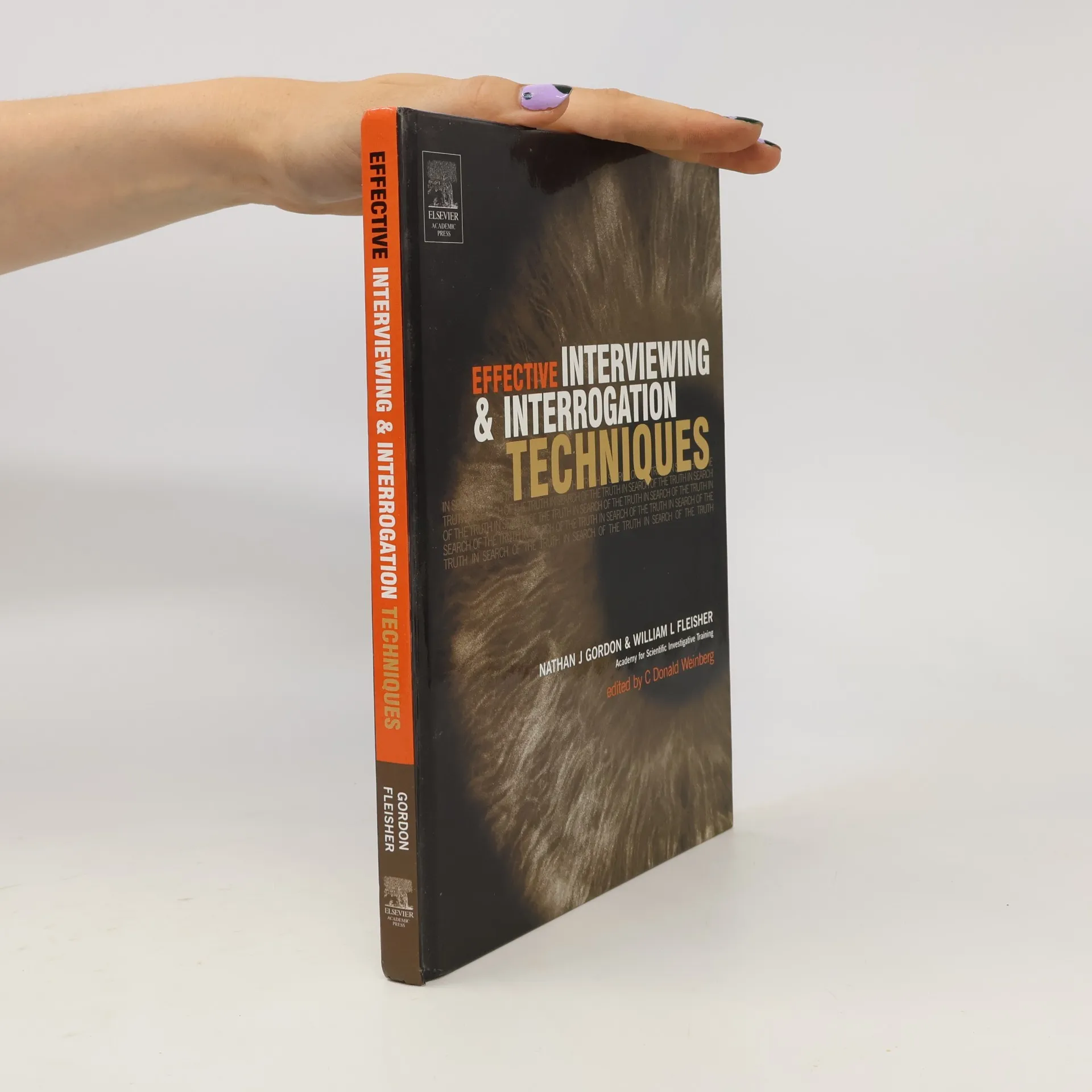
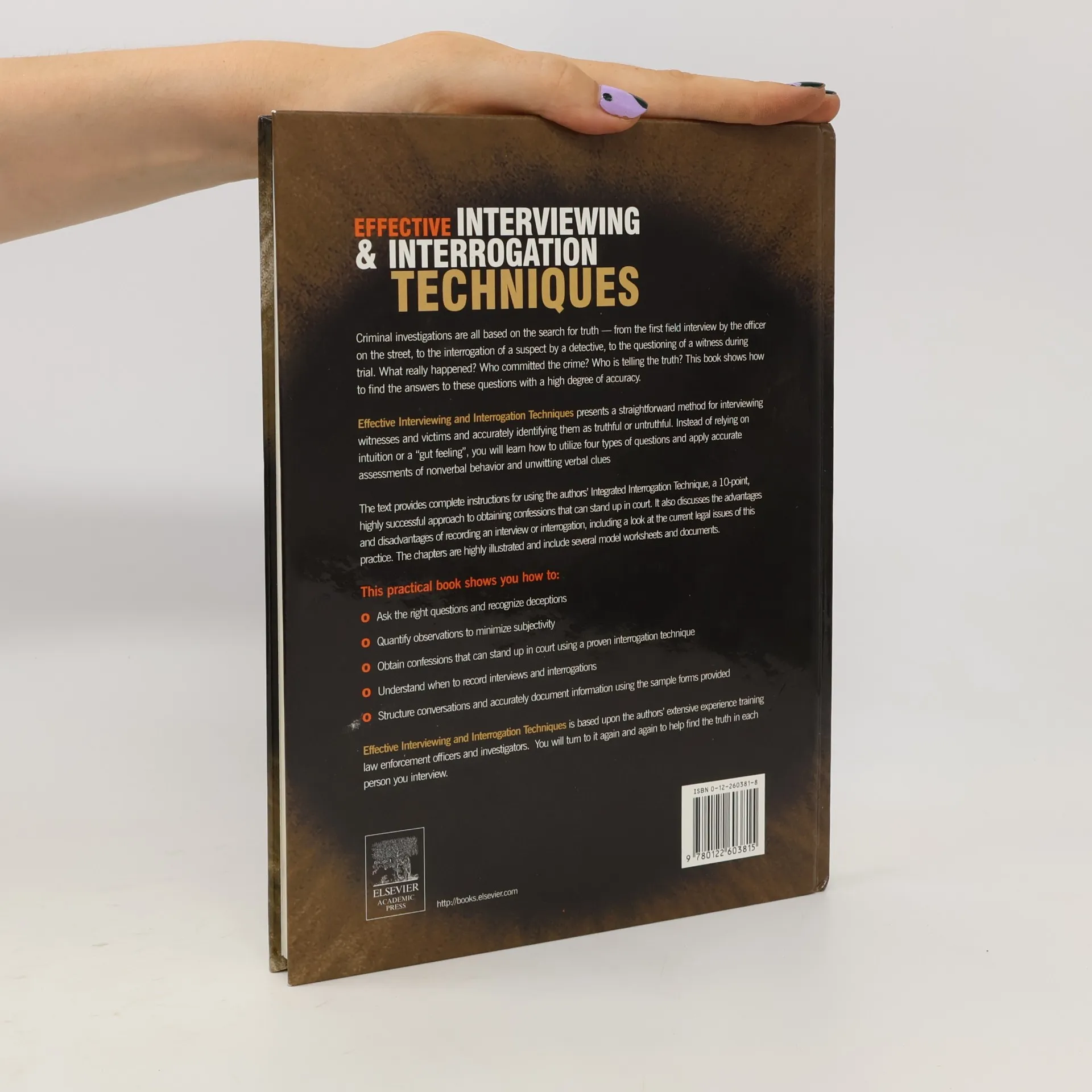
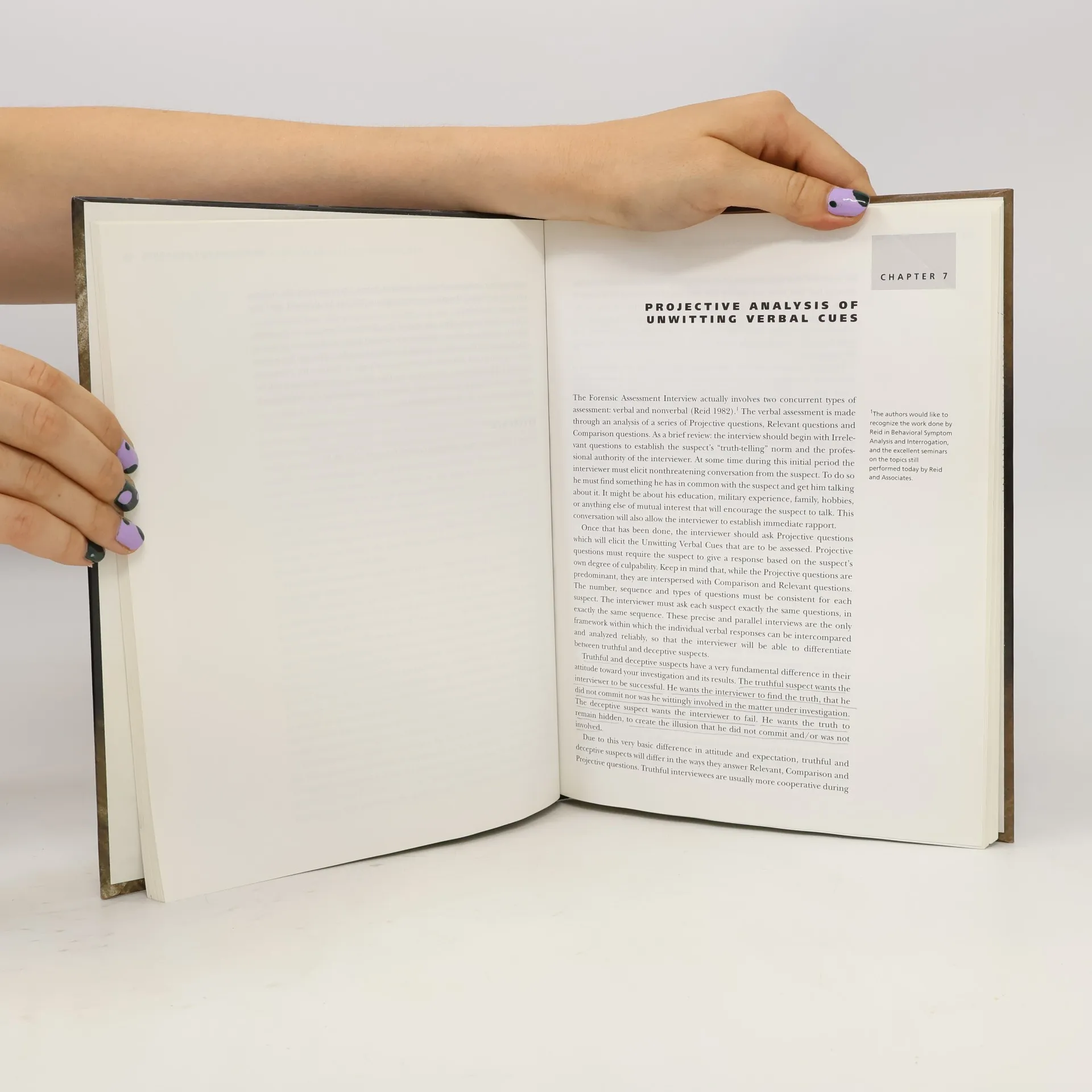
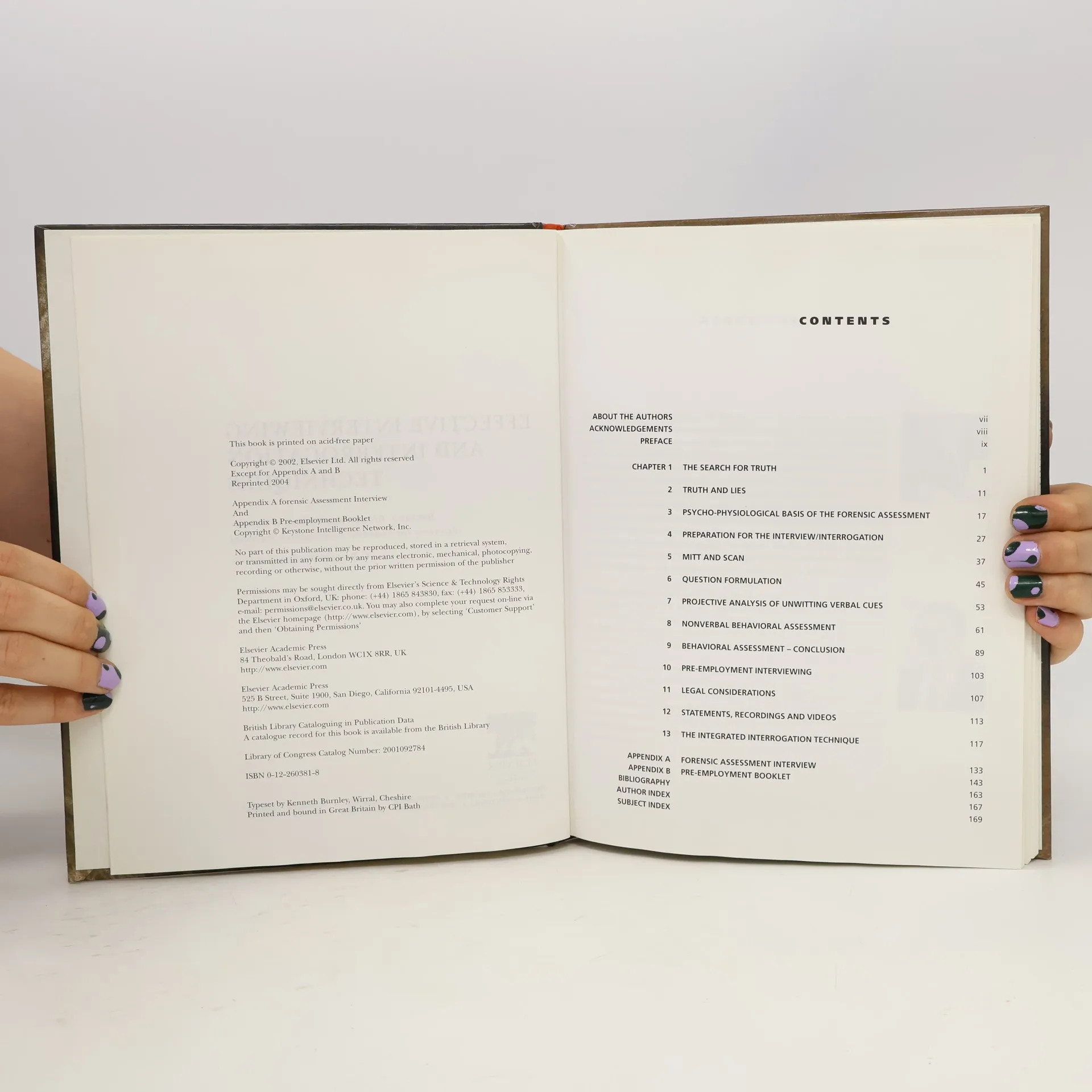
Effective Interviewing and Interrogation Techniques offers a practical approach for interviewing witnesses and victims, as well as interrogating suspects, with a focus on accurately identifying truthfulness. Rather than relying on intuition, interviewers will learn to employ four types of questions and assess nonverbal behavior and verbal cues. The book emphasizes quantifying observations to minimize subjectivity in evaluating suspects' truthfulness. Readers will also be introduced to the authors' Integrated Interrogation Technique, a 10-point method that has proven successful in obtaining court-upheld confessions. The text discusses the pros and cons of recording interviews and interrogations, along with relevant legal considerations. To enhance understanding, the book includes numerous illustrations and model worksheets, such as Consent Forms, Forensic Assessment Interview Technique Form, Numerical Evaluation Form, Sample Confession, and a Pre-employment Security Booklet. Investigators will find this resource invaluable for uncovering the truth in their interviews, making it a go-to reference for professionals in the field.


Compra de libros
Effective Interviewing and Interrogation Techniques, Nathan J. Gordon, William L Fleisher, C. Donald Weinberg
- Idioma

- Publicado en
- 2004
- product-detail.submit-box.info.binding
- (Tapa dura),
- Estado del libro
- Dañado
- Precio
- 4,74 €
Métodos de pago
Nos falta tu reseña aquí
- Idioma
- Inglés
- Editorial
- Academic Press
- Publicado en
- 2004
- Formato
- Tapa dura
- Páginas
- 181
- ISBN10
- 0122603818
- ISBN13
- 9780122603815
- Serie
- Etiquetas
- No ficción, Ciencias sociales, Ciencias políticas & Política, Temas psicológicos, Temática jurídica, EE.UU., Teorías Políticas, Criminalística, Criminología
- Calificación
- 3,9 de 5
- Descripción
- Effective Interviewing and Interrogation Techniques offers a practical approach for interviewing witnesses and victims, as well as interrogating suspects, with a focus on accurately identifying truthfulness. Rather than relying on intuition, interviewers will learn to employ four types of questions and assess nonverbal behavior and verbal cues. The book emphasizes quantifying observations to minimize subjectivity in evaluating suspects' truthfulness. Readers will also be introduced to the authors' Integrated Interrogation Technique, a 10-point method that has proven successful in obtaining court-upheld confessions. The text discusses the pros and cons of recording interviews and interrogations, along with relevant legal considerations. To enhance understanding, the book includes numerous illustrations and model worksheets, such as Consent Forms, Forensic Assessment Interview Technique Form, Numerical Evaluation Form, Sample Confession, and a Pre-employment Security Booklet. Investigators will find this resource invaluable for uncovering the truth in their interviews, making it a go-to reference for professionals in the field.