



Más información sobre el libro
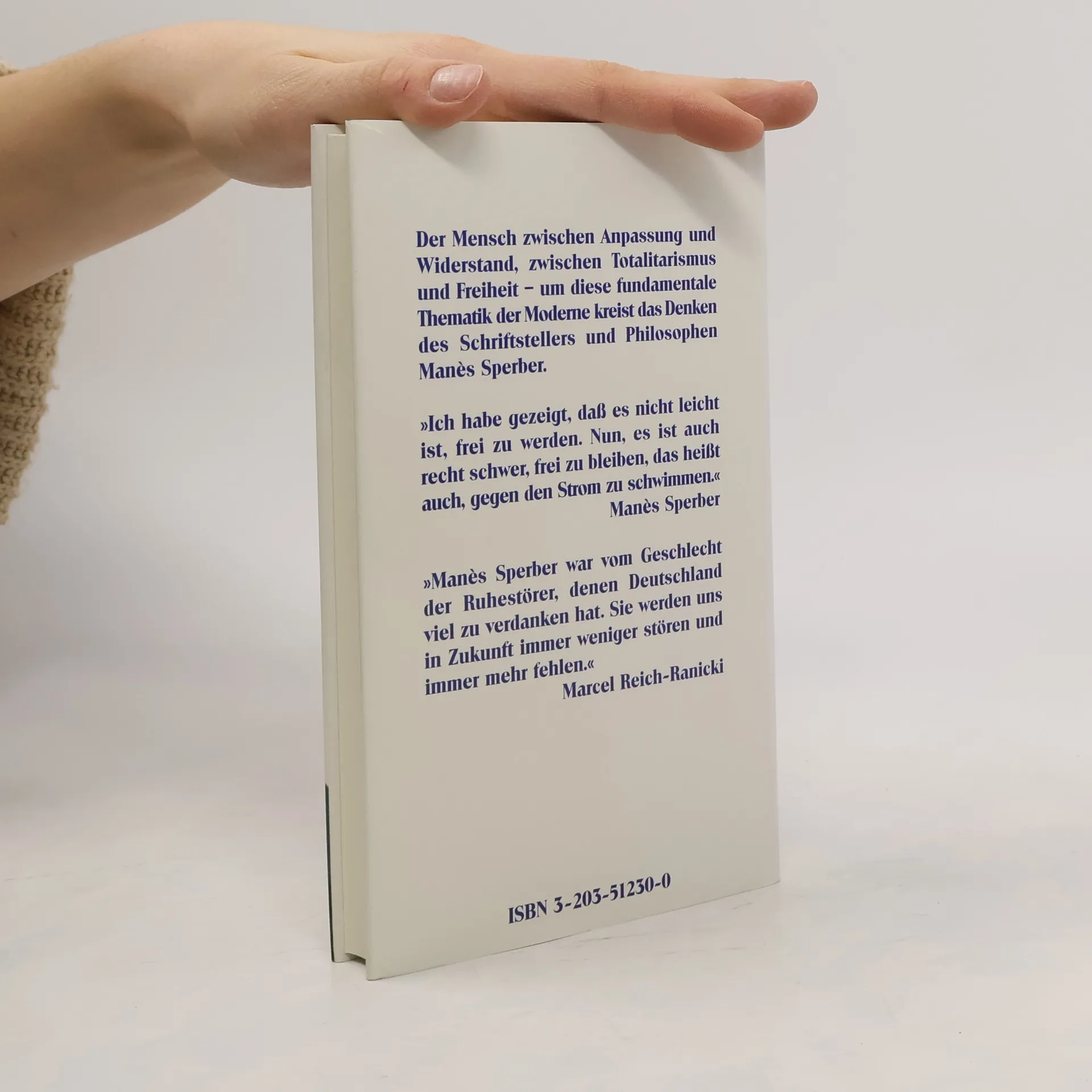
A collection of essays, most of them published previously. "Mein Judesein" [from "Die unfassbare Gewissheit" (Wien: Europaverlag, 1981)] (35-53) and "Über den Hass" [from "Essays zur täglichen Weltgeschichte" (Wien: Europaverlag, 1981)] (99-126) deal with the nature and history of antisemitism. In "Die polizistische Geschichtsauffassung" [from "Essays zur täglichen Weltgeschichte"] (69-98), comments on the communists' efforts to portray the trial of Julius and Ethel Rosenberg as antisemitic at the very time that they themselves were staging antisemitic trials in Eastern Europe. Wilhelm von Sternburg's introduction, "Der Tod, dieser nicht enden wollende Skandal: Leben und Werk des treuen Ketzers Manès Sperber" (9-33), describes Sperber's life, including his experience of antisemitism and the trauma of the Holocaust.
Compra de libros
Anpassung und Widerstand, Mane s. Sperber, Wilhelm von Sternburg
- Idioma

- Publicado en
- 1994
Métodos de pago
Nadie lo ha calificado todavía.
- Título
- Anpassung und Widerstand
- Idioma
- Alemán
- Autores
- Mane s. Sperber, Wilhelm von Sternburg
- Editorial
- Europaverlag
- Publicado en
- 1994
- Páginas
- 223
- ISBN10
- 3203512300
- ISBN13
- 9783203512303
- Serie
- Categorías
- Etiquetas
- Descripción
- A collection of essays, most of them published previously. "Mein Judesein" [from "Die unfassbare Gewissheit" (Wien: Europaverlag, 1981)] (35-53) and "Über den Hass" [from "Essays zur täglichen Weltgeschichte" (Wien: Europaverlag, 1981)] (99-126) deal with the nature and history of antisemitism. In "Die polizistische Geschichtsauffassung" [from "Essays zur täglichen Weltgeschichte"] (69-98), comments on the communists' efforts to portray the trial of Julius and Ethel Rosenberg as antisemitic at the very time that they themselves were staging antisemitic trials in Eastern Europe. Wilhelm von Sternburg's introduction, "Der Tod, dieser nicht enden wollende Skandal: Leben und Werk des treuen Ketzers Manès Sperber" (9-33), describes Sperber's life, including his experience of antisemitism and the trauma of the Holocaust.