

Más información sobre el libro
This 1st book by Perls is significant because in addition to criticising Freud, it also lays the groundwork for a new system of psychotherapy. In fact it's the beginning of the gestalt therapy by one of the founding fathers of this therapy.-- Ehrenwald Frederick Perls received his M.D. in Berlin in 1921. Like Wilhelm Reich he started out as a Freudian analyst, but under the influence of Kohler, Wertheimer & Kurt Goldstein developed his own school of analysis: Gestalt Therapy. His principles of gestalt therapy have been adopted by countless encounter & sensitivity groups. He aims in this book to examine some psychological & psychopathological reactions of the human organism within its environment. The author is criticsl of orthodox psychoanalysis, & claims that the use of the new intellectual tools holism (field conception) & semantics (the meaning of meaning) can greatly improve our theoretical outlook.




Compra de libros
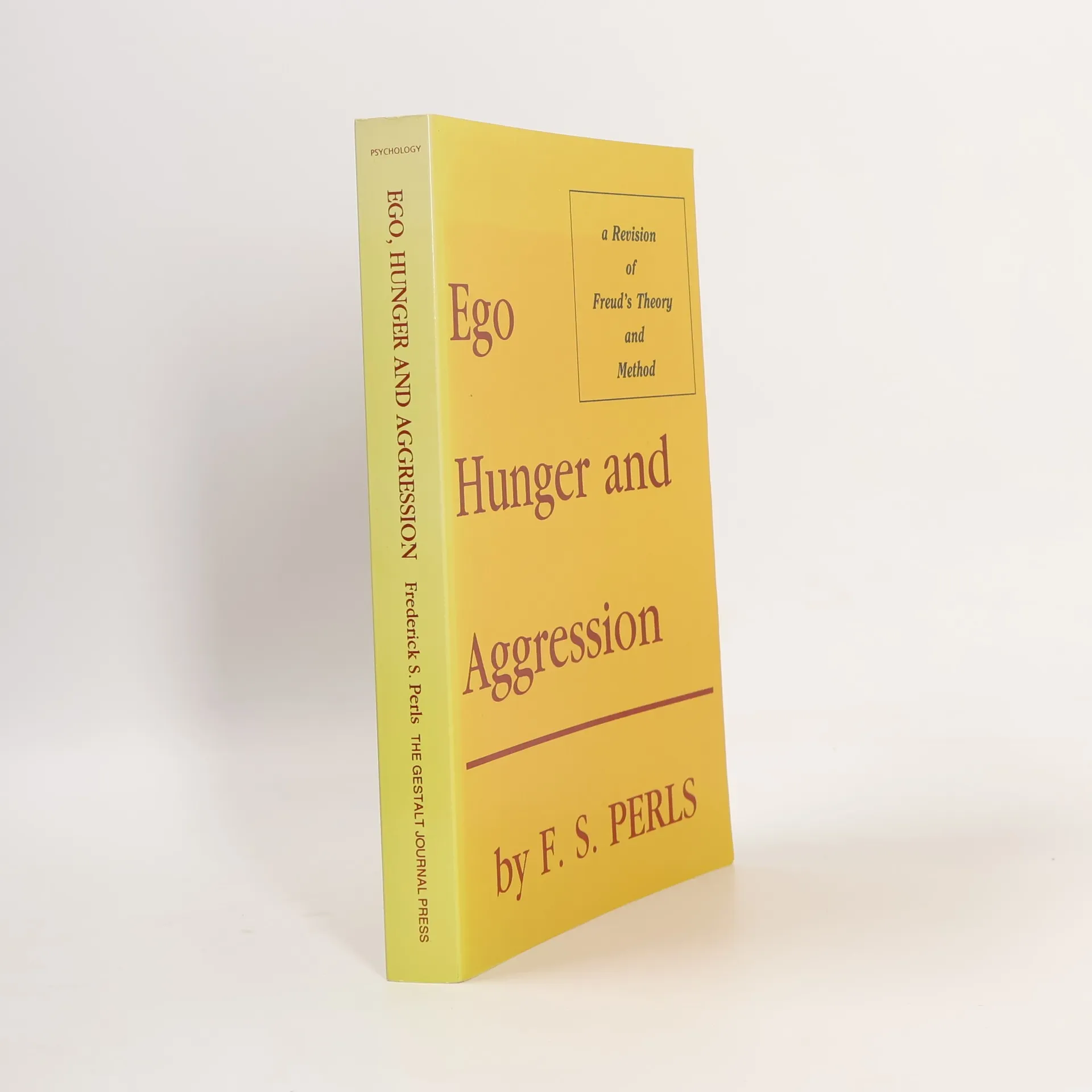
Ego, Hunger and Aggression, Frederick Salomon Perls
- Idioma

- Publicado en
- 1992
- Encuadernación
- (Tapa blanda)
Métodos de pago
Nos falta tu reseña aquí
- Subtítulo
- A Revision of Freud's Theory and Method
- Idioma
- Inglés
- Autores
- Frederick Salomon Perls
- Editorial
- The Gestalt Journal Press
- Publicado en
- 1992
- Formato
- Tapa blanda
- Páginas
- 342
- ISBN10
- 0939266180
- ISBN13
- 9780939266180
- Serie
- Etiquetas
- No ficción, Ciencias sociales, Temas psicológicos, Psicología
- Título original
- Ego, hunger, and aggression
- Calificación
- 4,1 de 5
- Descripción
- This 1st book by Perls is significant because in addition to criticising Freud, it also lays the groundwork for a new system of psychotherapy. In fact it's the beginning of the gestalt therapy by one of the founding fathers of this therapy.-- Ehrenwald Frederick Perls received his M.D. in Berlin in 1921. Like Wilhelm Reich he started out as a Freudian analyst, but under the influence of Kohler, Wertheimer & Kurt Goldstein developed his own school of analysis: Gestalt Therapy. His principles of gestalt therapy have been adopted by countless encounter & sensitivity groups. He aims in this book to examine some psychological & psychopathological reactions of the human organism within its environment. The author is criticsl of orthodox psychoanalysis, & claims that the use of the new intellectual tools holism (field conception) & semantics (the meaning of meaning) can greatly improve our theoretical outlook.