

Más información sobre el libro
Introduction to Mineralogy, Third Edition, consolidates much of the material now covered in traditional mineralogy and optical mineralogy courses and focuses on describing minerals within their geologic context. Presenting the important traditional content of mineralogy--including crystallography, chemical bonding, controls on mineral structure, mineral stability, and crystal growth--it provides students with a foundation for understanding the nature and occurrence of minerals. FEATURES Describes in detail physical, optical, and X-ray powder diffraction techniques of mineral study Outlines common chemical analytical methods Provides thorough descriptions of more than 100 common minerals, emphasizing the geologic contexts within which they occur Includes tables and diagrams that help students identify minerals using both physical and optical properties Incorporates numerous line drawings, photographs, and photomicrographs that elucidate complex concepts Introduction to Mineralogy can be packaged with Daniel Schulze's An Atlas of Minerals in Thin Section for use in your course for a nominal additional fee.


Compra de libros
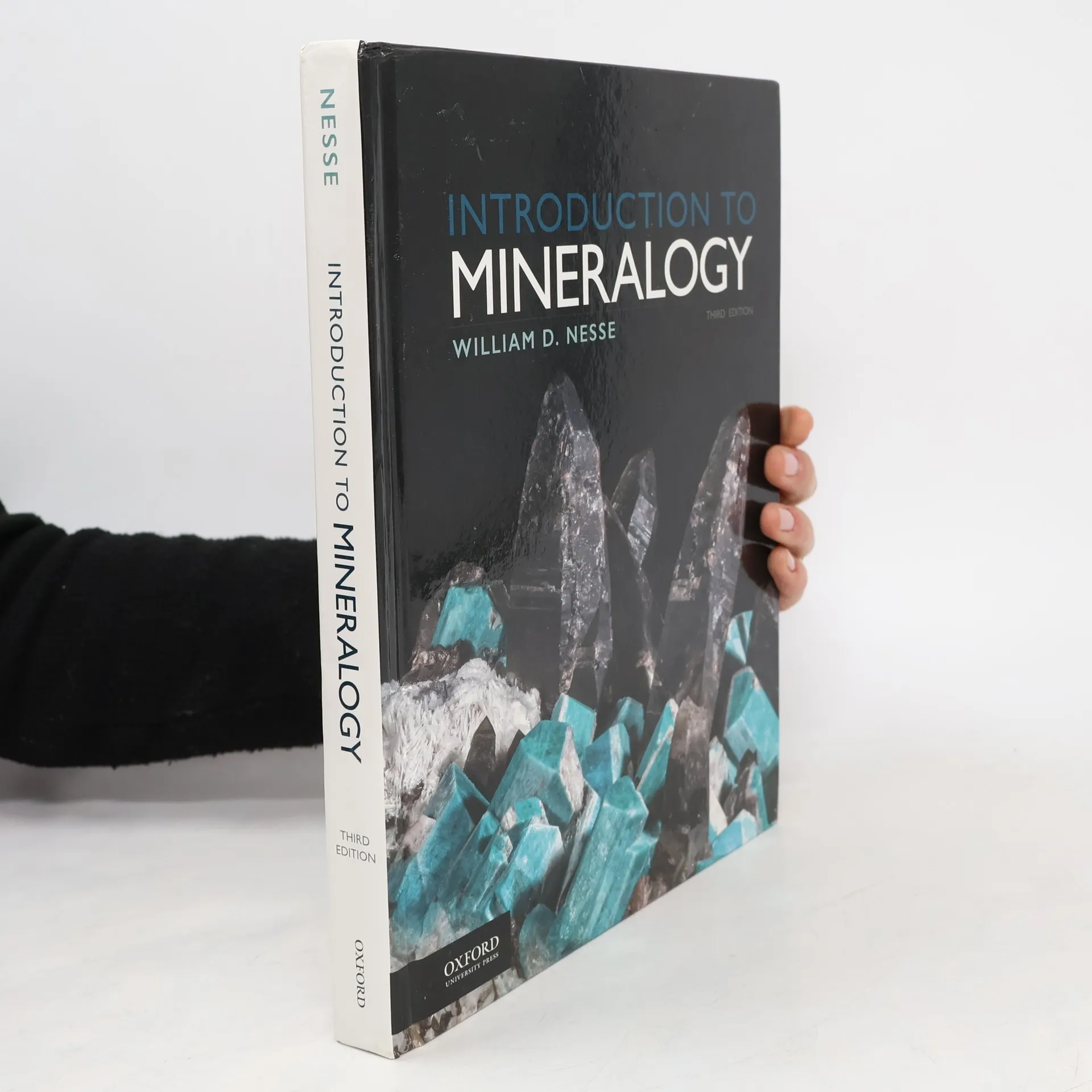
Introduction to Mineralogy, William D. Nesse
- Idioma

- Publicado en
- 2016
- Encuadernación
- (Tapa dura)
Métodos de pago
Nos falta tu reseña aquí
- Subtítulo
- Third Edition
- Idioma
- Inglés
- Autores
- William D. Nesse
- Editorial
- Oxford University Press
- Publicado en
- 2016
- Formato
- Tapa dura
- Páginas
- 512
- ISBN10
- 0190618353
- ISBN13
- 9780190618353
- Serie
- Etiquetas
- No ficción, Libros de texto, Ciencias naturales, Guías y Manuales, Ciencia, EE.UU., Escuela, Química, Libros de texto de física, Libros de texto de química, Geología, Minerales y Rocas, Óptica
- Calificación
- 4,2 de 5
- Descripción
- Introduction to Mineralogy, Third Edition, consolidates much of the material now covered in traditional mineralogy and optical mineralogy courses and focuses on describing minerals within their geologic context. Presenting the important traditional content of mineralogy--including crystallography, chemical bonding, controls on mineral structure, mineral stability, and crystal growth--it provides students with a foundation for understanding the nature and occurrence of minerals. FEATURES Describes in detail physical, optical, and X-ray powder diffraction techniques of mineral study Outlines common chemical analytical methods Provides thorough descriptions of more than 100 common minerals, emphasizing the geologic contexts within which they occur Includes tables and diagrams that help students identify minerals using both physical and optical properties Incorporates numerous line drawings, photographs, and photomicrographs that elucidate complex concepts Introduction to Mineralogy can be packaged with Daniel Schulze's An Atlas of Minerals in Thin Section for use in your course for a nominal additional fee.