

Más información sobre el libro
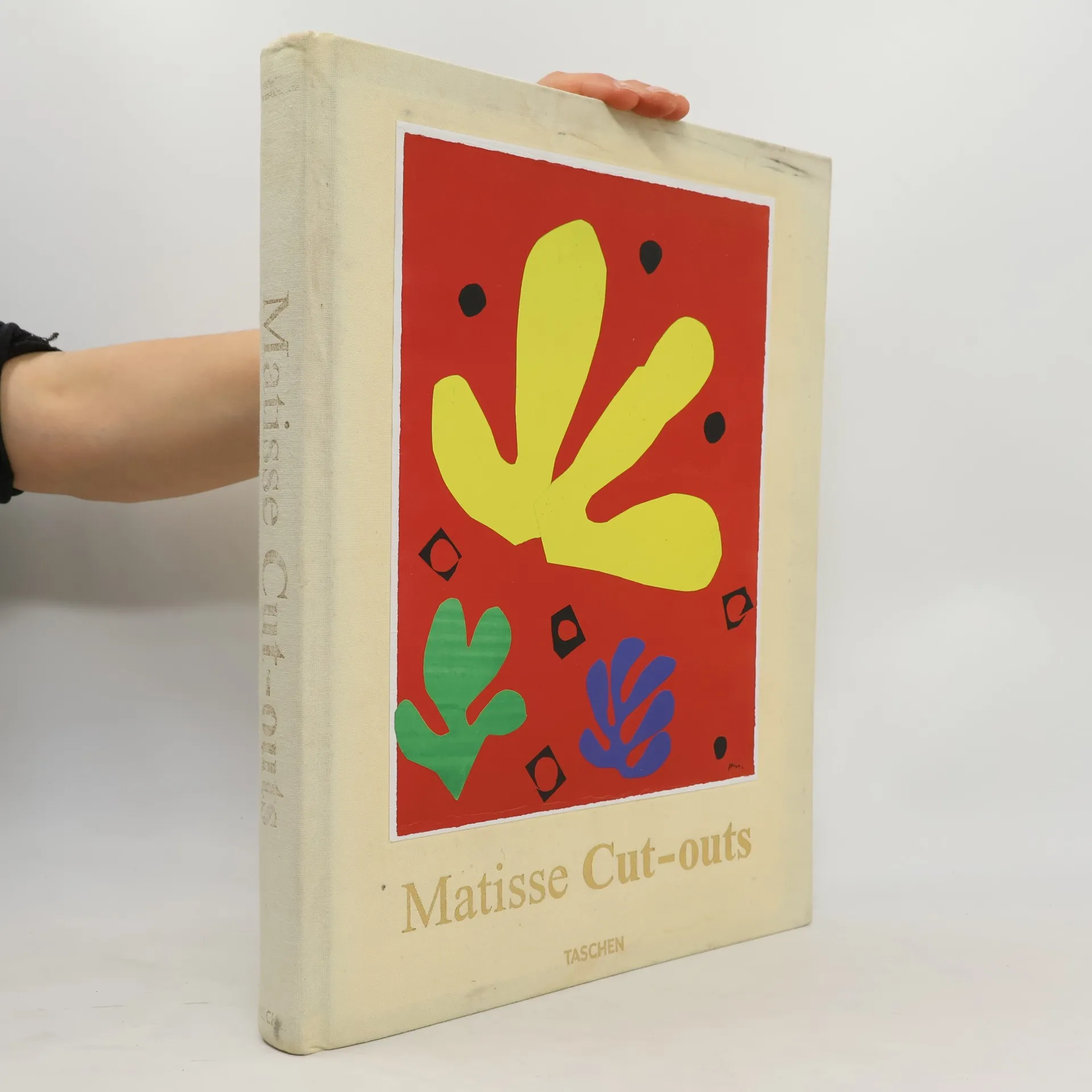
Towards the end of his career, the elderly and ailing Matisse, unable to stand and use a paintbrush, developed the revolutionary technique of 'carving into color,' creating vibrant paper cut-outs. At nearly 80 years old, he faced dismissal from some critics who viewed his work as the folly of a senile artist. However, these gouaches decoupees represented a significant breakthrough in modern art, re-imagining the longstanding conflict between color and line. This fresh TASCHEN edition provides a comprehensive historical context for Matisse's cut-outs, tracing their origins from his 1930 trip to Tahiti to his final years in Nice. It features numerous photographs of Matisse, including rare color images by Henri Cartier-Bresson, Brassai, and filmmaker Murnau, alongside texts from Matisse, Picasso, publisher E. Teriade, and poets Louis Aragon, Henri Michaux, Pierre Reverdy, and Matisse's son-in-law, Georges Duthuit. The cut-outs, with their deceptive simplicity, achieved a sculptural quality and early minimalist abstraction that would influence generations of artists. Exuberant and grand in scale, these works stand as true pillars of 20th-century art, bold and innovative, just as they were during Matisse's lifetime.
Compra de libros
Cut-Outs, Xavier-Gilles Néret
- Idioma

- Publicado en
- 2014
- Encuadernación
- (Tapa dura)
Métodos de pago
Nos falta tu reseña aquí
- Título
- Cut-Outs
- Subtítulo
- Drawing With Scissors
- Idioma
- Inglés
- Autores
- Xavier-Gilles Néret
- Editorial
- Taschen
- Publicado en
- 2014
- Formato
- Tapa dura
- Páginas
- 334
- ISBN10
- 3836536293
- ISBN13
- 9783836536295
- Serie
- Categorías
- Etiquetas
- Tema histórico, Arte, Francia, Siglo XX, Siglo XIX, Historia del arte, Fotos, París, Arte moderno, Modernismo, Surrealismo
- Calificación
- 4,65 de 5
- Descripción
- Towards the end of his career, the elderly and ailing Matisse, unable to stand and use a paintbrush, developed the revolutionary technique of 'carving into color,' creating vibrant paper cut-outs. At nearly 80 years old, he faced dismissal from some critics who viewed his work as the folly of a senile artist. However, these gouaches decoupees represented a significant breakthrough in modern art, re-imagining the longstanding conflict between color and line. This fresh TASCHEN edition provides a comprehensive historical context for Matisse's cut-outs, tracing their origins from his 1930 trip to Tahiti to his final years in Nice. It features numerous photographs of Matisse, including rare color images by Henri Cartier-Bresson, Brassai, and filmmaker Murnau, alongside texts from Matisse, Picasso, publisher E. Teriade, and poets Louis Aragon, Henri Michaux, Pierre Reverdy, and Matisse's son-in-law, Georges Duthuit. The cut-outs, with their deceptive simplicity, achieved a sculptural quality and early minimalist abstraction that would influence generations of artists. Exuberant and grand in scale, these works stand as true pillars of 20th-century art, bold and innovative, just as they were during Matisse's lifetime.