

Valoración del libro
Parámetros
- 224 páginas
- 8 horas de lectura
Más información sobre el libro
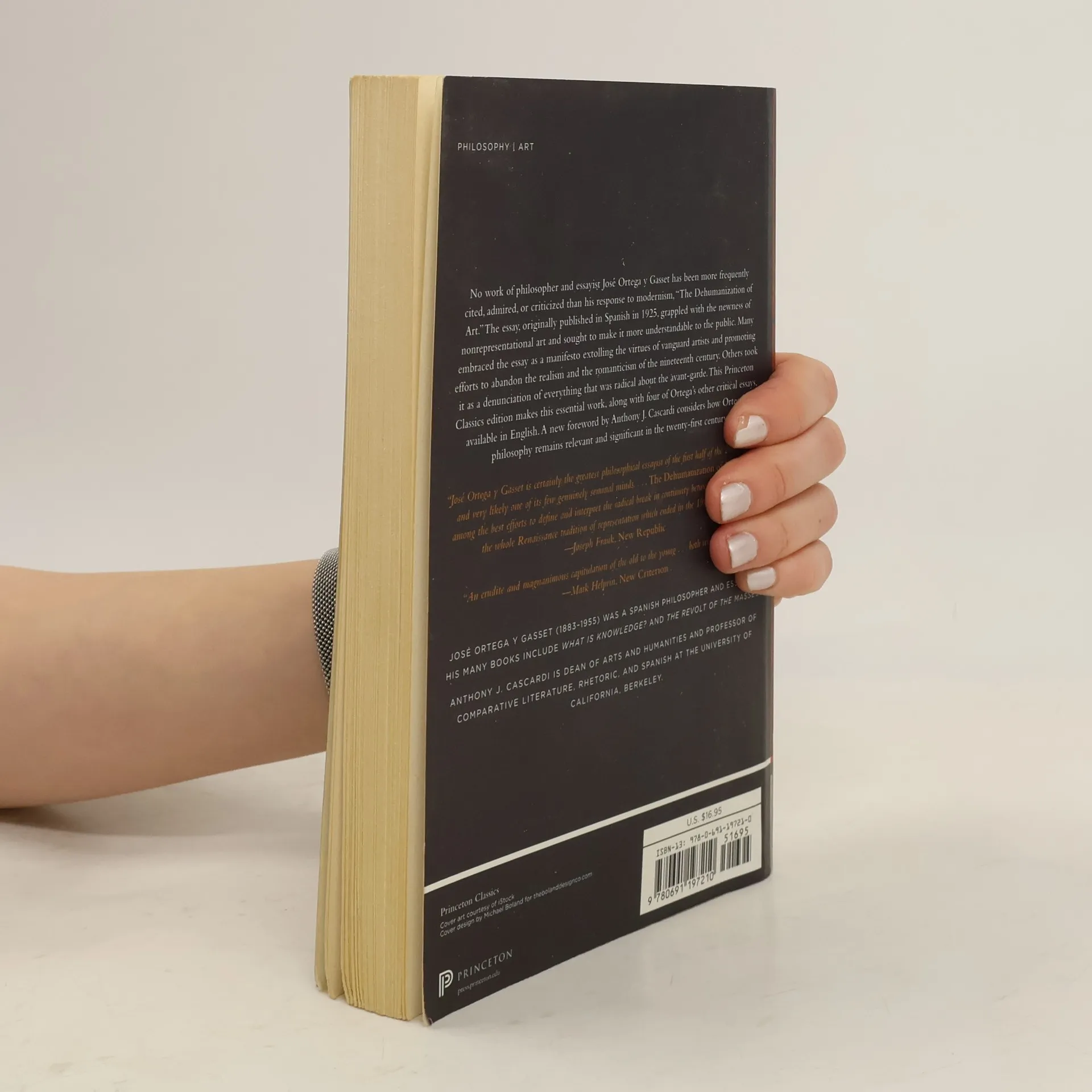
A classic work on radical aesthetics by one of the great philosophers of the early twentieth century No work of philosopher and essayist José Ortega y Gasset has been more frequently cited, admired, or criticized than his response to modernism, “The Dehumanization of Art.” The essay, originally published in Spanish in 1925, grappled with the newness of nonrepresentational art and sought to make it more understandable to the public. Many embraced the essay as a manifesto extolling the virtues of vanguard artists and promoting efforts to abandon the realism and the romanticism of the nineteenth century. Others took it as a denunciation of everything that was radical about the avant-garde. This Princeton Classics edition makes this essential work, along with four of Ortega’s other critical essays, available in English. A new foreword by Anthony J. Cascardi considers how Ortega’s philosophy remains relevant and significant in the twenty-first century.




Compra de libros
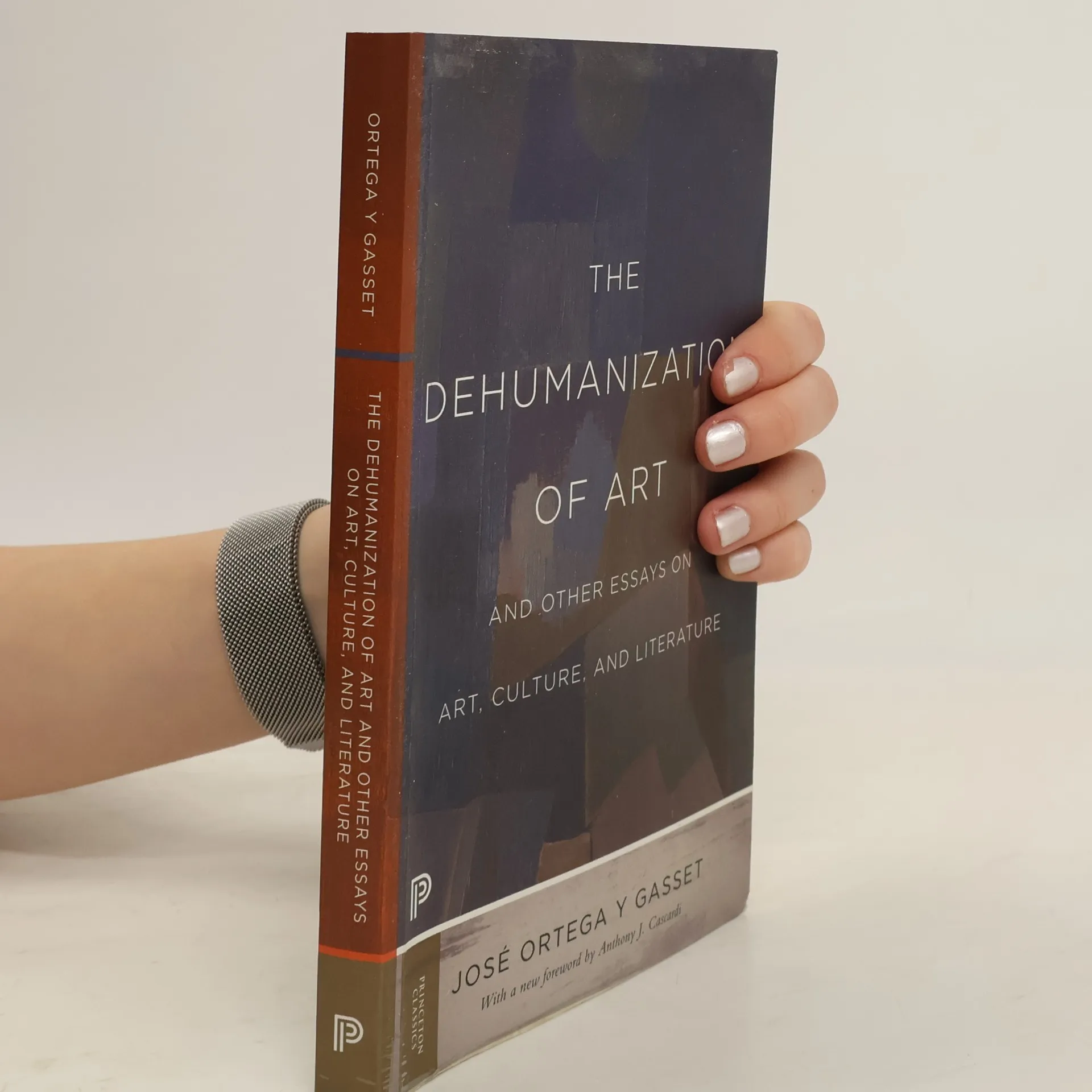
Princeton Classics: The Dehumanization of Art and Other Essays on Art, Culture, and Literature, José Ortega y. Gasset, Anthony J. Cascardi
- Idioma

- Publicado en
- 2019
- product-detail.submit-box.info.binding
- (Tapa blanda)
Métodos de pago
Nos falta tu reseña aquí
- Título
- Princeton Classics: The Dehumanization of Art and Other Essays on Art, Culture, and Literature
- Idioma
- Inglés
- Editorial
- Princeton University Press
- Publicado en
- 2019
- Formato
- Tapa blanda
- Páginas
- 224
- ISBN10
- 0691197210
- ISBN13
- 9780691197210
- Serie
- Etiquetas
- No ficción, Arte / Cultura, Ciencias sociales, Historias reales, Temática filosófica, Arte, Filosofía, Periodismo & Ensayos, España, Literatura española, Crítica
- Calificación
- 4 de 5
- Descripción
- A classic work on radical aesthetics by one of the great philosophers of the early twentieth century No work of philosopher and essayist José Ortega y Gasset has been more frequently cited, admired, or criticized than his response to modernism, “The Dehumanization of Art.” The essay, originally published in Spanish in 1925, grappled with the newness of nonrepresentational art and sought to make it more understandable to the public. Many embraced the essay as a manifesto extolling the virtues of vanguard artists and promoting efforts to abandon the realism and the romanticism of the nineteenth century. Others took it as a denunciation of everything that was radical about the avant-garde. This Princeton Classics edition makes this essential work, along with four of Ortega’s other critical essays, available in English. A new foreword by Anthony J. Cascardi considers how Ortega’s philosophy remains relevant and significant in the twenty-first century.