

Valoración del libro
Parámetros
- 240 páginas
- 9 horas de lectura
Más información sobre el libro
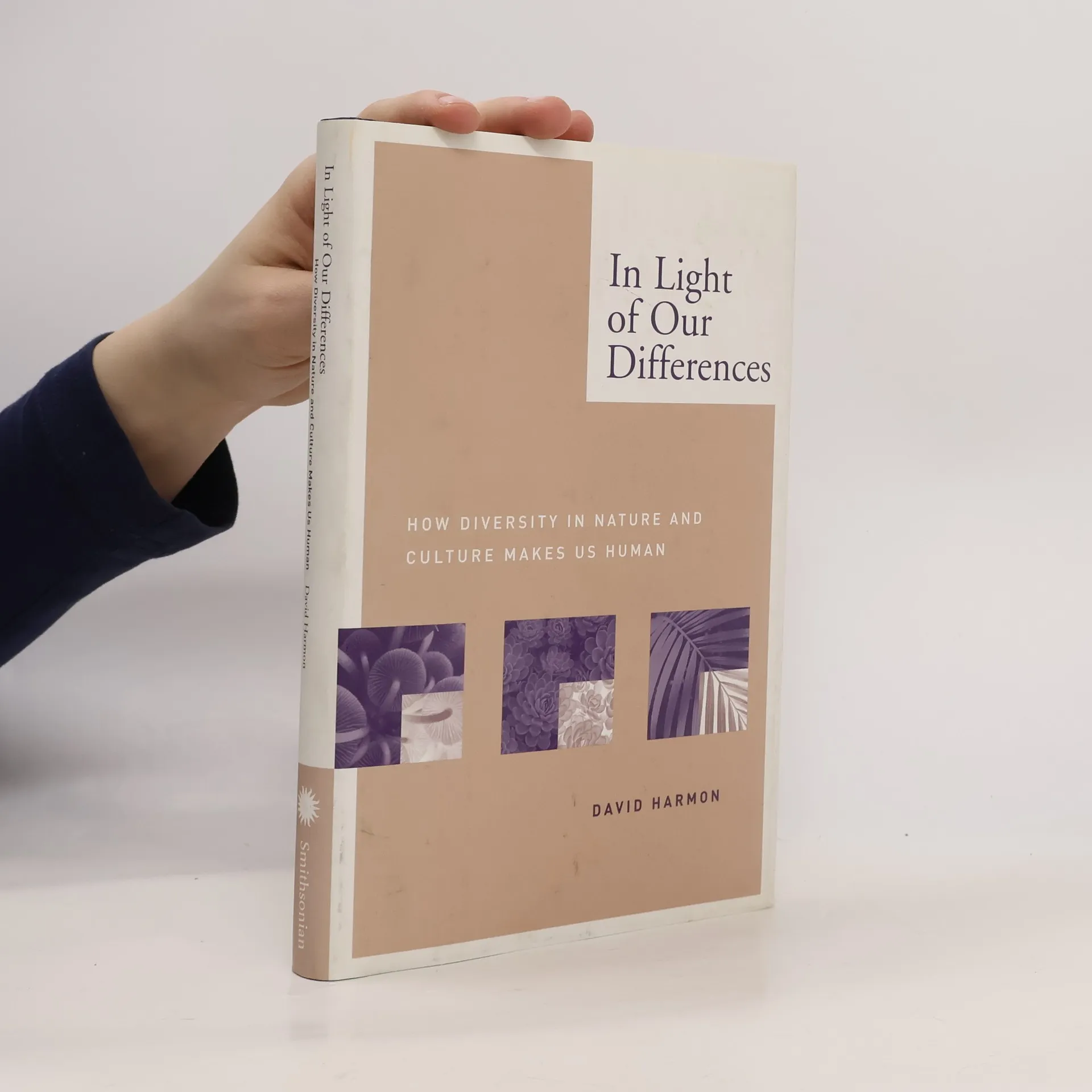
Most scientists agree that a sixth mass extinction looms unless Western society radically alters its relationship with nature. Concurrently, the world faces another crisis: the loss of many languages. Increasingly, research in biology, anthropology, linguistics, and related fields operates under the premise that we are nearing a point of irreversible loss, with the next few decades critical in determining whether we enter a fundamentally diminished world. This raises a crucial, yet previously unanswered, question: Why should anyone care? David Harmon uniquely addresses this by integrating insights from conservation biology, evolutionary theory, linguistics, geography, psychology, philosophy, and ethics. His interconnected exploration references thinkers like Voltaire, Darwin, and Wittgenstein to illustrate the importance of preserving diversity. As elemental differences in nature and human societies diminish, our range of experiences narrows, jeopardizing our essential humanity. The vitality of our planet stems from its rich variety of organisms, thoughts, and geophysical features, which foster the interplay of nature and culture. Harmon's timely work highlights that as we lose diversity, we risk losing our very selves.
Compra de libros
In Light of Our Differences, David Harmon
- Idioma

- Publicado en
- 2002
- Encuadernación
- (Tapa dura)
Métodos de pago
Nos falta tu reseña aquí
- Título
- In Light of Our Differences
- Subtítulo
- How Diversity in Nature and Culture Makes Us Human
- Idioma
- Inglés
- Autores
- David Harmon
- Editorial
- Smithsonian Books
- Publicado en
- 2002
- Formato
- Tapa dura
- Páginas
- 240
- ISBN10
- 158834066X
- ISBN13
- 9781588340665
- Serie
- Categorías
- Etiquetas
- Naturaleza, Ciencias naturales, Animales, Ciencia, EE.UU., Educación, Cultura y Sociedad, Cultura, Evolución, Antropología Cultural, Recursos Naturales, Biodiversidad, Ingeniería Social
- Calificación
- 3 de 5
- Descripción
- Most scientists agree that a sixth mass extinction looms unless Western society radically alters its relationship with nature. Concurrently, the world faces another crisis: the loss of many languages. Increasingly, research in biology, anthropology, linguistics, and related fields operates under the premise that we are nearing a point of irreversible loss, with the next few decades critical in determining whether we enter a fundamentally diminished world. This raises a crucial, yet previously unanswered, question: Why should anyone care? David Harmon uniquely addresses this by integrating insights from conservation biology, evolutionary theory, linguistics, geography, psychology, philosophy, and ethics. His interconnected exploration references thinkers like Voltaire, Darwin, and Wittgenstein to illustrate the importance of preserving diversity. As elemental differences in nature and human societies diminish, our range of experiences narrows, jeopardizing our essential humanity. The vitality of our planet stems from its rich variety of organisms, thoughts, and geophysical features, which foster the interplay of nature and culture. Harmon's timely work highlights that as we lose diversity, we risk losing our very selves.