

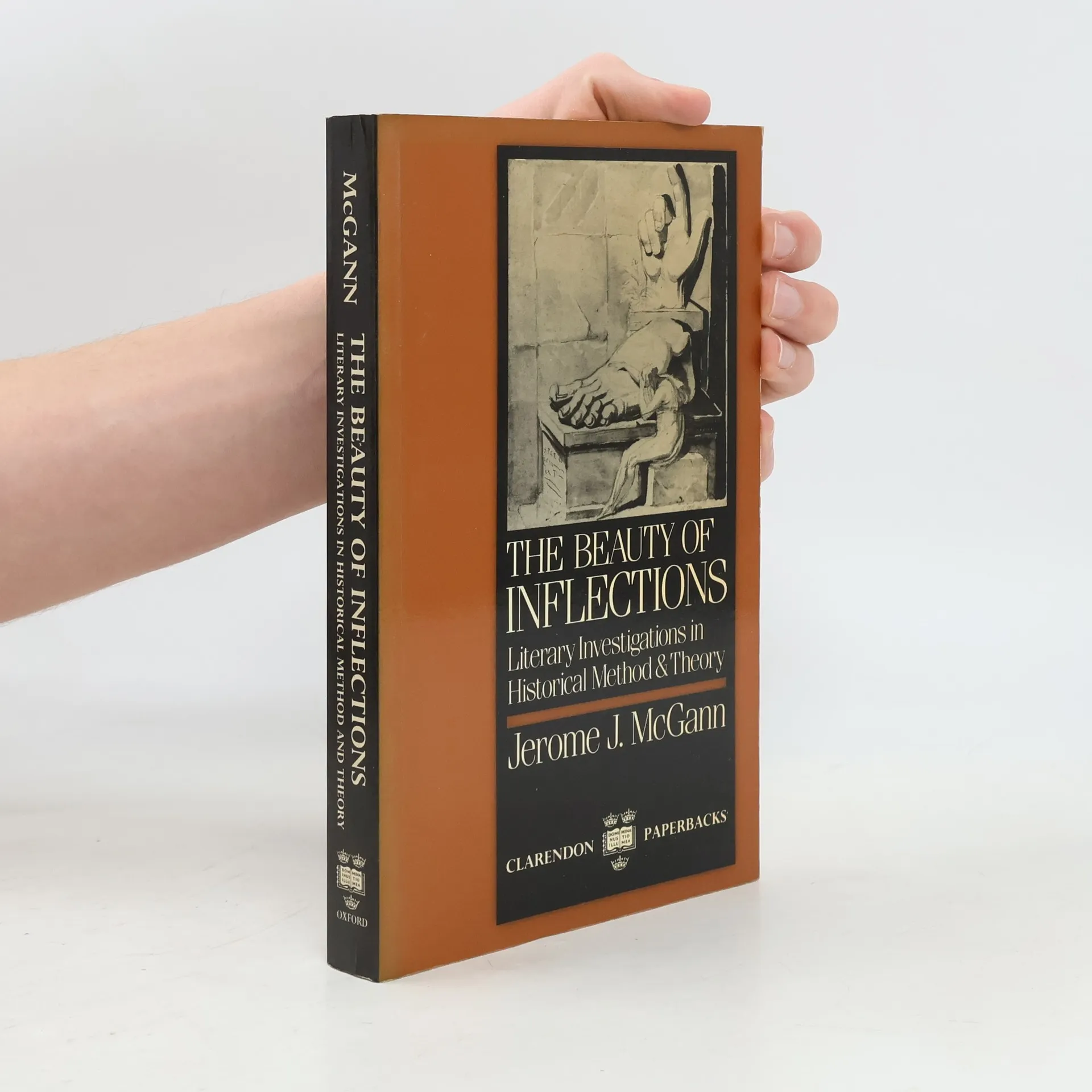
The Beauty of Inflections
Literary Investigations in Historical Method and Theory (Clarendon Paperbacks)
Autores
Valoración del libro
Más información sobre el libro
With emphasis on the theoretical and methodological, the studies collected here serve a dual purpose: to explore the fault lines that mark various kinds of ahistorical literary studies from New Criticism to Poststructuralism; and to develop a fully elaborated socio-historical criticism for literary works. McGann moves toward his goal by means of four special sets of investigations: the relation between the so-called "autonomous" poem and its political/historical contexts; the relation of reception and history to literary interpretation; the problems of canon and the characterization of period; and the ideological dimensions of both literary works and criticism of such works. Central to his enquiry is the notion that, whether viewed as an experience or as an event, a literary work is a nexus of various concrete social determinations that can be specified as an aesthetic order.
Compra de libros
The Beauty of Inflections, Jerome J. McGann
- Idioma

- Publicado en
- 1985
- Encuadernación
- (Tapa blanda)
Métodos de pago
Nos falta tu reseña aquí
- Título
- The Beauty of Inflections
- Subtítulo
- Literary Investigations in Historical Method and Theory (Clarendon Paperbacks)
- Idioma
- Inglés
- Autores
- Jerome J. McGann
- Editorial
- Oxford University Press
- Publicado en
- 1985
- Formato
- Tapa blanda
- Páginas
- 352
- ISBN10
- 0198117507
- ISBN13
- 9780198117506
- Serie
- Etiquetas
- Europa, Gran Bretaña, Crítica literaria, Irlanda, Crítica, Teoría literaria
- Calificación
- 3,6 de 5
- Descripción
- With emphasis on the theoretical and methodological, the studies collected here serve a dual purpose: to explore the fault lines that mark various kinds of ahistorical literary studies from New Criticism to Poststructuralism; and to develop a fully elaborated socio-historical criticism for literary works. McGann moves toward his goal by means of four special sets of investigations: the relation between the so-called "autonomous" poem and its political/historical contexts; the relation of reception and history to literary interpretation; the problems of canon and the characterization of period; and the ideological dimensions of both literary works and criticism of such works. Central to his enquiry is the notion that, whether viewed as an experience or as an event, a literary work is a nexus of various concrete social determinations that can be specified as an aesthetic order.