

Parámetros
- 486 páginas
- 18 horas de lectura
Más información sobre el libro
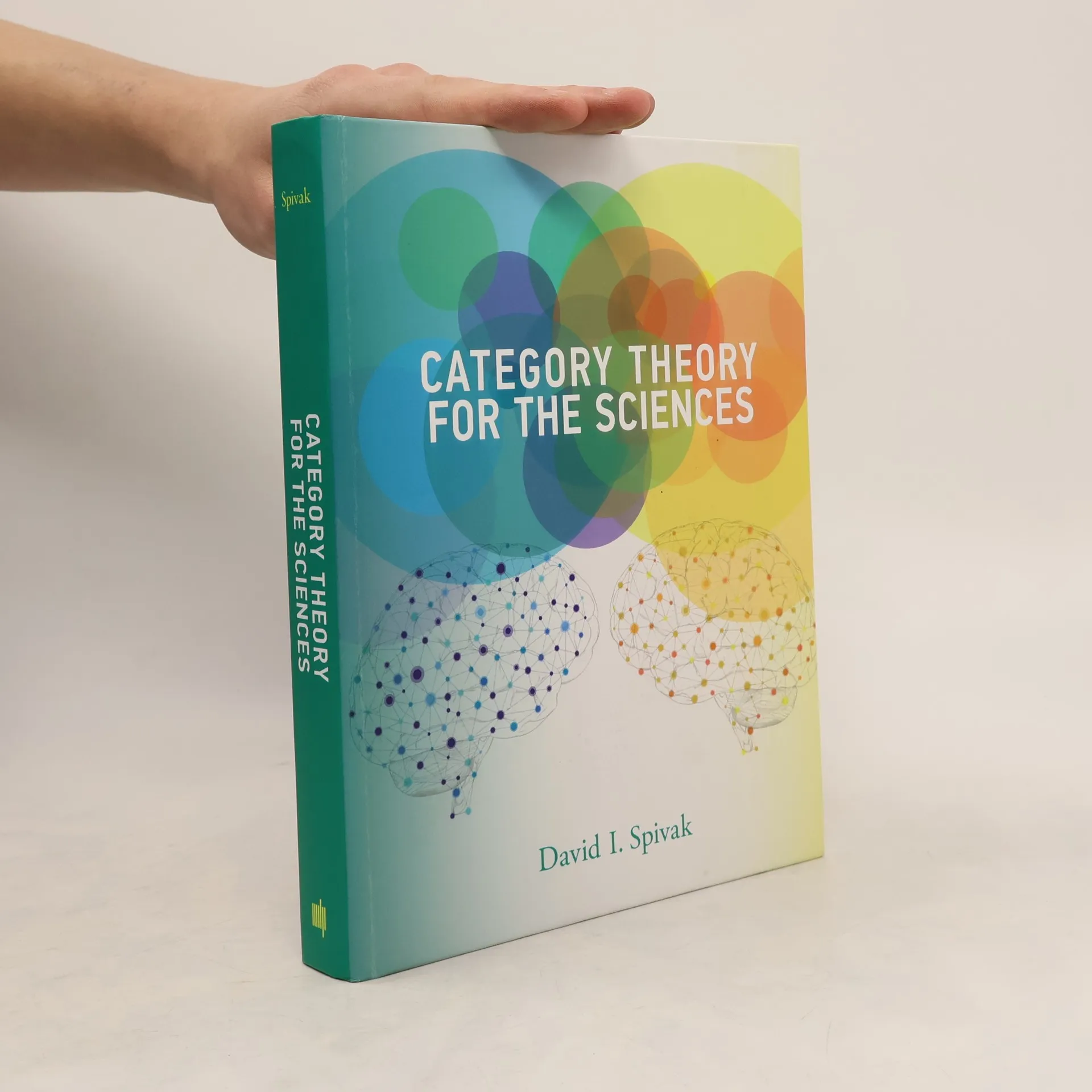
This book introduces category theory as a rigorous and coherent modeling language applicable across various scientific fields. Developed in the 1940s to unify mathematics, category theory has proven effective in facilitating communication among diverse mathematical areas. The text demonstrates its utility beyond mathematics, emphasizing the dynamic nature of information and the importance of translating organizational structures across disciplines. Written in an engaging style, it is accessible to non-mathematicians and assumes minimal mathematical background. The book begins with databases to introduce fundamental concepts such as sets and functions, progressing to essential mathematical notions like monoids, groups, orders, and graphs—essentially categories in disguise. It elaborates on the core concepts of category theory: categories, functors, and natural transformations, while also addressing limits, colimits, functor categories, sheaves, monads, and operads. The approach prioritizes examples and exercises over theorems and proofs, featuring over 300 exercises with solutions. This work aims to bridge the gap between mathematical concepts and the models used in scientific disciplines like computation, neuroscience, and physics.
Compra de libros
Category Theory for the Sciences, David I Spivak
- Idioma

- Publicado en
- 2014
- Encuadernación
- (Tapa dura)
Métodos de pago
Nos falta tu reseña aquí
- Título
- Category Theory for the Sciences
- Idioma
- Inglés
- Autores
- David I Spivak
- Editorial
- MIT Press
- Publicado en
- 2014
- Formato
- Tapa dura
- Páginas
- 486
- ISBN10
- 0262028131
- ISBN13
- 9780262028134
- Serie
- Categorías
- Etiquetas
- Comercio, Aventura, Temas psicológicos, Guías y Manuales, Temática filosófica, Ciencia, EE.UU., Salud, Relaciones, Tecnología, Educación, Escuela, Literatura especializada, Liderazgo, Viaje en el tiempo, Inteligencia Artificial, Álgebra, Números, Algoritmos, Filosofía de la Ciencia, Teoría de Conjuntos, Pensamiento Matemático
- Calificación
- 4 de 5
- Descripción
- This book introduces category theory as a rigorous and coherent modeling language applicable across various scientific fields. Developed in the 1940s to unify mathematics, category theory has proven effective in facilitating communication among diverse mathematical areas. The text demonstrates its utility beyond mathematics, emphasizing the dynamic nature of information and the importance of translating organizational structures across disciplines. Written in an engaging style, it is accessible to non-mathematicians and assumes minimal mathematical background. The book begins with databases to introduce fundamental concepts such as sets and functions, progressing to essential mathematical notions like monoids, groups, orders, and graphs—essentially categories in disguise. It elaborates on the core concepts of category theory: categories, functors, and natural transformations, while also addressing limits, colimits, functor categories, sheaves, monads, and operads. The approach prioritizes examples and exercises over theorems and proofs, featuring over 300 exercises with solutions. This work aims to bridge the gap between mathematical concepts and the models used in scientific disciplines like computation, neuroscience, and physics.