

Parámetros
- 478 páginas
- 17 horas de lectura
Más información sobre el libro
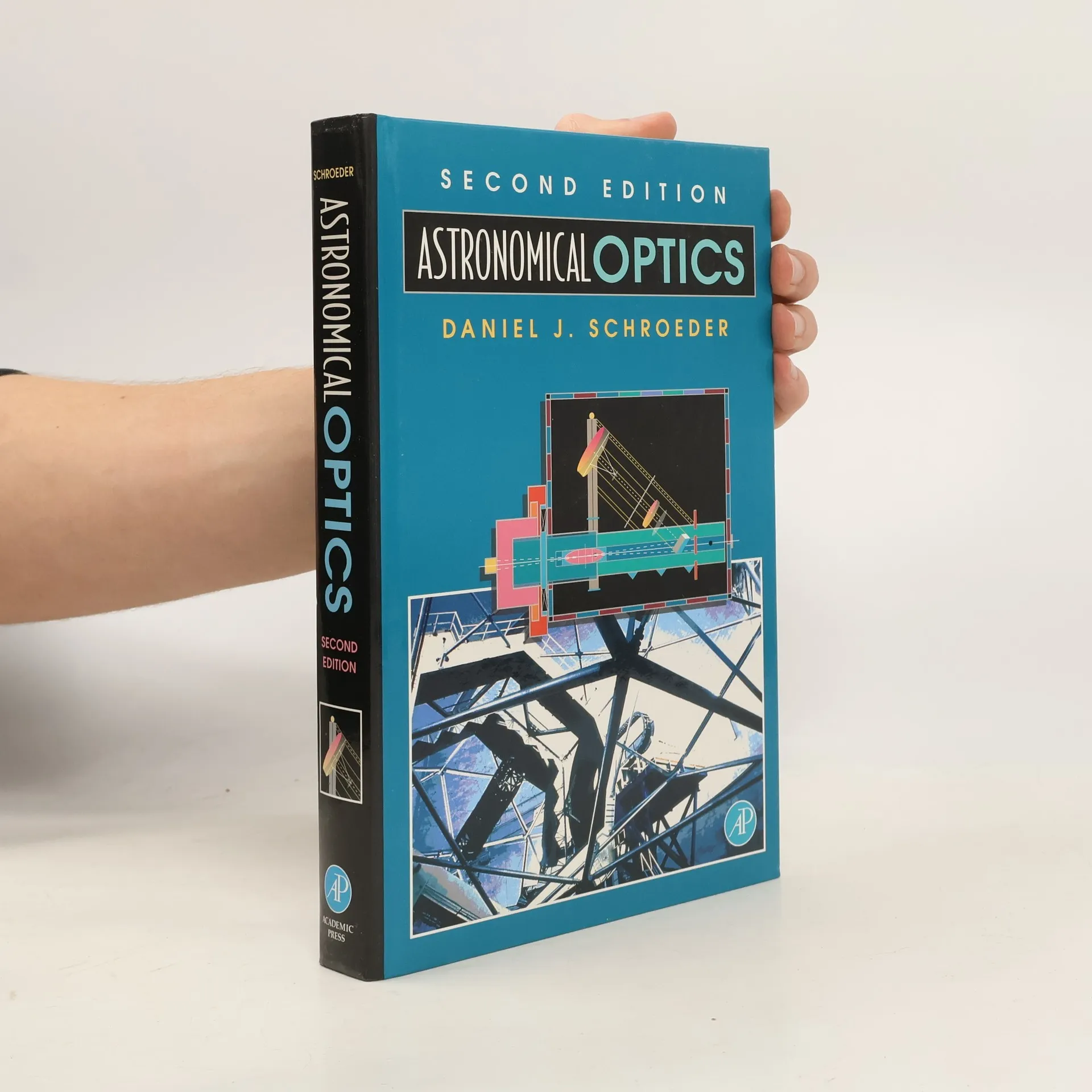
This book provides a unified treatment of the characteristics of telescopes of all types, both those whose performance is set by geometrical aberrations and the effect of the atmosphere, and those diffraction-limited telescopes designed for observations from above the atmosphere. The emphasis throughout is on basic principles, such as Fermat's principle, and their application to optical systems specifically designed to image distant celestial sources. The book also contains thorough discussions of the principles underlying all spectroscopic instrumentation, with special emphasis on grating instruments used with telescopes. An introduction to adaptive optics provides the needed background for further inquiry into this rapidly developing area. Geometrical aberration theory based on Fermat's principle Diffraction theory and transfer function approach to near-perfect telescopes Thorough discussion of 2-mirror telescopes, including misalignments Basic principles of spectrometry; grating and echelle instruments Schmidt and other catadioptric telescopes Principles of adaptive optics Over 220 figures and nearly 90 summary tables
Compra de libros
Astronomical Optics: Second Edition, Daniel J. Schroeder
- Idioma

- Publicado en
- 1999
- Encuadernación
- (Tapa dura)
Métodos de pago
Nos falta tu reseña aquí
- Título
- Astronomical Optics: Second Edition
- Idioma
- Inglés
- Autores
- Daniel J. Schroeder
- Editorial
- Academic press
- Publicado en
- 1999
- Formato
- Tapa dura
- Páginas
- 478
- ISBN10
- 0126298106
- ISBN13
- 9780126298109
- Serie
- Etiquetas
- Ciencia, EE.UU., Tecnología, Espacio, Libros de texto de física, Ingeniería, Astrofísica, Óptica
- Calificación
- 3 de 5
- Descripción
- This book provides a unified treatment of the characteristics of telescopes of all types, both those whose performance is set by geometrical aberrations and the effect of the atmosphere, and those diffraction-limited telescopes designed for observations from above the atmosphere. The emphasis throughout is on basic principles, such as Fermat's principle, and their application to optical systems specifically designed to image distant celestial sources. The book also contains thorough discussions of the principles underlying all spectroscopic instrumentation, with special emphasis on grating instruments used with telescopes. An introduction to adaptive optics provides the needed background for further inquiry into this rapidly developing area. Geometrical aberration theory based on Fermat's principle Diffraction theory and transfer function approach to near-perfect telescopes Thorough discussion of 2-mirror telescopes, including misalignments Basic principles of spectrometry; grating and echelle instruments Schmidt and other catadioptric telescopes Principles of adaptive optics Over 220 figures and nearly 90 summary tables