

Más información sobre el libro
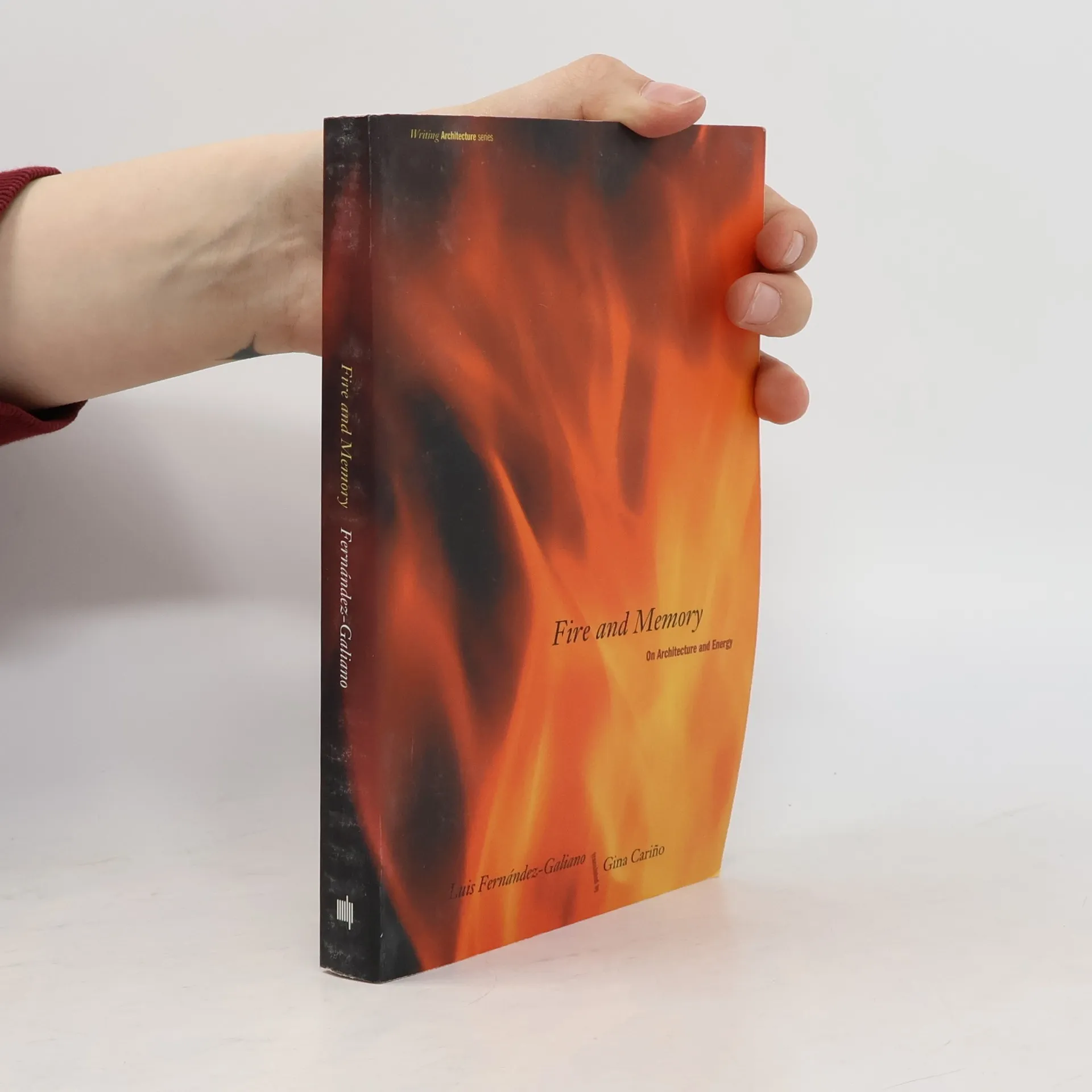
Architecture and fire, construction and combustion, meet in this poetic treatise on energy in building.In Fire and Memory, Luis Fernández-Galiano reconstructs the movement from cold to warm architecture, from building fire to building a building with and for fire, through what he calls a metaphorical plundering of disciplines as diverse as anthropology and economics, and in particular of ecology and thermodynamics. Beginning with the mythical fire in the origins of architecture and moving to its symbolic representation in the twentieth century, Galiano develops a theoretical dialogue between combustion and construction that ranges from Vitruvius to Le Corbusier, from the mechanical and organic to time and entropy. Galiano points out that energy, so important to the origin of architectural theory in Vitruvius's time, has been absent from architectural theory since the introduction of the dictatorship of the eye over that of the skin. With Fire and Memory, he reintroduces energy to the discussion of architecture and reminds us that the sense of touch is as necessary to an understanding of the environment as the sense of sight.
Compra de libros
Writing Architecture: Fire and Memory, Luis Fernández-Galiano, Gina Cariño
- Idioma

- Publicado en
- 2000
- Encuadernación
- (Tapa blanda)
Métodos de pago
Nos falta tu reseña aquí
- Título
- Writing Architecture: Fire and Memory
- Subtítulo
- On Architecture and Energy
- Idioma
- Inglés
- Autores
- Luis Fernández-Galiano, Gina Cariño
- Editorial
- MIT Press
- Publicado en
- 2000
- Formato
- Tapa blanda
- Páginas
- 325
- ISBN10
- 0262561336
- ISBN13
- 9780262561334
- Serie
- Etiquetas
- Arquitectura
- Calificación
- 4,35 de 5
- Descripción
- Architecture and fire, construction and combustion, meet in this poetic treatise on energy in building.In Fire and Memory, Luis Fernández-Galiano reconstructs the movement from cold to warm architecture, from building fire to building a building with and for fire, through what he calls a metaphorical plundering of disciplines as diverse as anthropology and economics, and in particular of ecology and thermodynamics. Beginning with the mythical fire in the origins of architecture and moving to its symbolic representation in the twentieth century, Galiano develops a theoretical dialogue between combustion and construction that ranges from Vitruvius to Le Corbusier, from the mechanical and organic to time and entropy. Galiano points out that energy, so important to the origin of architectural theory in Vitruvius's time, has been absent from architectural theory since the introduction of the dictatorship of the eye over that of the skin. With Fire and Memory, he reintroduces energy to the discussion of architecture and reminds us that the sense of touch is as necessary to an understanding of the environment as the sense of sight.