



Más información sobre el libro
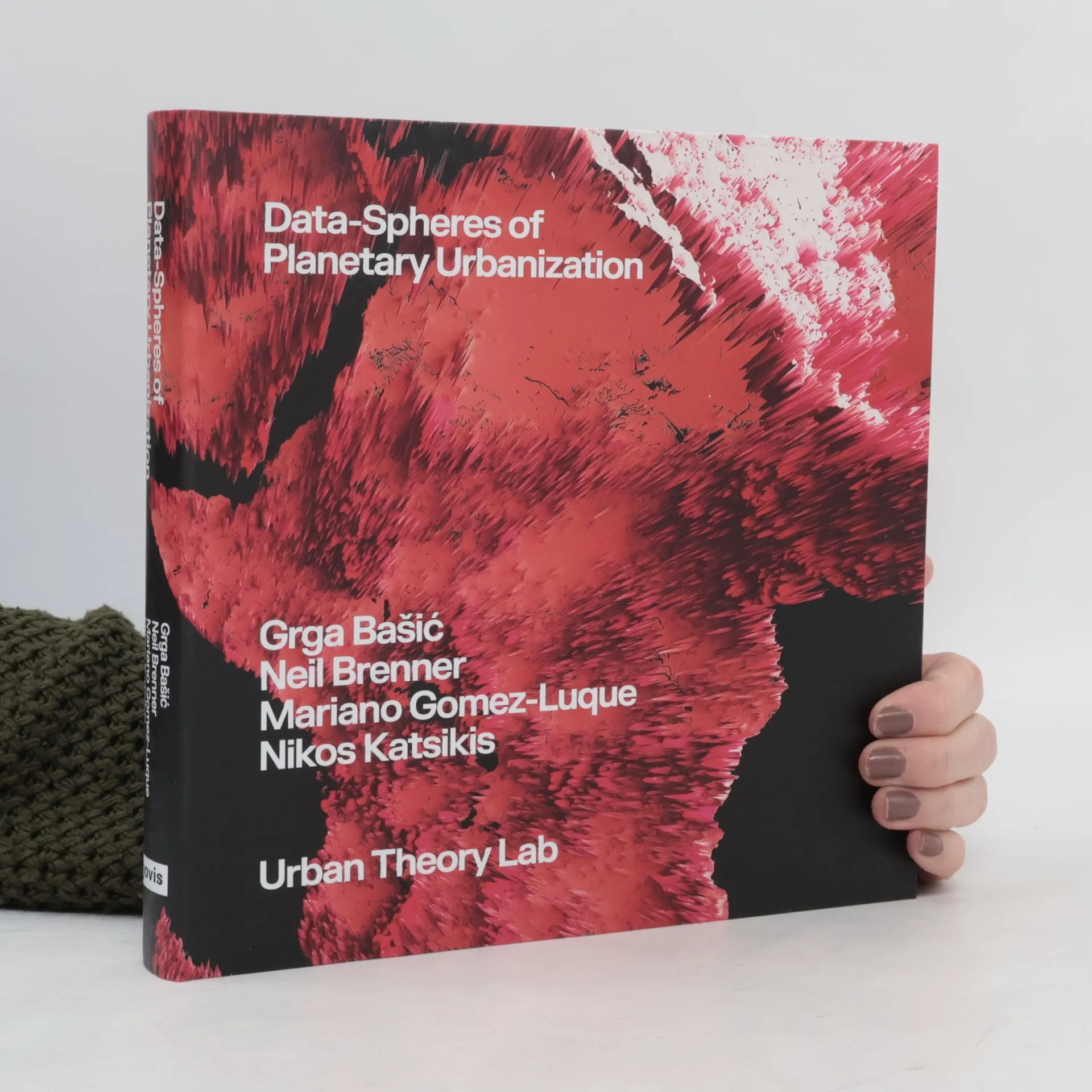
How can we map the urbanization of the planet in an era of climate breakdown? The Urban Theory Lab's Data-Spheres of Planetary Urbanization confronts this question by assembling a series of experimental visualizations of the worldwide urban fabric. This book reverses the mainstream, city-centric perspective on urbanization, showing, instead, that the world of contemporary urbanization encompasses much of the planet, including apparently remote areas, wildlands, and oceans. Cities are not only producers of value, but entropic black holes that consume surpluses produced elsewhere and project waste back into the planetary biosphere. Non-city spaces are, correspondingly, the metabolic bases of planetary urbanization. With a foreword by Jason W. Moore, an afterword by Alexander Arroyo, and contributions by Martín Arboleda, Danika Cooper, Kian Goh, Julie Michelle Klinger, Roi Salgueiro Barrio, and Hashim Sarkis Shows the impact of planetary urbanization in 500 beautiful and revealing spatial data visualizations Highlights the importance of operational landscapes beyond the city Assembles theoretical and methodological texts by the Urban Theory Lab as well as critical commentaries
Compra de libros
Data-Spheres of Planetary Urbanization, Nikos Katsikis, Mariano Gomez-Luque, Neil Brenner, Grga Bašić
- Idioma

- Publicado en
- 2025
- Encuadernación
- (Tapa blanda)
Métodos de pago
Nadie lo ha calificado todavía.
- Título
- Data-Spheres of Planetary Urbanization
- Idioma
- Inglés
- Editorial
- jovis
- Publicado en
- 2025
- Formato
- Tapa blanda
- Páginas
- 304
- ISBN10
- 3986122702
- ISBN13
- 9783986122706
- Serie
- Etiquetas
- Arquitectura
- Descripción
- How can we map the urbanization of the planet in an era of climate breakdown? The Urban Theory Lab's Data-Spheres of Planetary Urbanization confronts this question by assembling a series of experimental visualizations of the worldwide urban fabric. This book reverses the mainstream, city-centric perspective on urbanization, showing, instead, that the world of contemporary urbanization encompasses much of the planet, including apparently remote areas, wildlands, and oceans. Cities are not only producers of value, but entropic black holes that consume surpluses produced elsewhere and project waste back into the planetary biosphere. Non-city spaces are, correspondingly, the metabolic bases of planetary urbanization. With a foreword by Jason W. Moore, an afterword by Alexander Arroyo, and contributions by Martín Arboleda, Danika Cooper, Kian Goh, Julie Michelle Klinger, Roi Salgueiro Barrio, and Hashim Sarkis Shows the impact of planetary urbanization in 500 beautiful and revealing spatial data visualizations Highlights the importance of operational landscapes beyond the city Assembles theoretical and methodological texts by the Urban Theory Lab as well as critical commentaries