

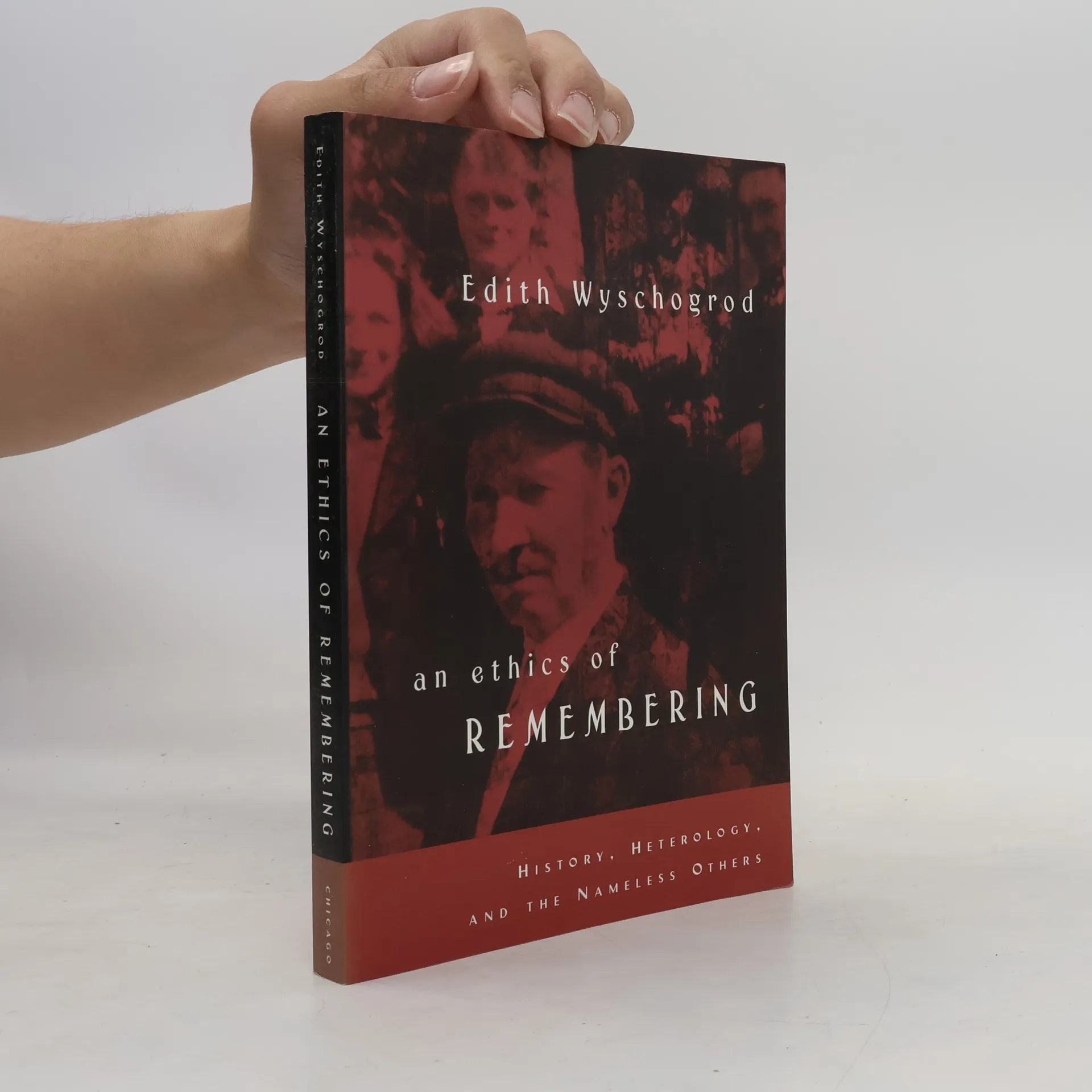


Más información sobre el libro
What are the ethical responsibilities of the historian in an age of mass murder and hyperreality? Can one be postmodern and still write history? For whom should history be written?Edith Wyschogrod animates such questions through the passionate figure of the "heterological historian." Realizing the philosophical impossibility of ever recovering "what really happened," this historian nevertheless acknowledges a moral imperative to speak for those who have been rendered voiceless, to give countenance to those who have become faceless, and hope to the desolate. Wyschogrod also weighs the impact of modern archival methods, such as photographs, film, and the Internet, which bring with them new constraints on the writing of history and which mandate a new vision of community. Drawing on the works of continental philosophers, historiographers, cognitive scientists, and filmmakers, Wyschogrod creates a powerful new framework for the understanding of history and the ethical duties of the historian.
Compra de libros
An Ethics of Remembering, Edith Wyschogrod
- Idioma

- Publicado en
- 1998
- Encuadernación
- (Tapa blanda)
Métodos de pago
Nadie lo ha calificado todavía.
- Título
- An Ethics of Remembering
- Subtítulo
- History, Heterology, and the Nameless Others
- Idioma
- Inglés
- Autores
- Edith Wyschogrod
- Editorial
- The University of Chicago Press
- Publicado en
- 1998
- Formato
- Tapa blanda
- Páginas
- 302
- ISBN10
- 0226920453
- ISBN13
- 9780226920450
- Serie
- Categorías
- Etiquetas
- Descripción
- What are the ethical responsibilities of the historian in an age of mass murder and hyperreality? Can one be postmodern and still write history? For whom should history be written?Edith Wyschogrod animates such questions through the passionate figure of the "heterological historian." Realizing the philosophical impossibility of ever recovering "what really happened," this historian nevertheless acknowledges a moral imperative to speak for those who have been rendered voiceless, to give countenance to those who have become faceless, and hope to the desolate. Wyschogrod also weighs the impact of modern archival methods, such as photographs, film, and the Internet, which bring with them new constraints on the writing of history and which mandate a new vision of community. Drawing on the works of continental philosophers, historiographers, cognitive scientists, and filmmakers, Wyschogrod creates a powerful new framework for the understanding of history and the ethical duties of the historian.