

Más información sobre el libro
One of the chief accomplishments of the Renaissance was the development of perspective in painting, which introduced spatial perception and led to the beauty of works by Giotto, Botticelli, and da Vinci. Dr. J. V. Field, a historian of math and the arts, narrates how the "practical" mathematics used by Renaissance artists influenced the evolution of "proper" mathematics—a story of life imitating art. This account details the emergence of modern mathematics from 1300 to 1650, a period when craftsmen learned "practical mathematics" and the discipline gained intellectual significance. Field examines the impact of artistic mathematics on the development of new geometry in the 17th century, particularly Desargues' projective geometry, which significantly advanced modern mathematics. He also discusses the 14th and 15th-century "abacus" schools favored by merchants and craftsmen, highlighting the contrast between practical tools and the abstract arithmetic and geometry taught in universities. Furthermore, the application of these mathematical concepts in music theory and elementary astronomy is explored. Richly illustrated with color and black-and-white plates, and featuring extracts from original mathematical texts, this engaging narrative will captivate those interested in the intertwined histories of mathematics, art, and the social dynamics of the Renaissance.
Compra de libros
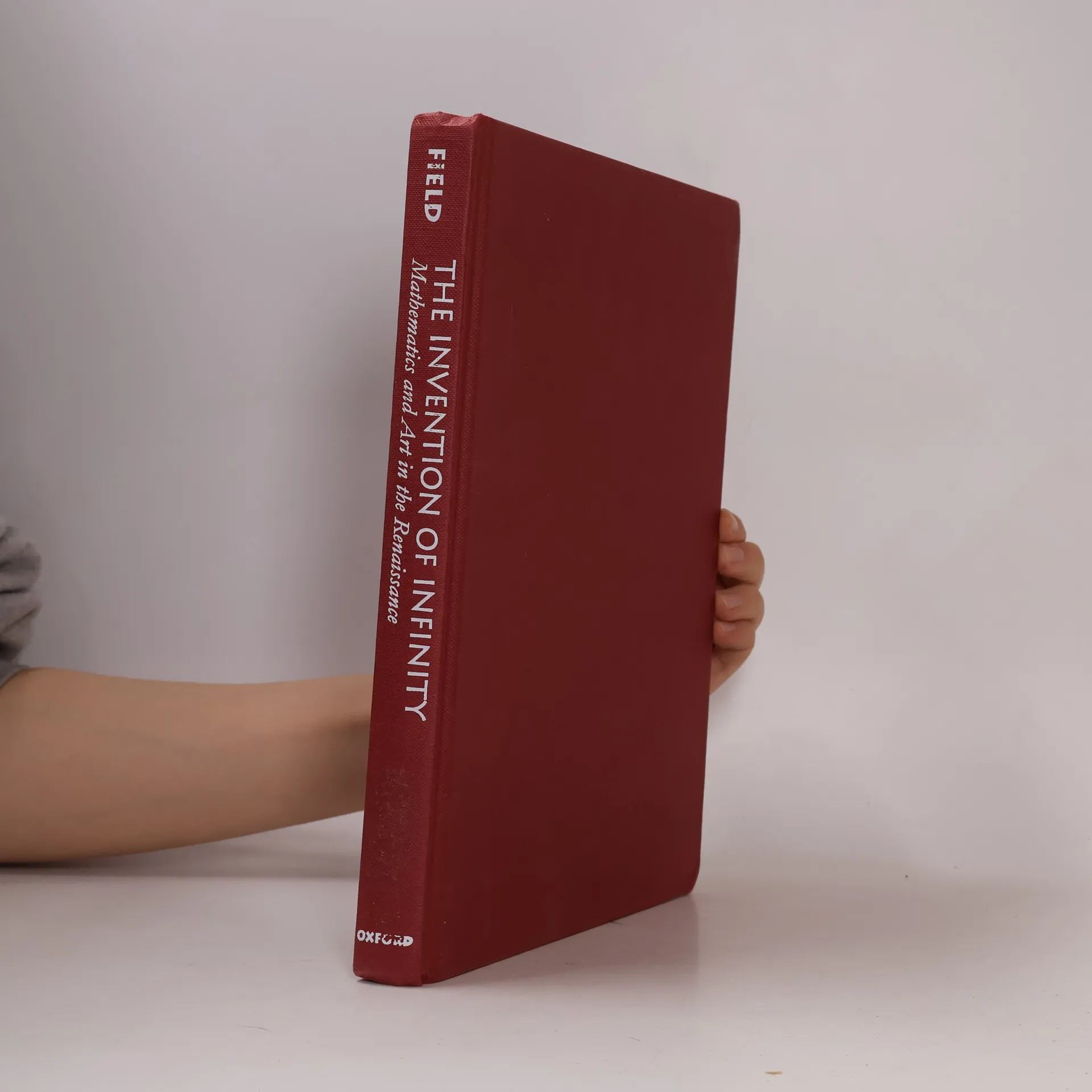
The Invention of Infinity, Judith Veronica Field
- Idioma

- Publicado en
- 1997
- Encuadernación
- (Tapa dura)
Métodos de pago
Nadie lo ha calificado todavía.
- Título
- The Invention of Infinity
- Subtítulo
- Mathematics and Art in the Renaissance
- Idioma
- Inglés
- Autores
- Judith Veronica Field
- Editorial
- Oxford University Press
- Publicado en
- 1997
- Formato
- Tapa dura
- Páginas
- 264
- ISBN10
- 0198523947
- ISBN13
- 9780198523949
- Serie
- Categorías
- Etiquetas
- Arte, Historia del arte
- Descripción
- One of the chief accomplishments of the Renaissance was the development of perspective in painting, which introduced spatial perception and led to the beauty of works by Giotto, Botticelli, and da Vinci. Dr. J. V. Field, a historian of math and the arts, narrates how the "practical" mathematics used by Renaissance artists influenced the evolution of "proper" mathematics—a story of life imitating art. This account details the emergence of modern mathematics from 1300 to 1650, a period when craftsmen learned "practical mathematics" and the discipline gained intellectual significance. Field examines the impact of artistic mathematics on the development of new geometry in the 17th century, particularly Desargues' projective geometry, which significantly advanced modern mathematics. He also discusses the 14th and 15th-century "abacus" schools favored by merchants and craftsmen, highlighting the contrast between practical tools and the abstract arithmetic and geometry taught in universities. Furthermore, the application of these mathematical concepts in music theory and elementary astronomy is explored. Richly illustrated with color and black-and-white plates, and featuring extracts from original mathematical texts, this engaging narrative will captivate those interested in the intertwined histories of mathematics, art, and the social dynamics of the Renaissance.