


Más información sobre el libro
Set in a modern, urban Paris, the prose pieces in this volume constitute a further exploration of the terrain Baudelaire had covered in his verse masterpiece, The Flowers of Evil : the city and its squalor and inequalities, the pressures of time and mortality, and the liberation provided by the sensual delights of intoxication, art, and women. Published posthumously in 1869, Paris Spleen was a landmark publication in the development of the genre of prose poetry—a format which Baudelaire saw as particularly suited for expressing the feelings of uncertainty, flux, and freedom of his age—and one of the founding texts of literary modernism.
Compra de libros
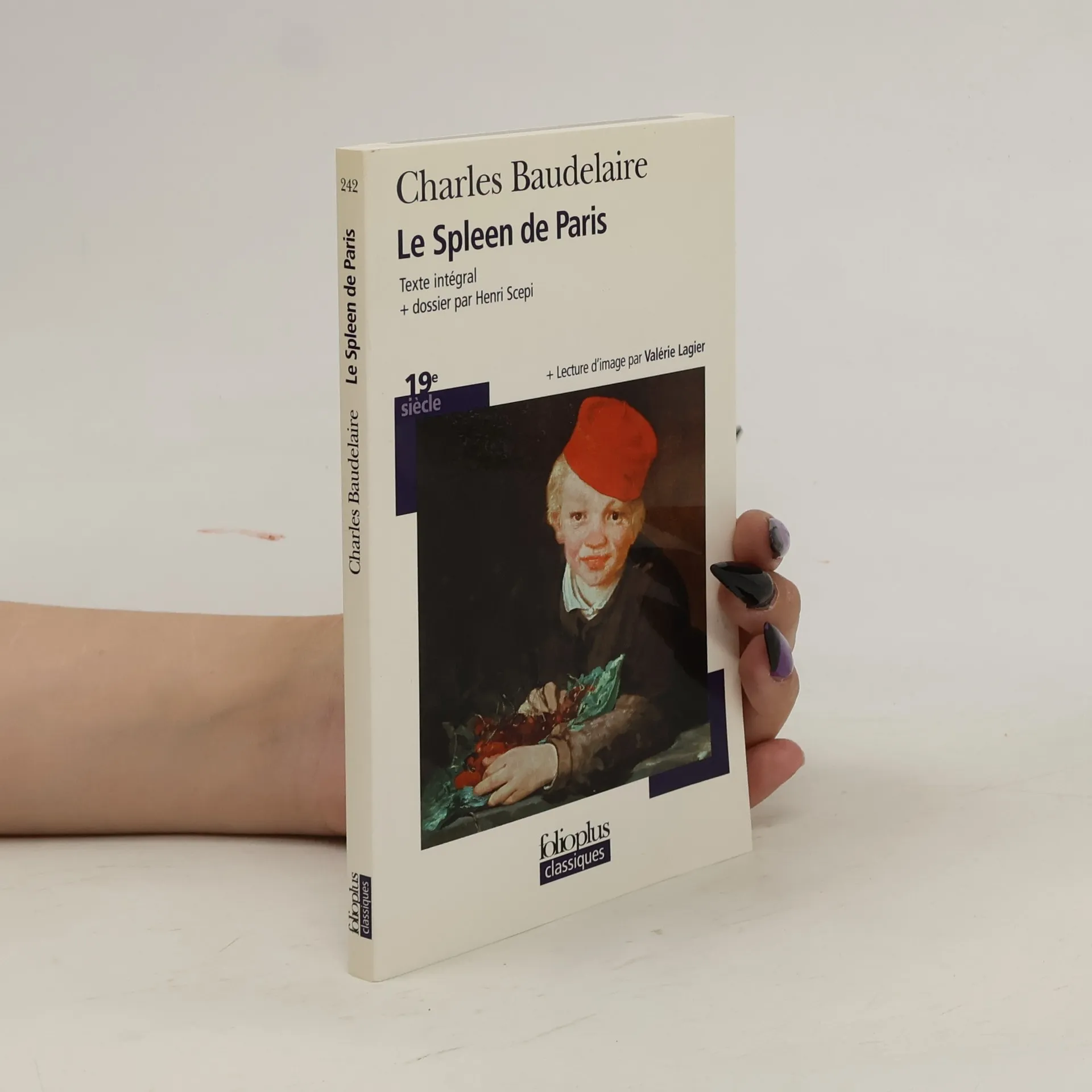
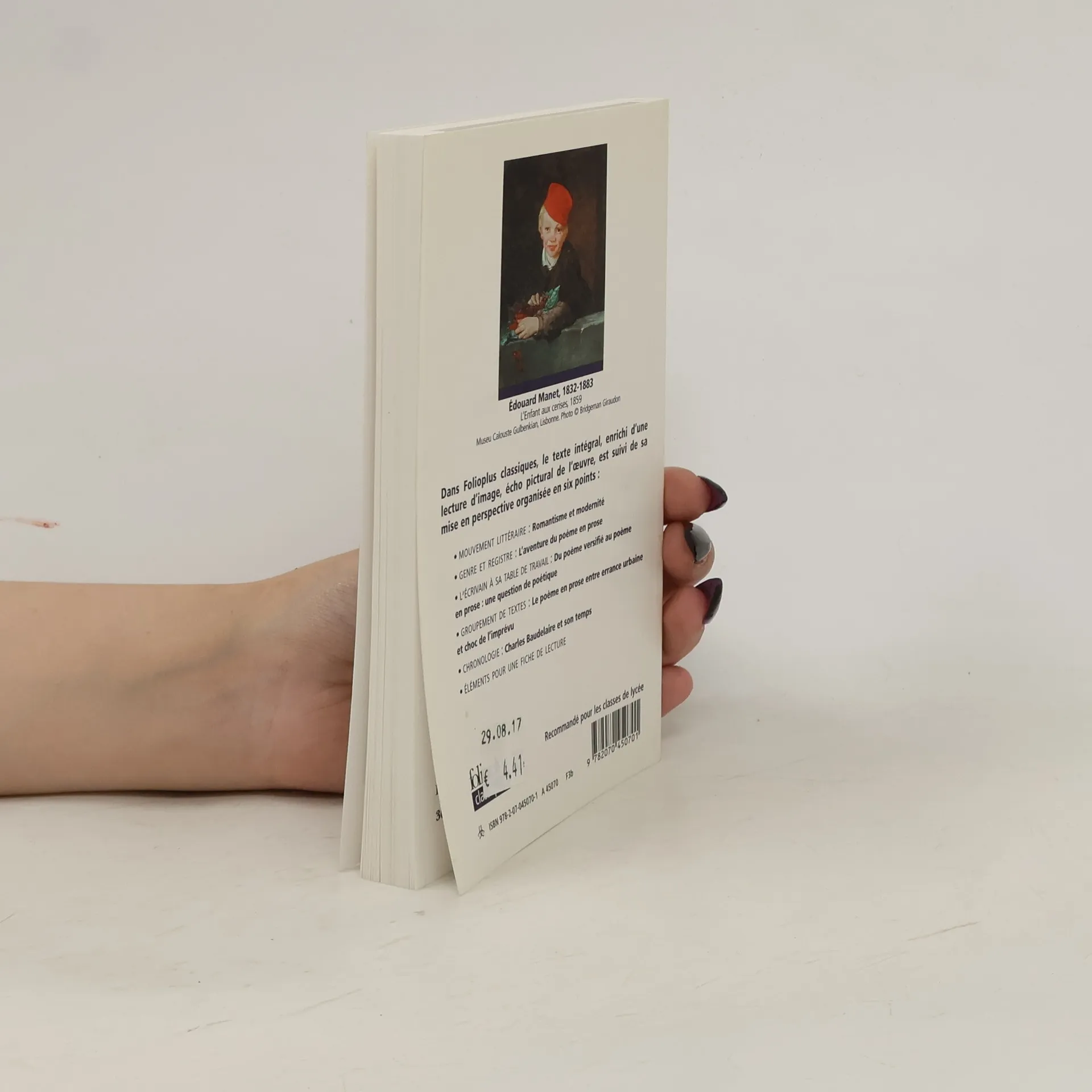
Folioplus Classiques - 242: Le Spleen de Paris: Texte intégral + dossier par Henri Scepi + lecture d'image par Valérie Lagier, Charles Baudelaire, Henri Scepi, Valérie Lagier
- Idioma

- Publicado en
- 2013
- Encuadernación
- (Tapa blanda)
Métodos de pago
Nadie lo ha calificado todavía.
- Título
- Folioplus Classiques - 242: Le Spleen de Paris: Texte intégral + dossier par Henri Scepi + lecture d'image par Valérie Lagier
- Idioma
- Francés
- Autores
- Charles Baudelaire, Henri Scepi, Valérie Lagier
- Editorial
- French and European Publications Inc
- Publicado en
- 2013
- Formato
- Tapa blanda
- Páginas
- 240
- ISBN10
- 2070450708
- ISBN13
- 9782070450701
- Serie
- Etiquetas
- Cuentos cortos, Francia, Siglo XIX, Literatura francesa, París
- Descripción
- Set in a modern, urban Paris, the prose pieces in this volume constitute a further exploration of the terrain Baudelaire had covered in his verse masterpiece, The Flowers of Evil : the city and its squalor and inequalities, the pressures of time and mortality, and the liberation provided by the sensual delights of intoxication, art, and women. Published posthumously in 1869, Paris Spleen was a landmark publication in the development of the genre of prose poetry—a format which Baudelaire saw as particularly suited for expressing the feelings of uncertainty, flux, and freedom of his age—and one of the founding texts of literary modernism.