

Parámetros
- 320 páginas
- 12 horas de lectura
Más información sobre el libro
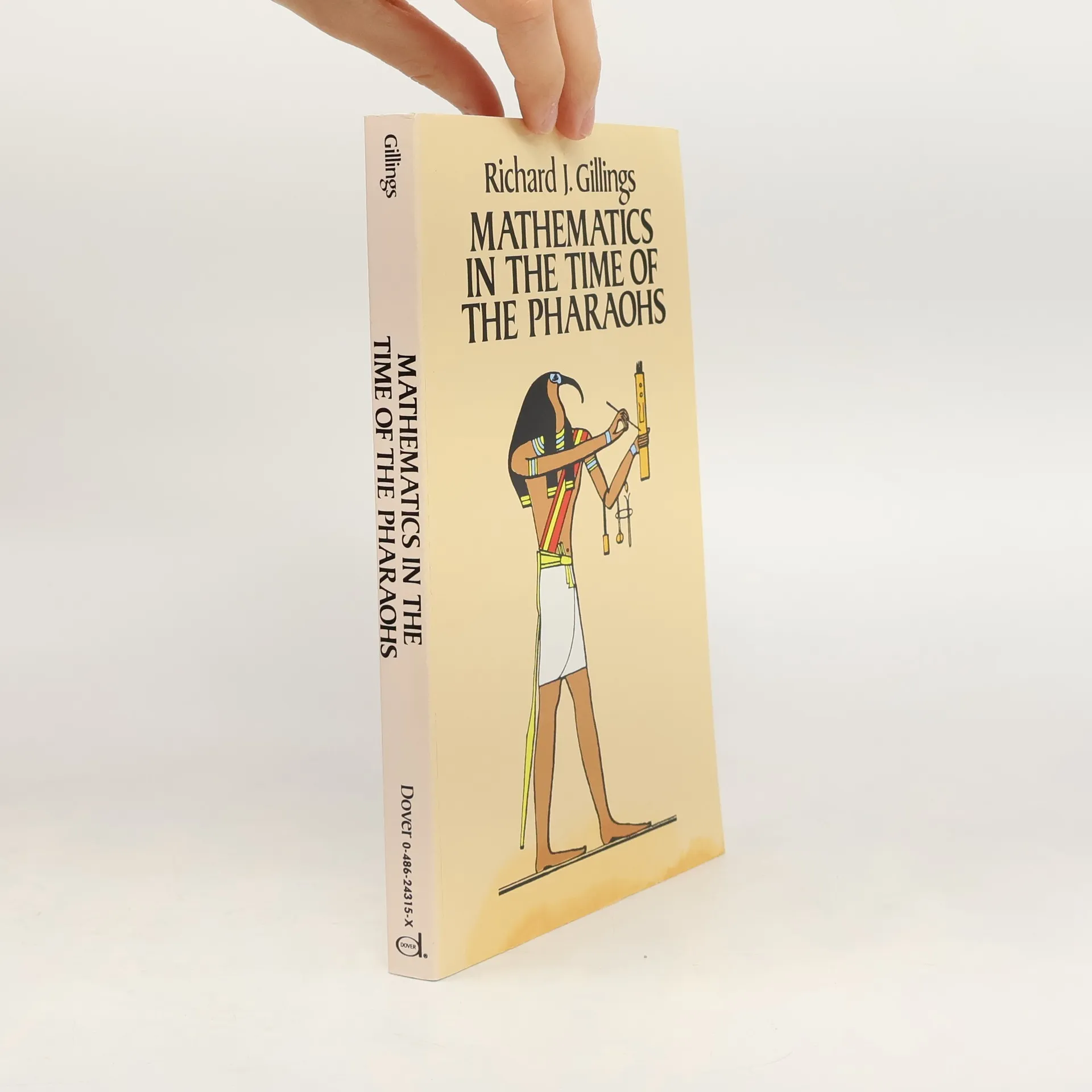
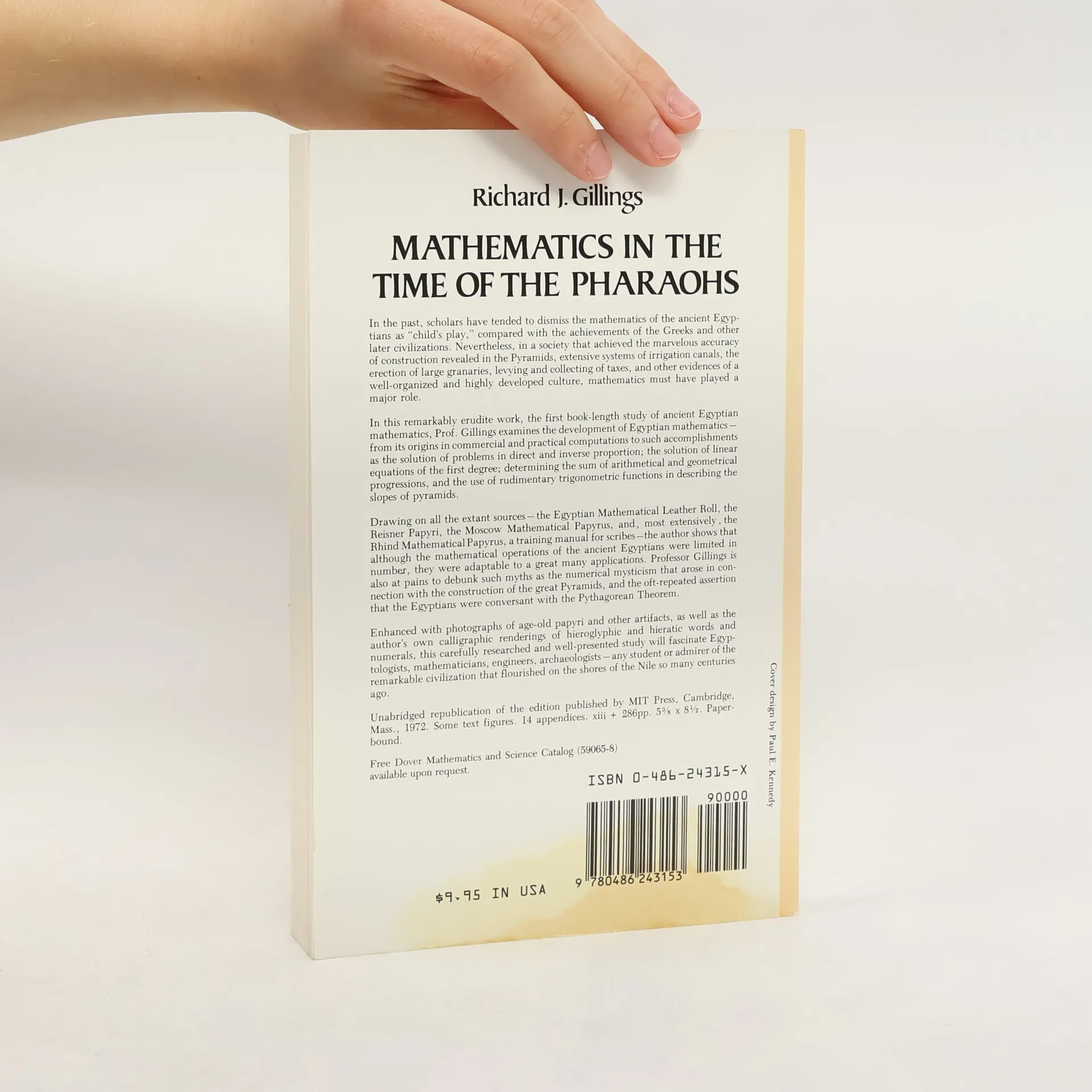
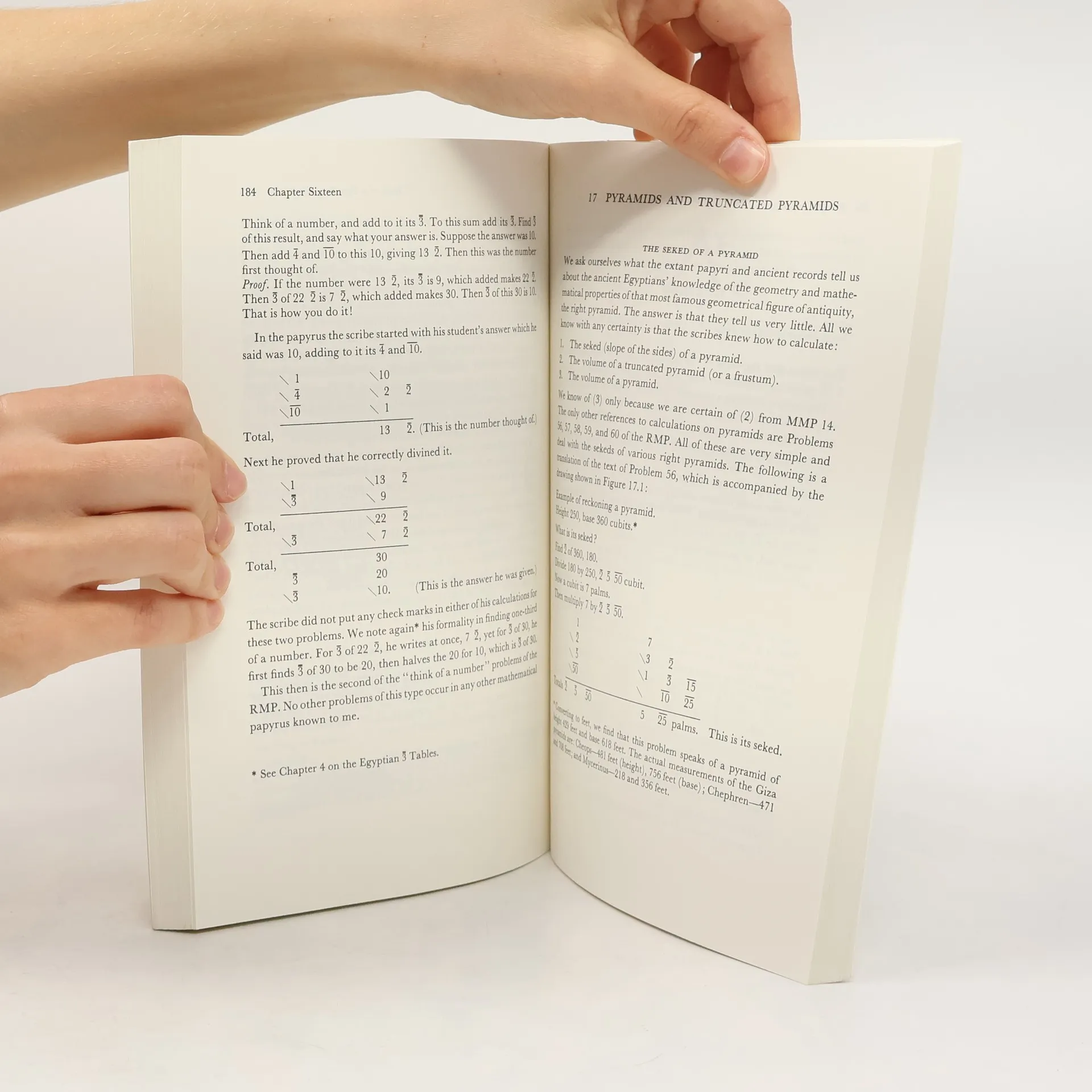
Scholars have often dismissed ancient Egyptian mathematics as simplistic compared to Greek achievements. However, the remarkable accuracy in constructing the Pyramids, extensive irrigation systems, and organized taxation suggests that mathematics played a crucial role in this advanced society. In this comprehensive study, Professor Gillings explores the evolution of Egyptian mathematics, tracing its roots from practical computations to significant accomplishments like solving direct and inverse proportion problems, linear equations, and understanding arithmetical and geometrical progressions. He utilizes all available sources, including the Egyptian Mathematical Leather Roll, the Reisner Papyri, the Moscow Mathematical Papyrus, and primarily the Rhind Mathematical Papyrus, a scribe training manual. While the mathematical operations of the Egyptians were limited, they were versatile and applicable to various contexts. Gillings also addresses myths surrounding Egyptian mathematics, such as the supposed numerical mysticism linked to the Pyramids and the claim that they knew the Pythagorean Theorem. Enhanced with photographs of ancient papyri and artifacts, along with the author's calligraphic representations of hieroglyphics and numerals, this meticulously researched work will captivate Egyptologists, mathematicians, engineers, archaeologists, and anyone interested in this remarkable civilization along the Nile.
Compra de libros
Mathematics in the Time of the Pharaohs, Richard J. Gillings
- Idioma

- Publicado en
- 1982
- product-detail.submit-box.info.binding
- (Tapa blanda),
- Estado del libro
- Dañado
- Precio
- 7,91 €
Métodos de pago
Nadie lo ha calificado todavía.
- Idioma
- Inglés
- Autores
- Richard J. Gillings
- Editorial
- Dover Publications
- Publicado en
- 1982
- Formato
- Tapa blanda
- Páginas
- 320
- ISBN10
- 048624315X
- ISBN13
- 9780486243153
- Serie
- Etiquetas
- No ficción, Tema histórico, Ciencia y Matemáticas, Ciencia, Matemáticas, Egipto, Historia de la Ciencia
- Descripción
- Scholars have often dismissed ancient Egyptian mathematics as simplistic compared to Greek achievements. However, the remarkable accuracy in constructing the Pyramids, extensive irrigation systems, and organized taxation suggests that mathematics played a crucial role in this advanced society. In this comprehensive study, Professor Gillings explores the evolution of Egyptian mathematics, tracing its roots from practical computations to significant accomplishments like solving direct and inverse proportion problems, linear equations, and understanding arithmetical and geometrical progressions. He utilizes all available sources, including the Egyptian Mathematical Leather Roll, the Reisner Papyri, the Moscow Mathematical Papyrus, and primarily the Rhind Mathematical Papyrus, a scribe training manual. While the mathematical operations of the Egyptians were limited, they were versatile and applicable to various contexts. Gillings also addresses myths surrounding Egyptian mathematics, such as the supposed numerical mysticism linked to the Pyramids and the claim that they knew the Pythagorean Theorem. Enhanced with photographs of ancient papyri and artifacts, along with the author's calligraphic representations of hieroglyphics and numerals, this meticulously researched work will captivate Egyptologists, mathematicians, engineers, archaeologists, and anyone interested in this remarkable civilization along the Nile.