



Más información sobre el libro
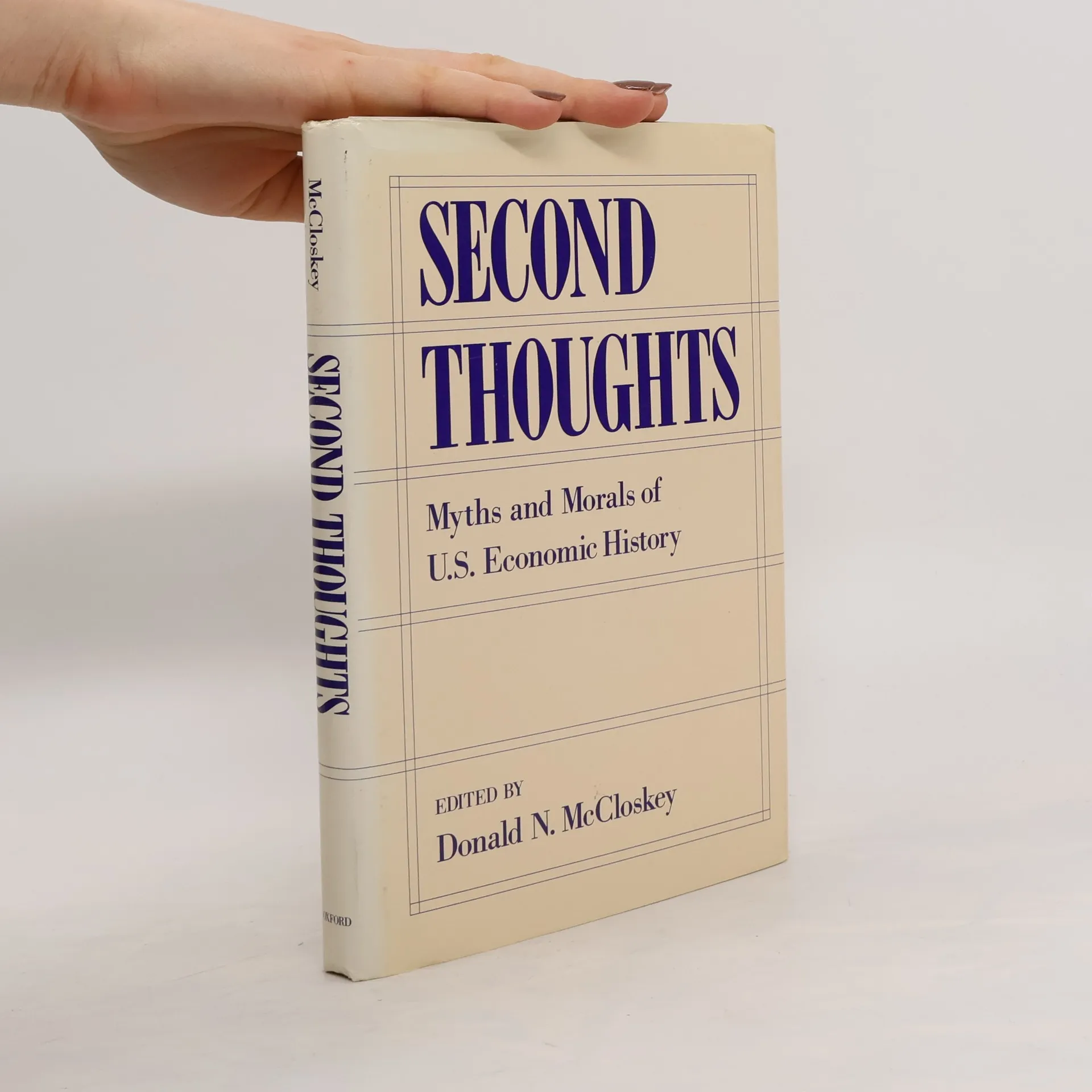
This book examines the past as a way of preparing for the future. McCloskey has brought together leading economic historians who show that commonly accepted perceptions of our economic past can be wrong and, therefore, misleading. The contributors (including Robert Higgs, Julian and Rita Simon, Elyce Rotella, Terry Anderson, Barry Eichengreen, Price Fishback, Susan Phillips and J. Richard Zecher) address a wide range of issues: Teapot Dome scandal, banking regulation, "new" immigration problems, A T & T and deregulation, Third World development policies, the role of "big" government, technological innovation, and property rights. Each essay explores the role of government policy in the outcome of events. Written in nontechnical prose, this book is an essential reference for those interested in our economic past.
Compra de libros
Second Thoughts, Robert A. Margo, Jeffrey G Williamson, Elyce J. Rotella, Donald N. McCloskey, Deirdre N. McCloskey
- Idioma

- Publicado en
- 1993
- Encuadernación
- (Tapa dura),
- Estado del libro
- Bueno
- Precio
- 3,99 €
Métodos de pago
Nadie lo ha calificado todavía.
- Título
- Second Thoughts
- Subtítulo
- Myths and Morals of U.S. Economic History
- Idioma
- Inglés
- Autores
- Robert A. Margo, Jeffrey G Williamson, Elyce J. Rotella, Donald N. McCloskey, Deirdre N. McCloskey
- Editorial
- Oxford University Press
- Publicado en
- 1993
- Formato
- Tapa dura
- Páginas
- 218
- ISBN10
- 0195066332
- ISBN13
- 9780195066333
- Serie
- Categorías
- Etiquetas
- Comercio, EE.UU., Historia Económica, Política económica
- Descripción
- This book examines the past as a way of preparing for the future. McCloskey has brought together leading economic historians who show that commonly accepted perceptions of our economic past can be wrong and, therefore, misleading. The contributors (including Robert Higgs, Julian and Rita Simon, Elyce Rotella, Terry Anderson, Barry Eichengreen, Price Fishback, Susan Phillips and J. Richard Zecher) address a wide range of issues: Teapot Dome scandal, banking regulation, "new" immigration problems, A T & T and deregulation, Third World development policies, the role of "big" government, technological innovation, and property rights. Each essay explores the role of government policy in the outcome of events. Written in nontechnical prose, this book is an essential reference for those interested in our economic past.