

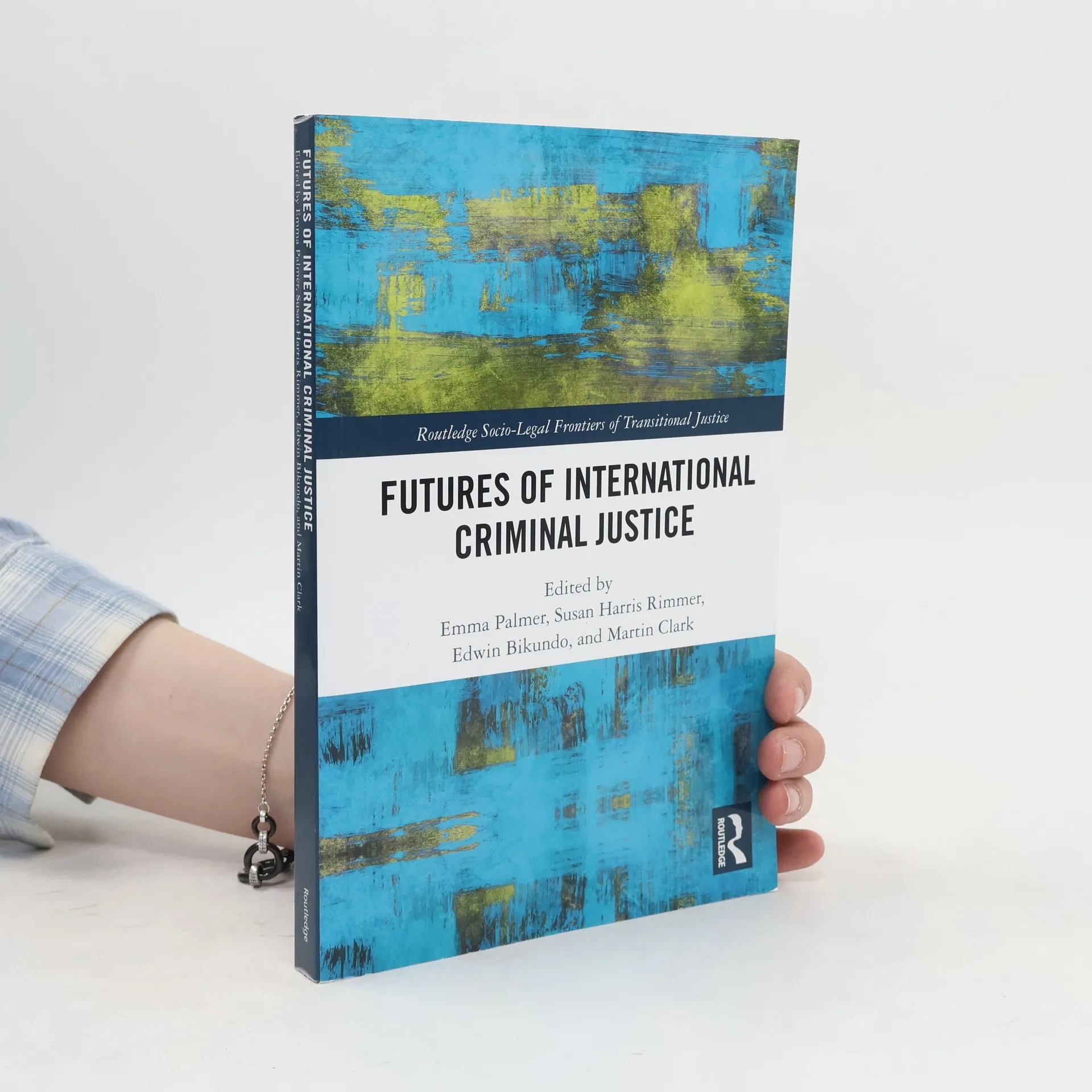


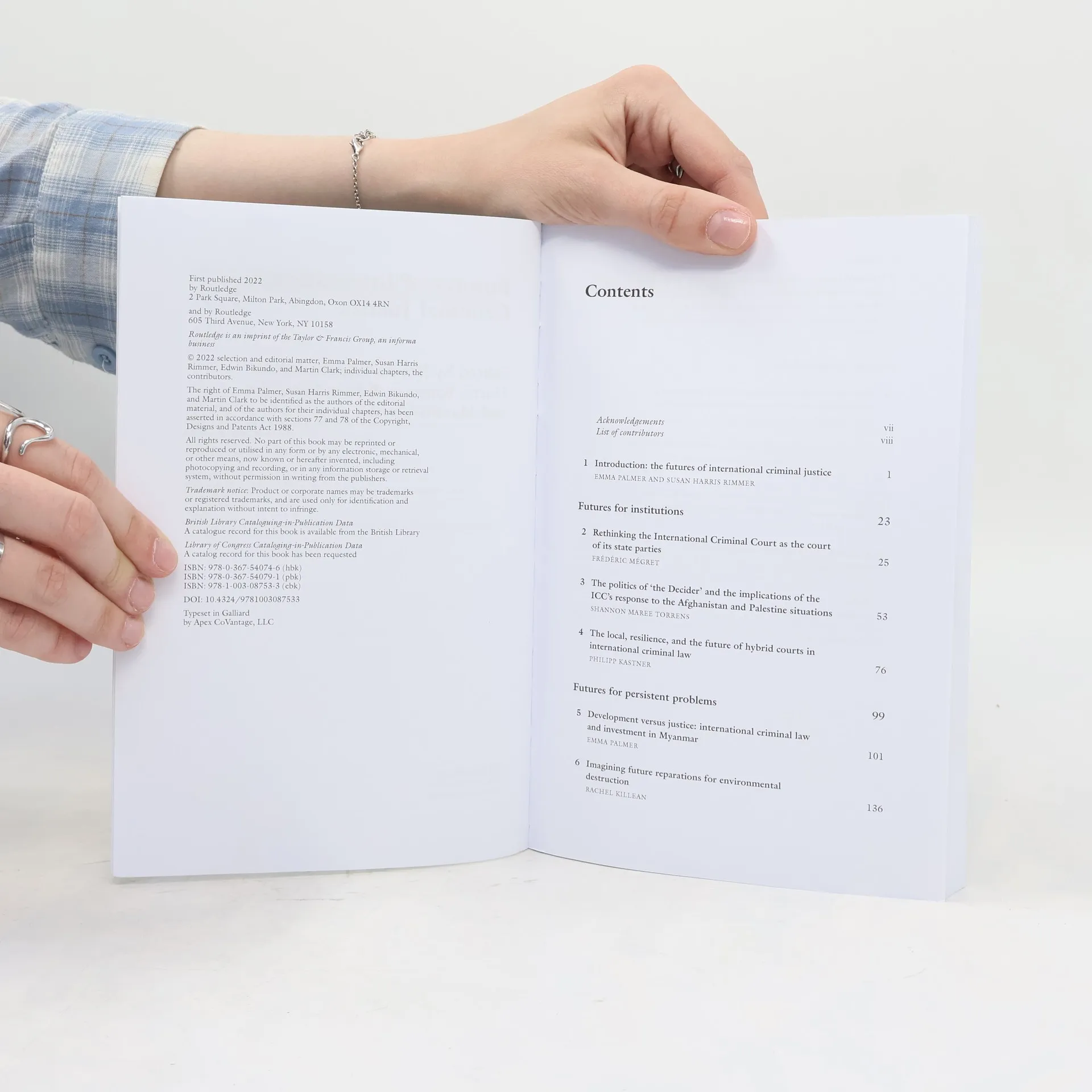
Más información sobre el libro
"This collection identifies and discusses problems and opportunities for the theory and practice of international criminal justice. The International Criminal Court and project of prosecuting international atrocity crimes have faced multiple challenges and critiques. In recent times, these have included changes in technology, the conduct of armed conflict, the environment, and geopolitics. The mostly emerging contributors to this collection draw on diverse socio-legal research frameworks to discuss proposals for the futures of international criminal justice. These include addressing accountability gaps and under-examined or emerging areas of criminality at, but also beyond, the International Criminal Court, especially related to technology and the environment. The book discusses the tensions between universalism and localisation, as well as the regionalisation of international criminal justice and how these approaches might adapt to dynamic organisational, political and social structures, at the ICC and beyond"--
Compra de libros
Routledge Socio-Legal Frontiers of Transitional Justice: Futures of International Criminal Justice, Emma Palmer, Susan Harris Rimmer, Edwin Bikundo, Martin Clark
- Idioma

- Publicado en
- 2022
- Encuadernación
- (Tapa blanda),
- Estado del libro
- Bueno
- Precio
- 12,49 €
Métodos de pago
Nadie lo ha calificado todavía.
- Título
- Routledge Socio-Legal Frontiers of Transitional Justice: Futures of International Criminal Justice
- Idioma
- Inglés
- Editorial
- Routledge
- Publicado en
- 2022
- Formato
- Tapa blanda
- Páginas
- 266
- ISBN10
- 0367540797
- ISBN13
- 9780367540791
- Serie
- Etiquetas
- Comercio, Temática jurídica, Tecnología, Desarrollo, Derecho penal, Derecho Internacional, Criminología, República Centroafricana, Responsabilidad penal
- Descripción
- "This collection identifies and discusses problems and opportunities for the theory and practice of international criminal justice. The International Criminal Court and project of prosecuting international atrocity crimes have faced multiple challenges and critiques. In recent times, these have included changes in technology, the conduct of armed conflict, the environment, and geopolitics. The mostly emerging contributors to this collection draw on diverse socio-legal research frameworks to discuss proposals for the futures of international criminal justice. These include addressing accountability gaps and under-examined or emerging areas of criminality at, but also beyond, the International Criminal Court, especially related to technology and the environment. The book discusses the tensions between universalism and localisation, as well as the regionalisation of international criminal justice and how these approaches might adapt to dynamic organisational, political and social structures, at the ICC and beyond"--