


Más información sobre el libro
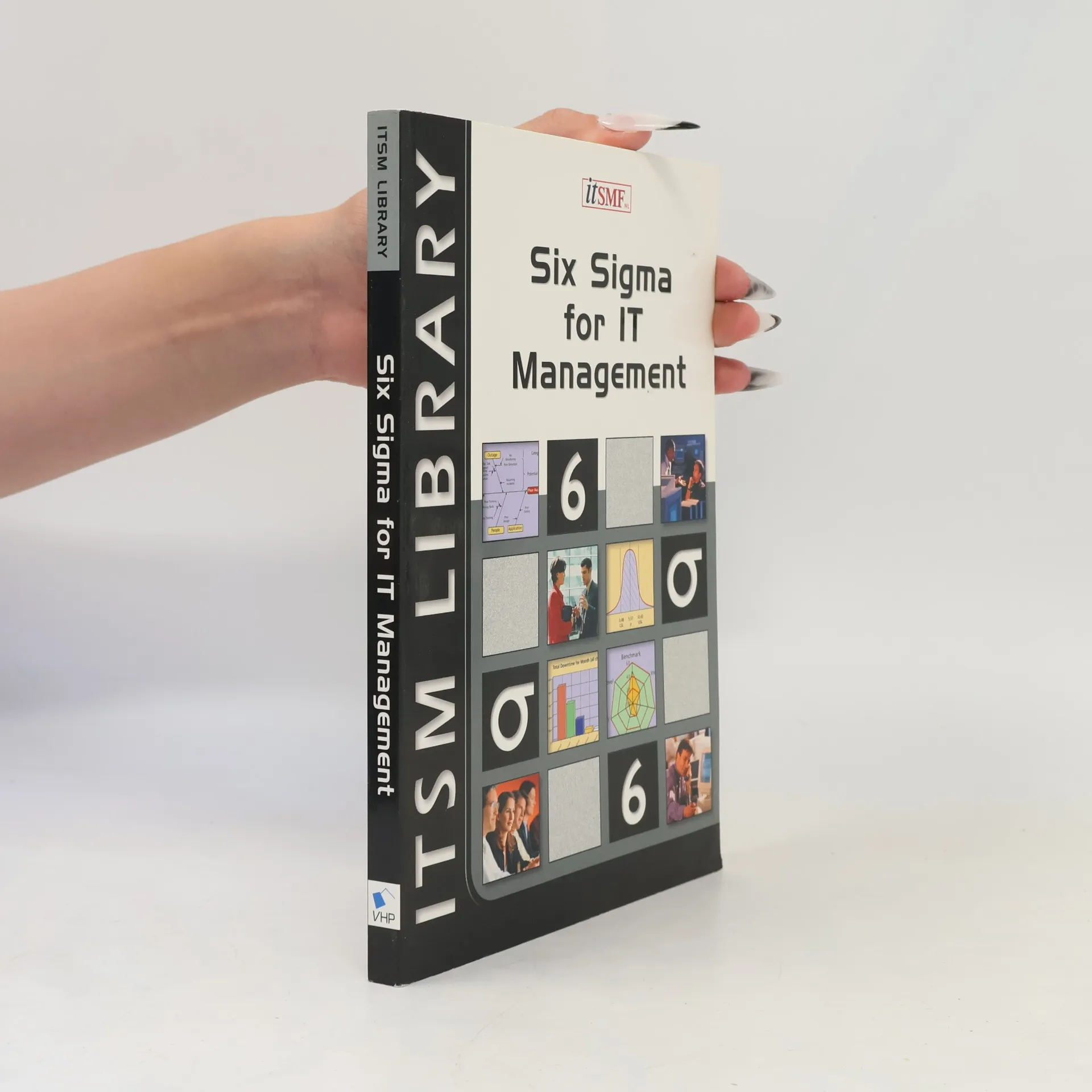
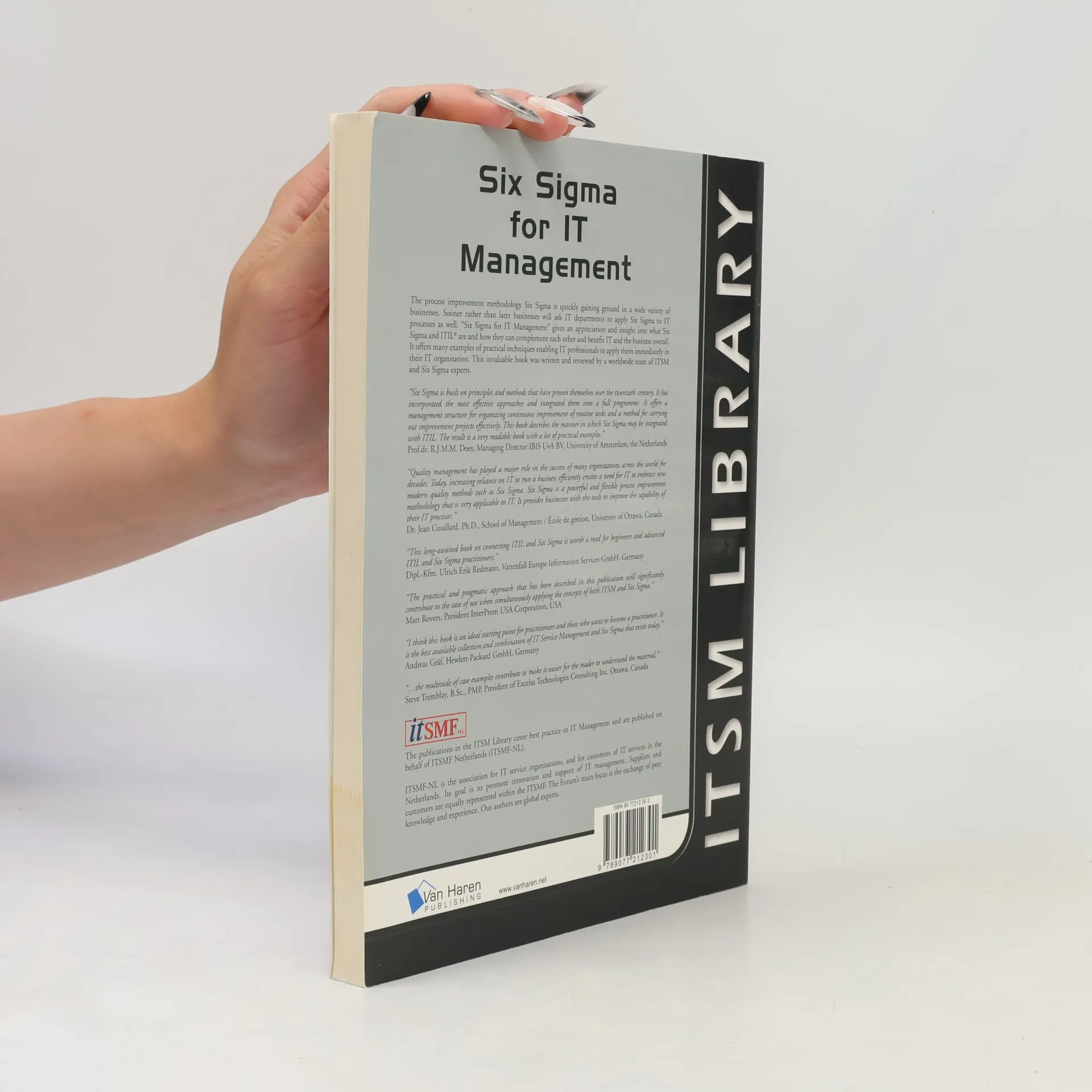
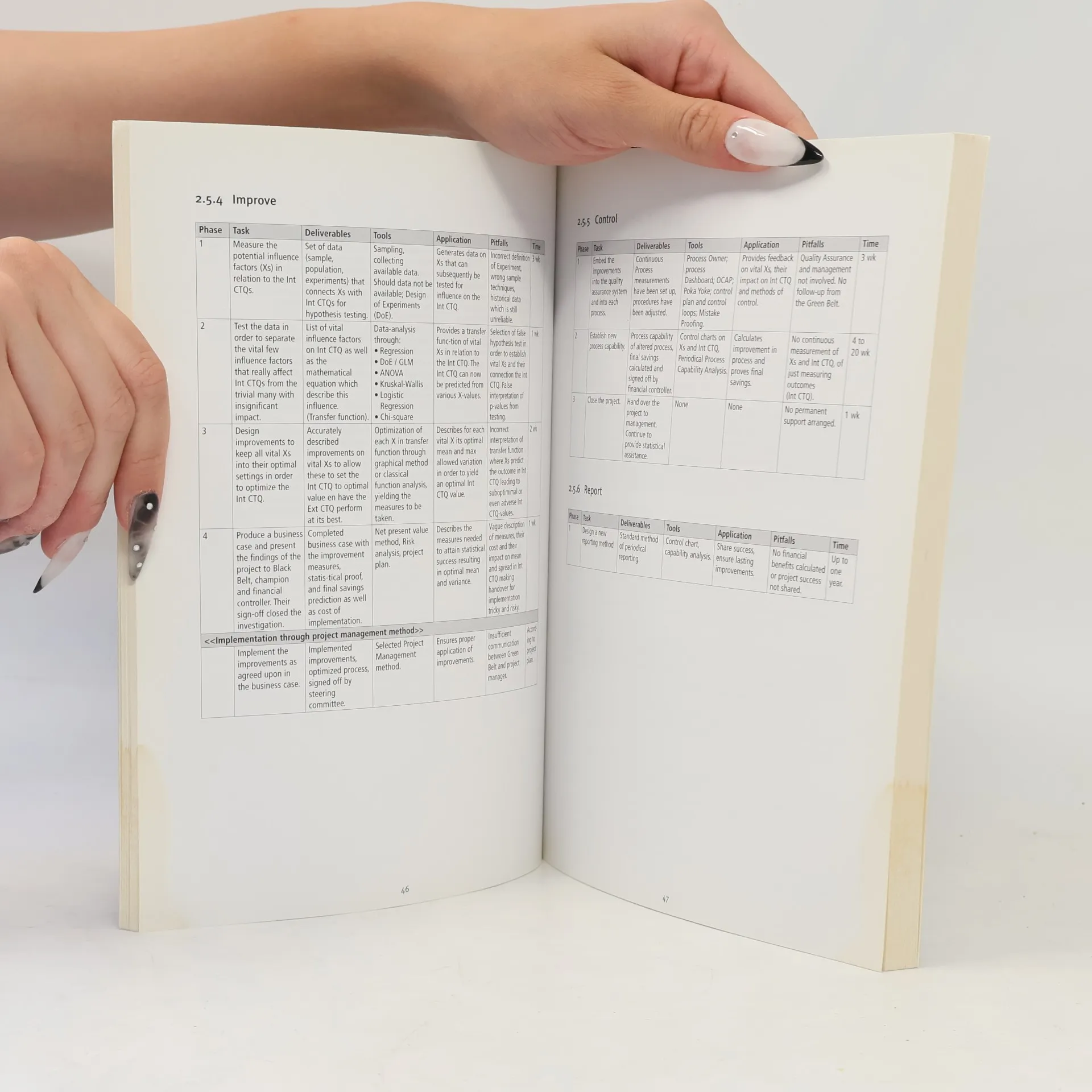
This book offers a coherent view and guidance for successfully implementing the Six Sigma approach in IT service organizations, aiming to integrate ITIL and Six Sigma for continuous improvement. Six Sigma employs a quantitative methodology focused on reducing variation in process outcomes, whether for tangible products like cars or intangible services. The production process consists of various steps, events, or activities, and Six Sigma evaluates each step by dissecting the elements, identifying critical characteristics, mapping related processes, assessing capabilities, uncovering weaknesses, and enhancing process capabilities. By following these steps, businesses can elevate their performance standards. As IT has become essential to business operations, this book illustrates how IT can act as an enabler for improved business processes, using the Six Sigma framework to measure outcomes consistently. While ITIL outlines the "what" of Service Management, Six Sigma details the "how" of process improvement, creating a synergistic approach to enhance the quality of IT service delivery and support. Additionally, Six Sigma provides metrics for process outcomes and a standardized method for utilizing these metrics effectively.
Compra de libros
Six Sigma for IT Management, Rajeev Andharia, Sven Den Boer, Melvin Harteveld, Patrick L Musto, Silva Prickel, Linh C Ho
- Idioma

- Publicado en
- 2006
- Encuadernación
- (Tapa blanda),
- Estado del libro
- Dañado
- Precio
- 2,45 €
Métodos de pago
Nadie lo ha calificado todavía.
- Idioma
- Inglés
- Editorial
- Van Haren Publishing
- Publicado en
- 2006
- Formato
- Tapa blanda
- Páginas
- 150
- ISBN10
- 9077212302
- ISBN13
- 9789077212301
- Serie
- Etiquetas
- No ficción, Comercio, Negocios & Gestión, Tecnología & Ingeniería, Guías y Manuales, Ordenadores & Internet, Economía, Gestión & Recursos humanos
- Descripción
- This book offers a coherent view and guidance for successfully implementing the Six Sigma approach in IT service organizations, aiming to integrate ITIL and Six Sigma for continuous improvement. Six Sigma employs a quantitative methodology focused on reducing variation in process outcomes, whether for tangible products like cars or intangible services. The production process consists of various steps, events, or activities, and Six Sigma evaluates each step by dissecting the elements, identifying critical characteristics, mapping related processes, assessing capabilities, uncovering weaknesses, and enhancing process capabilities. By following these steps, businesses can elevate their performance standards. As IT has become essential to business operations, this book illustrates how IT can act as an enabler for improved business processes, using the Six Sigma framework to measure outcomes consistently. While ITIL outlines the "what" of Service Management, Six Sigma details the "how" of process improvement, creating a synergistic approach to enhance the quality of IT service delivery and support. Additionally, Six Sigma provides metrics for process outcomes and a standardized method for utilizing these metrics effectively.