

Más información sobre el libro
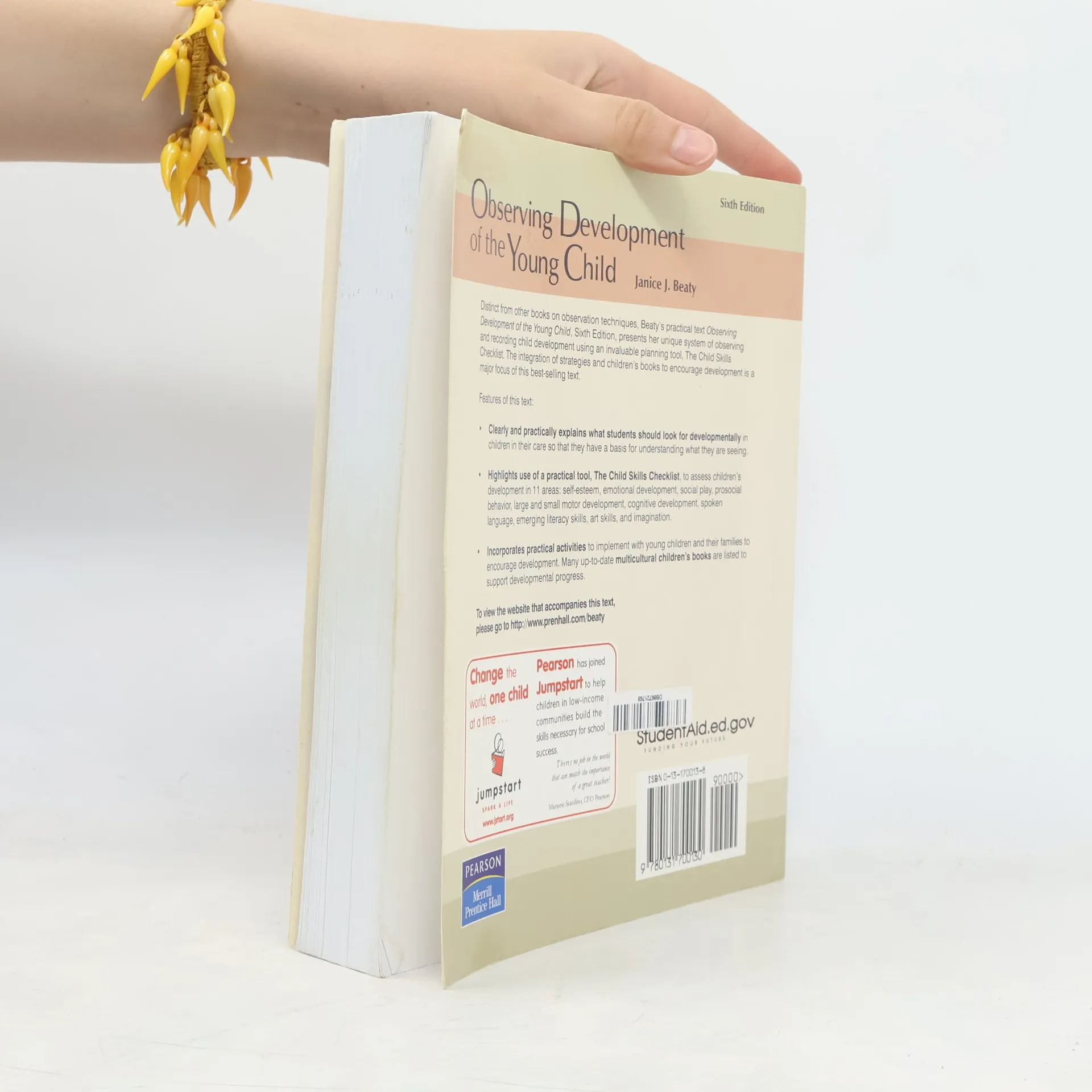
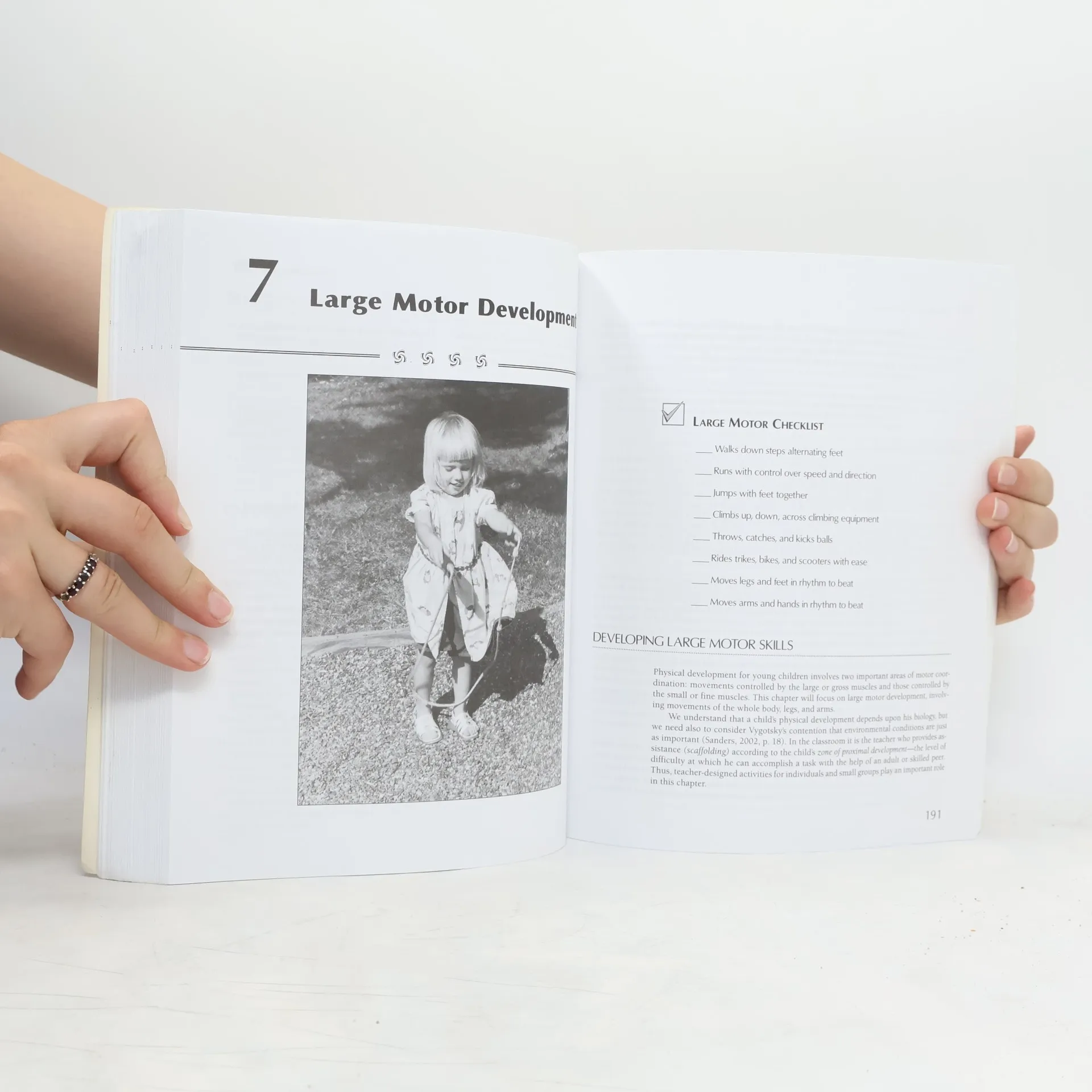
“How can we tell where children stand in their physical, cognitive, socioemotional, language, and creative development? Do we test them? Measure them? Compare them?” This textbook teaches students how to become observers and how to document their findings using one tool: The Child Development Checklist . The author posits that the best method to determine a child’s strengths is for the teacher to observe the young child in the regular classroom based on a particular set of criteria. The reasons for assessing children in this manner are: Once the child’s strengths have been assessed, the book then provides suitable lesson plans and activities to support the child’s development. New To This Edition: NEW! Presents new information on how to become an observer-- How to get started, when and how long to observe, what to look for in children, and how to record. NEW! Suggests a lternative approaches to child assessment– These include visual documentation, i.e. art, photos, videos, and using documentation panels. NEW! Offers new information on self-esteem in young children –Explains how and why a child should develop a secure attachment relationship with a teacher. NEW! Includes new research on the brain showing the importance of physical exercise for children– The research shows that exercises increases brain synapses that improve permanent memory development.
Compra de libros
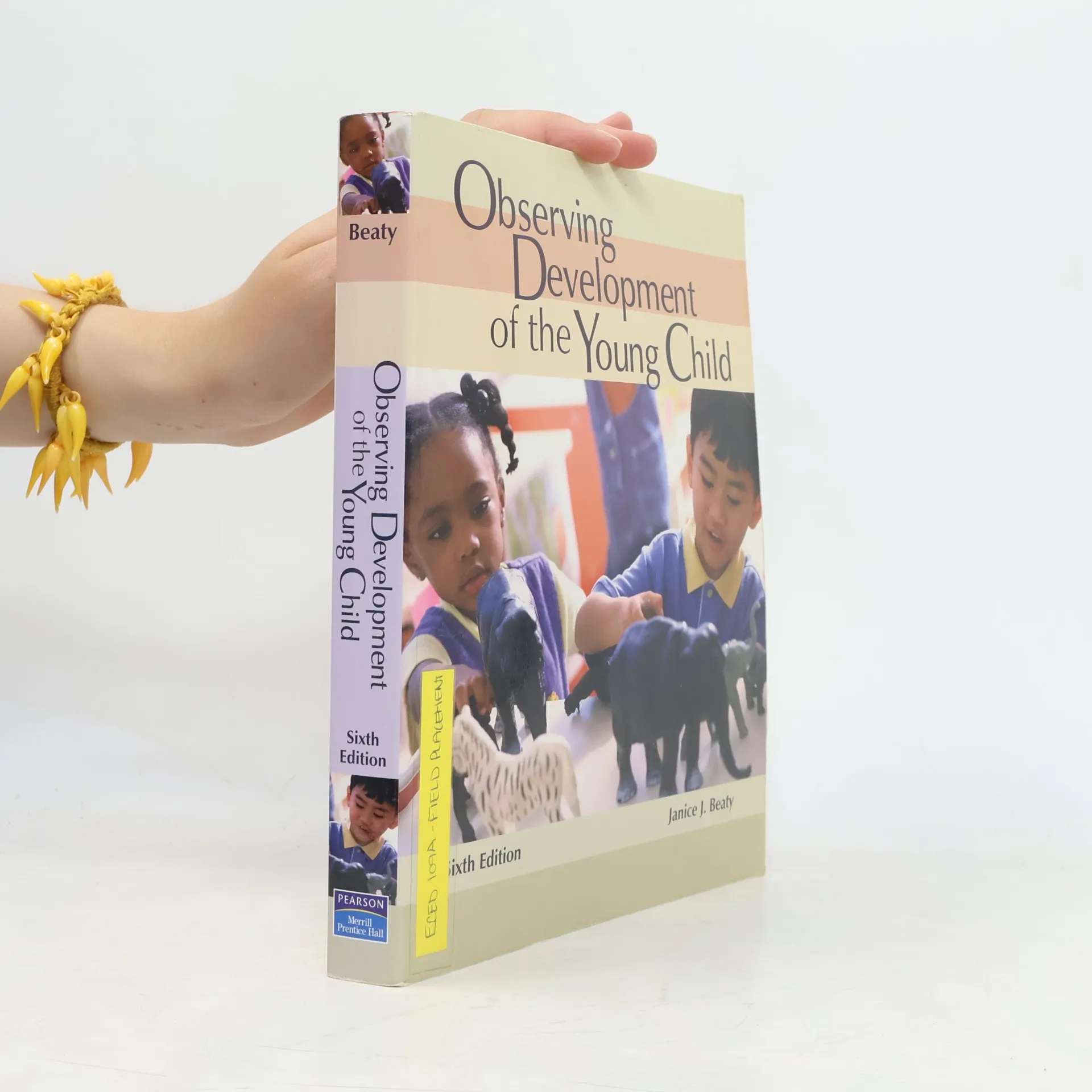
Observing Development of the Young Child, Janice J. Beaty
- Idioma

- Publicado en
- 2006
- Encuadernación
- (Tapa blanda),
- Estado del libro
- Bueno
- Precio
- 3,19 €
Métodos de pago
Nadie lo ha calificado todavía.
- Título
- Observing Development of the Young Child
- Subtítulo
- Sixth Edition
- Idioma
- Inglés
- Autores
- Janice J. Beaty
- Editorial
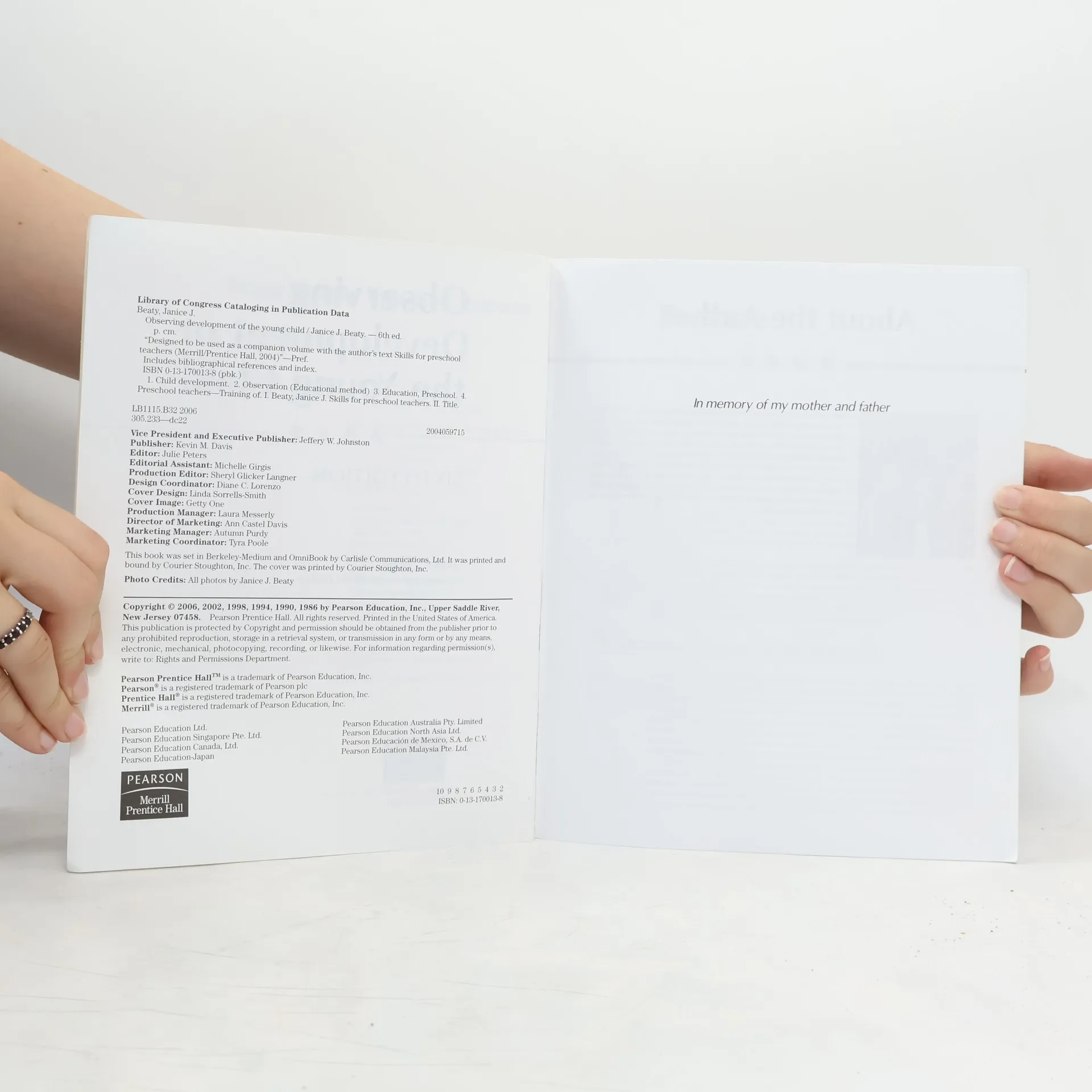
- Pearson College Div
- Publicado en
- 2006
- Formato
- Tapa blanda
- Páginas
- 471
- ISBN10
- 0131700138
- ISBN13
- 9780131700130
- Serie
- Etiquetas
- Temas psicológicos, EE.UU., Educación
- Descripción
- “How can we tell where children stand in their physical, cognitive, socioemotional, language, and creative development? Do we test them? Measure them? Compare them?” This textbook teaches students how to become observers and how to document their findings using one tool: The Child Development Checklist . The author posits that the best method to determine a child’s strengths is for the teacher to observe the young child in the regular classroom based on a particular set of criteria. The reasons for assessing children in this manner are: Once the child’s strengths have been assessed, the book then provides suitable lesson plans and activities to support the child’s development. New To This Edition: NEW! Presents new information on how to become an observer-- How to get started, when and how long to observe, what to look for in children, and how to record. NEW! Suggests a lternative approaches to child assessment– These include visual documentation, i.e. art, photos, videos, and using documentation panels. NEW! Offers new information on self-esteem in young children –Explains how and why a child should develop a secure attachment relationship with a teacher. NEW! Includes new research on the brain showing the importance of physical exercise for children– The research shows that exercises increases brain synapses that improve permanent memory development.