

Más información sobre el libro
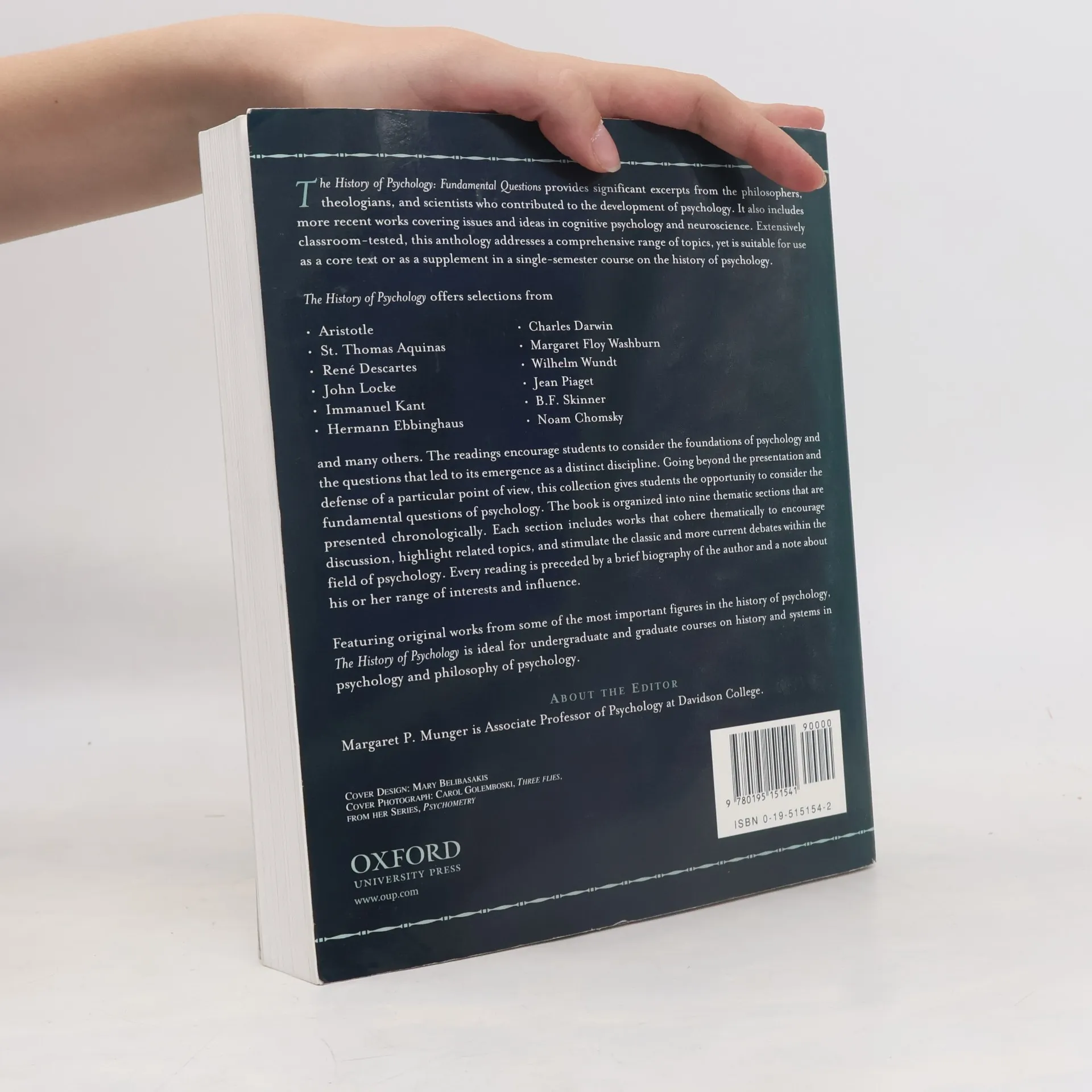
This anthology presents significant excerpts from philosophers, theologians, and scientists who shaped the development of psychology, along with contemporary works in cognitive psychology and neuroscience. Extensively classroom-tested, it covers a wide range of topics, making it suitable as a core text or supplement for a single-semester course on the history of psychology. Selections include influential figures such as Aristotle, St. Thomas Aquinas, Rene Descartes, John Locke, Immanuel Kant, Hermann Ebbinghaus, Charles Darwin, Margaret Floy Washburn, Wilhelm Wundt, Jean Piaget, B.F. Skinner, and Noam Chomsky. The readings prompt students to explore the foundations of psychology and the questions that led to its emergence as a distinct discipline. Organized into nine thematic sections presented chronologically, each section features works that align thematically, fostering discussion and highlighting related topics while stimulating classic and contemporary debates in psychology. Each reading is accompanied by a brief biography of the author, detailing their interests and influence. This collection is ideal for undergraduate and graduate courses on the history and systems of psychology and the philosophy of psychology.
Compra de libros
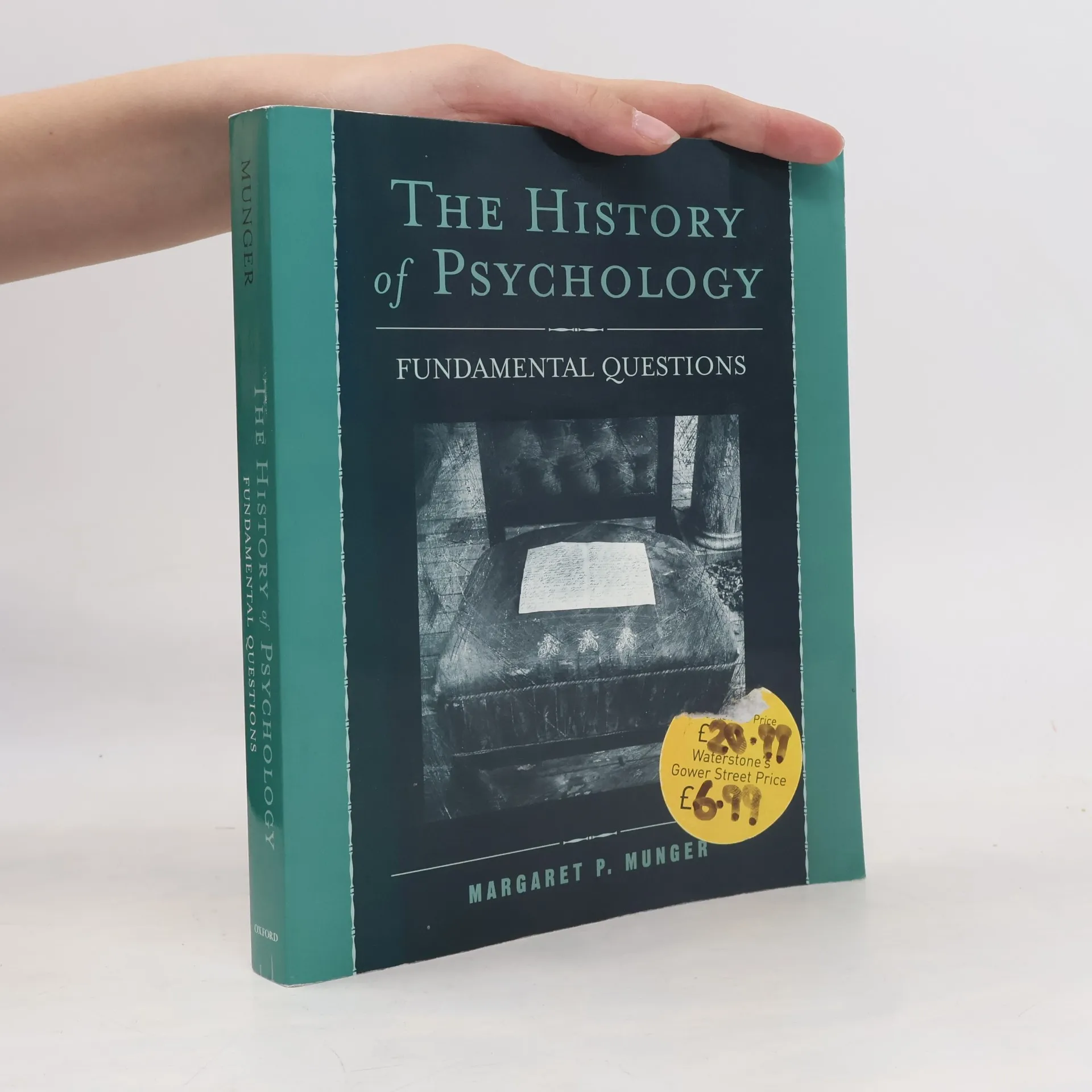
The History of Psychology, Margaret P. Munger
- Idioma

- Publicado en
- 2003
- Encuadernación
- (Tapa blanda)
Métodos de pago
Nadie lo ha calificado todavía.
- Título
- The History of Psychology
- Subtítulo
- Fundamental Questions
- Idioma
- Inglés
- Autores
- Margaret P. Munger
- Editorial
- Oxford University Press
- Publicado en
- 2003
- Formato
- Tapa blanda
- Páginas
- 528
- ISBN10
- 0195151542
- ISBN13
- 9780195151541
- Serie
- Categorías
- Etiquetas
- Descripción
- This anthology presents significant excerpts from philosophers, theologians, and scientists who shaped the development of psychology, along with contemporary works in cognitive psychology and neuroscience. Extensively classroom-tested, it covers a wide range of topics, making it suitable as a core text or supplement for a single-semester course on the history of psychology. Selections include influential figures such as Aristotle, St. Thomas Aquinas, Rene Descartes, John Locke, Immanuel Kant, Hermann Ebbinghaus, Charles Darwin, Margaret Floy Washburn, Wilhelm Wundt, Jean Piaget, B.F. Skinner, and Noam Chomsky. The readings prompt students to explore the foundations of psychology and the questions that led to its emergence as a distinct discipline. Organized into nine thematic sections presented chronologically, each section features works that align thematically, fostering discussion and highlighting related topics while stimulating classic and contemporary debates in psychology. Each reading is accompanied by a brief biography of the author, detailing their interests and influence. This collection is ideal for undergraduate and graduate courses on the history and systems of psychology and the philosophy of psychology.