

Más información sobre el libro
THIS EDITION HAS BEEN REPLACED BY A NEWER EDITION. Juvenal, Decimus Iunius Iuvenalis (ca. AD 60-140), a master of satirical hexameter poetry from Aquinum, crafted incisive satires on various aspects of Roman life. His works critique inept poetry (Satire 1), expose the vices of false philosophers (2), articulate the grievances of the deserving poor (3), and depict the dynamics of clients (5). He satirizes a council meeting under Emperor Domitian (4), vicious women (6), and reflects on the future of letters and learning under a new emperor (7). He emphasizes virtue over birth as the source of nobility (8) and critiques homosexual vice (9). The tone shifts in later satires, exploring themes like the true object of prayer (10), contrasts in eating habits (11), a friend's shipwreck escape, will-hunters (12), guilt and revenge (13), parental examples (14), cannibalism in Egypt (15), and the privileges of soldiers (16, unfinished). Persius Flaccus, Aulus (AD 34-62), of Volaterrae, was of equestrian rank and studied grammar, rhetoric, and Stoic philosophy in Rome. He lived a sober life with his family and friends, including Lucan. His six Satires begin with a prologue and address topics such as the corruption of literature (1), misguided prayers (2), deliberate wrong living (3), insincere politicians (4), praise for Cornutus the Stoic, and the servility of men (5), concluding with a chatty poem to poet Bassus (6).
Compra de libros
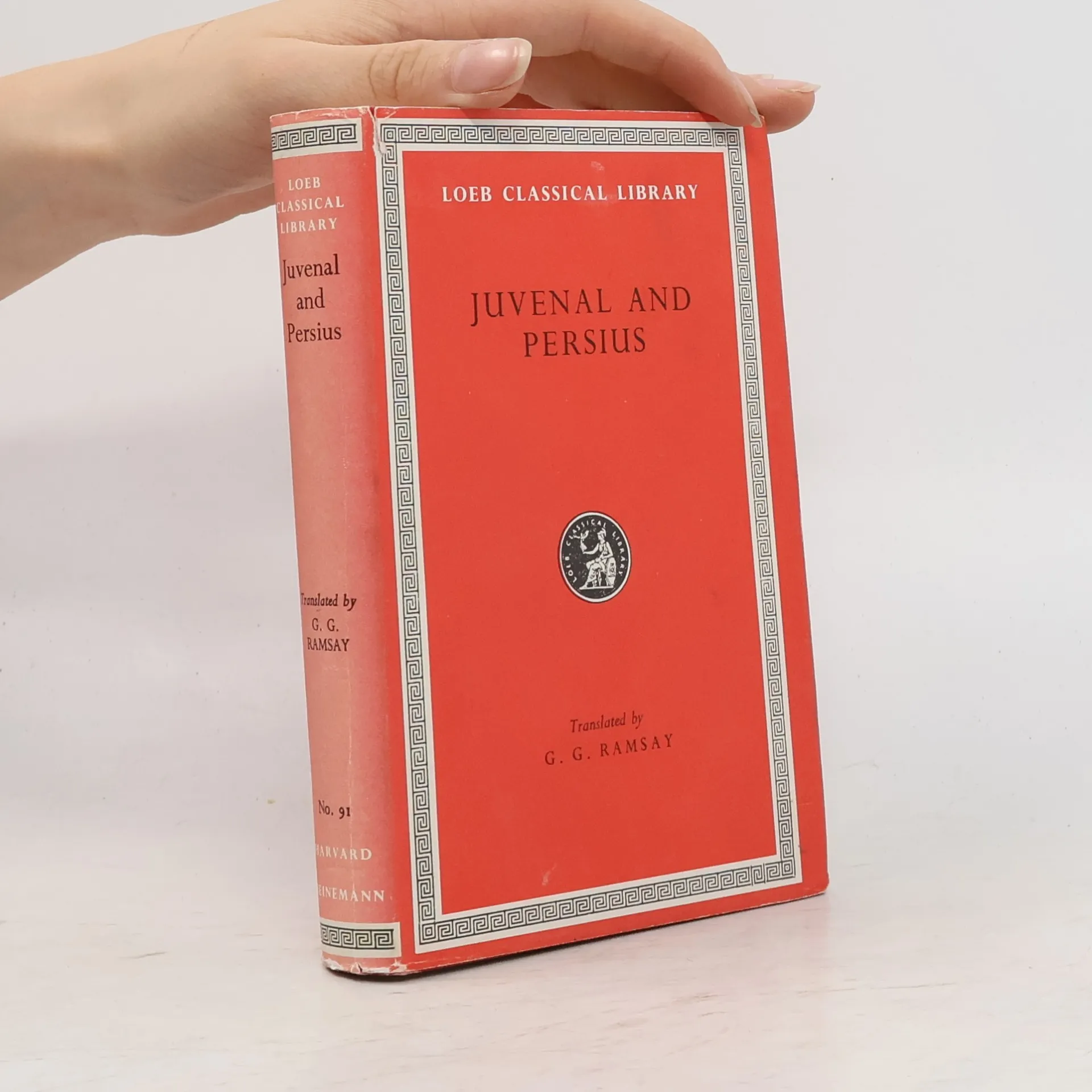
Juvenal and Persius, Aulus Persius Flaccus, G. G. Ramsay, G. P. Goold, Juvenal
- Idioma


- Publicado en
- 1979
- Encuadernación
- (Tapa dura)
Métodos de pago
Nadie lo ha calificado todavía.
- Título
- Juvenal and Persius
- Idioma
- Inglés, Latín
- Autores
- Aulus Persius Flaccus, G. G. Ramsay, G. P. Goold, Juvenal
- Editorial
- Loeb Classical Library
- Publicado en
- 1979
- Formato
- Tapa dura
- Páginas
- 414
- ISBN10
- 0674991028
- ISBN13
- 9780674991026
- Serie
- Etiquetas
- Guías y Manuales
- Descripción
- THIS EDITION HAS BEEN REPLACED BY A NEWER EDITION. Juvenal, Decimus Iunius Iuvenalis (ca. AD 60-140), a master of satirical hexameter poetry from Aquinum, crafted incisive satires on various aspects of Roman life. His works critique inept poetry (Satire 1), expose the vices of false philosophers (2), articulate the grievances of the deserving poor (3), and depict the dynamics of clients (5). He satirizes a council meeting under Emperor Domitian (4), vicious women (6), and reflects on the future of letters and learning under a new emperor (7). He emphasizes virtue over birth as the source of nobility (8) and critiques homosexual vice (9). The tone shifts in later satires, exploring themes like the true object of prayer (10), contrasts in eating habits (11), a friend's shipwreck escape, will-hunters (12), guilt and revenge (13), parental examples (14), cannibalism in Egypt (15), and the privileges of soldiers (16, unfinished). Persius Flaccus, Aulus (AD 34-62), of Volaterrae, was of equestrian rank and studied grammar, rhetoric, and Stoic philosophy in Rome. He lived a sober life with his family and friends, including Lucan. His six Satires begin with a prologue and address topics such as the corruption of literature (1), misguided prayers (2), deliberate wrong living (3), insincere politicians (4), praise for Cornutus the Stoic, and the servility of men (5), concluding with a chatty poem to poet Bassus (6).