




Parámetros
Más información sobre el libro
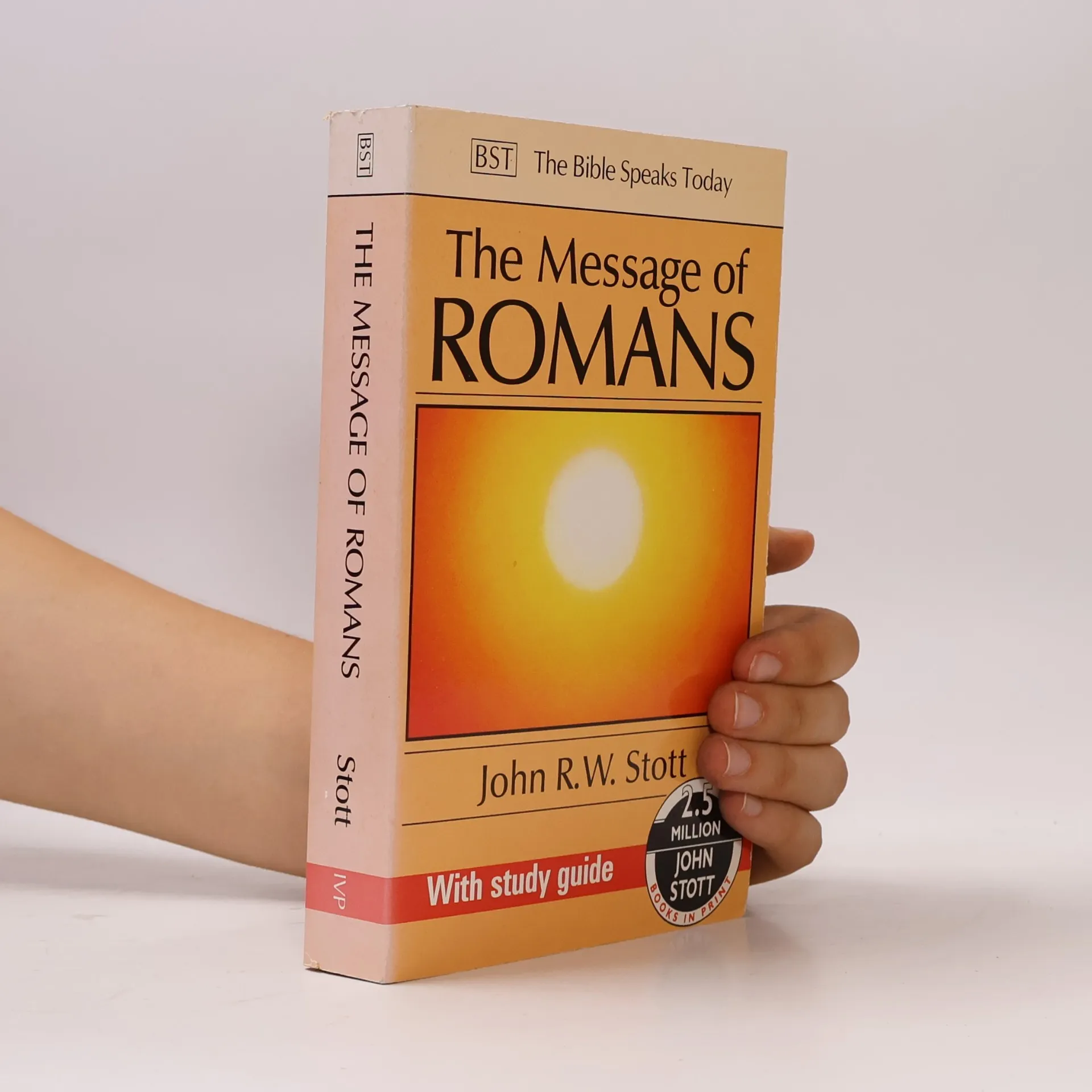
Paul's letter to the young church in Rome has dramatically influenced Christians through the ages. It has been described as 'a gateway into heaven'. In his letter Paul gives a complete picture of the gospel - the fullest and grandest in the New Testament. His horizons are vast, taking in time and eternity, the past, present and future of humanity, and the great themes of justification, sanctification and glorification. This is the most personally rooted of John Stott's expositions, for he confesses to having re-encountered Paul's letter constantly throughout his Christian life. At the same time, he interacts with other commentators, some of whom are challenging time-honoured traditional interpretations. He sees Romans as a Christian manifesto for our increasingly unstable world, emphasizing the good news of freedom through Jesus Christ. Paul's vision of this freedom is astonishing. It overcomes ethnic conflict, the darkness of moral guilt, condemnation from God and alienation from others. It is a freedom to serve God and our neighbours in love.
Compra de libros
The Message of Romans, John Stott, David Stone
- Idioma

- Publicado en
- 1994
- Encuadernación
- (Tapa blanda)
Métodos de pago
Nadie lo ha calificado todavía.
- Título
- The Message of Romans
- Subtítulo
- With Study Guide
- Idioma
- Inglés
- Autores
- John Stott, David Stone
- Editorial
- Inter-Varsity Press
- Publicado en
- 1994
- Formato
- Tapa blanda
- ISBN10
- 0851108261
- ISBN13
- 9780851108261
- Serie
- Etiquetas
- Temas religiosos, Cristianismo, Biblia, Nuevo Testamento
- Descripción
- Paul's letter to the young church in Rome has dramatically influenced Christians through the ages. It has been described as 'a gateway into heaven'. In his letter Paul gives a complete picture of the gospel - the fullest and grandest in the New Testament. His horizons are vast, taking in time and eternity, the past, present and future of humanity, and the great themes of justification, sanctification and glorification. This is the most personally rooted of John Stott's expositions, for he confesses to having re-encountered Paul's letter constantly throughout his Christian life. At the same time, he interacts with other commentators, some of whom are challenging time-honoured traditional interpretations. He sees Romans as a Christian manifesto for our increasingly unstable world, emphasizing the good news of freedom through Jesus Christ. Paul's vision of this freedom is astonishing. It overcomes ethnic conflict, the darkness of moral guilt, condemnation from God and alienation from others. It is a freedom to serve God and our neighbours in love.