

Más información sobre el libro
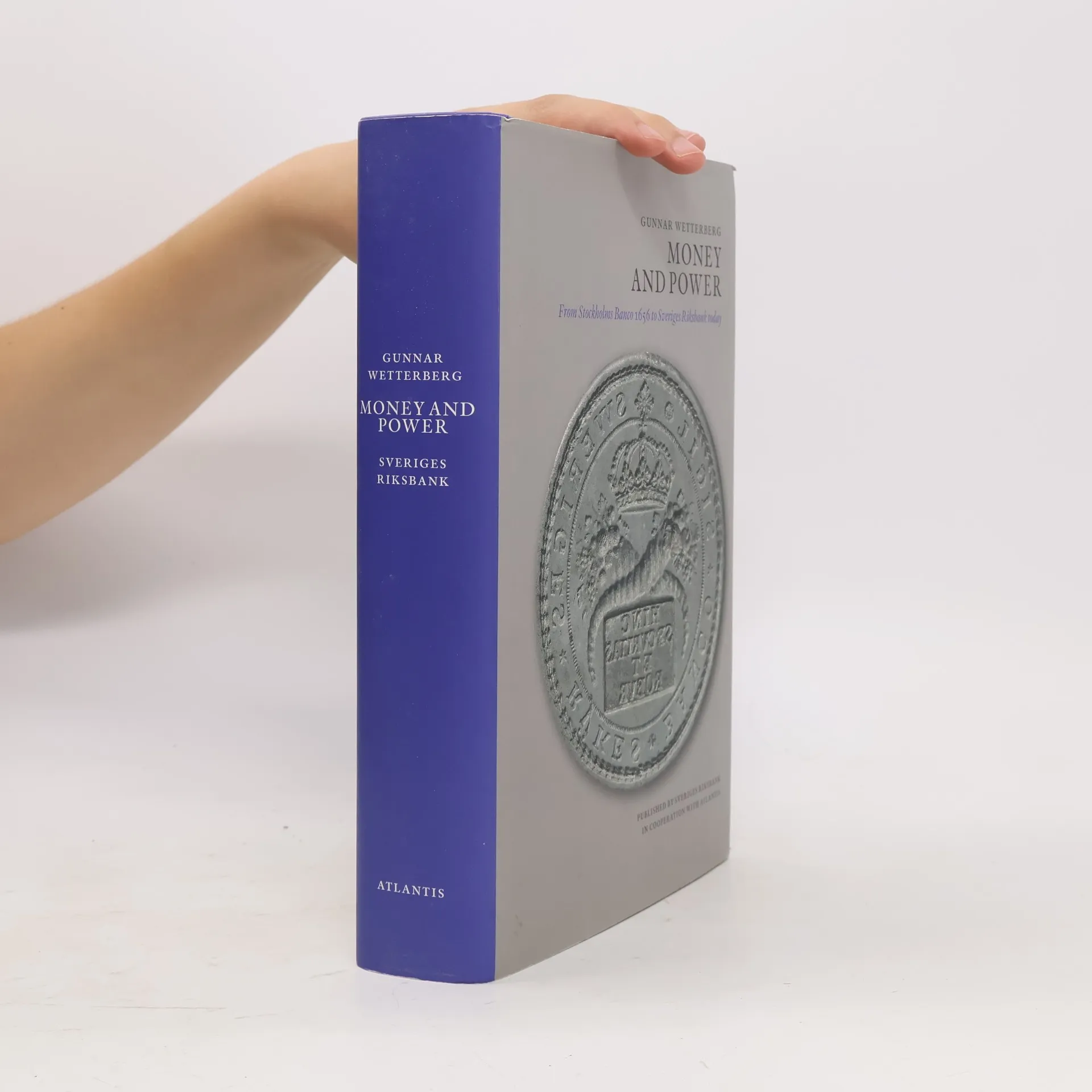
Sveriges Riksbank, the world's oldest central bank, has been a central factor in Swedish power politics. The struggle began soon after Johan Palmstruch obtained a royal charter for Stockholms Banco in 1696. When his bank failed, it was reconstructed by the Estates of the Realm. Karl XI and Karl XII then used the Bank to finance wars. In the 18th century the Bank funded manufacturing and the Crown's until campaigns. In the 19th century it was used to oppose A.O. Wallenberg and the commercial banks. As a modern central bank in the past century and more, the Riksbank has been a key player in economic management. Its monetary policy has been tested in a succession of economic crises: the straits of two world wars, Ivar Kruger's time and the Great Depression, the era of regulation, the subsequent deregulation, and the demise of a fixed exchange rate in 1992, when the interest rate was raised to 500 per cent. Gunnar Wetterberg portrays the essential features of this story from Stockholms Banco to the Riksbank of today. In doing so he touches on many issues that are germane to financial crises today and in the future.
Compra de libros
Money and Power, Gunnar Wetterberg
- Idioma

- Publicado en
- 2009
- Encuadernación
- (Tapa dura)
Métodos de pago
Nadie lo ha calificado todavía.
- Título
- Money and Power
- Subtítulo
- From Stockholms Banco 1656 to Sveriges Riksbank Today
- Idioma
- Inglés
- Autores
- Gunnar Wetterberg
- Editorial
- Sveriges Riksbank
- Publicado en
- 2009
- Formato
- Tapa dura
- ISBN10
- 9173532916
- ISBN13
- 9789173532914
- Serie
- Etiquetas
- Descripción
- Sveriges Riksbank, the world's oldest central bank, has been a central factor in Swedish power politics. The struggle began soon after Johan Palmstruch obtained a royal charter for Stockholms Banco in 1696. When his bank failed, it was reconstructed by the Estates of the Realm. Karl XI and Karl XII then used the Bank to finance wars. In the 18th century the Bank funded manufacturing and the Crown's until campaigns. In the 19th century it was used to oppose A.O. Wallenberg and the commercial banks. As a modern central bank in the past century and more, the Riksbank has been a key player in economic management. Its monetary policy has been tested in a succession of economic crises: the straits of two world wars, Ivar Kruger's time and the Great Depression, the era of regulation, the subsequent deregulation, and the demise of a fixed exchange rate in 1992, when the interest rate was raised to 500 per cent. Gunnar Wetterberg portrays the essential features of this story from Stockholms Banco to the Riksbank of today. In doing so he touches on many issues that are germane to financial crises today and in the future.