

Más información sobre el libro
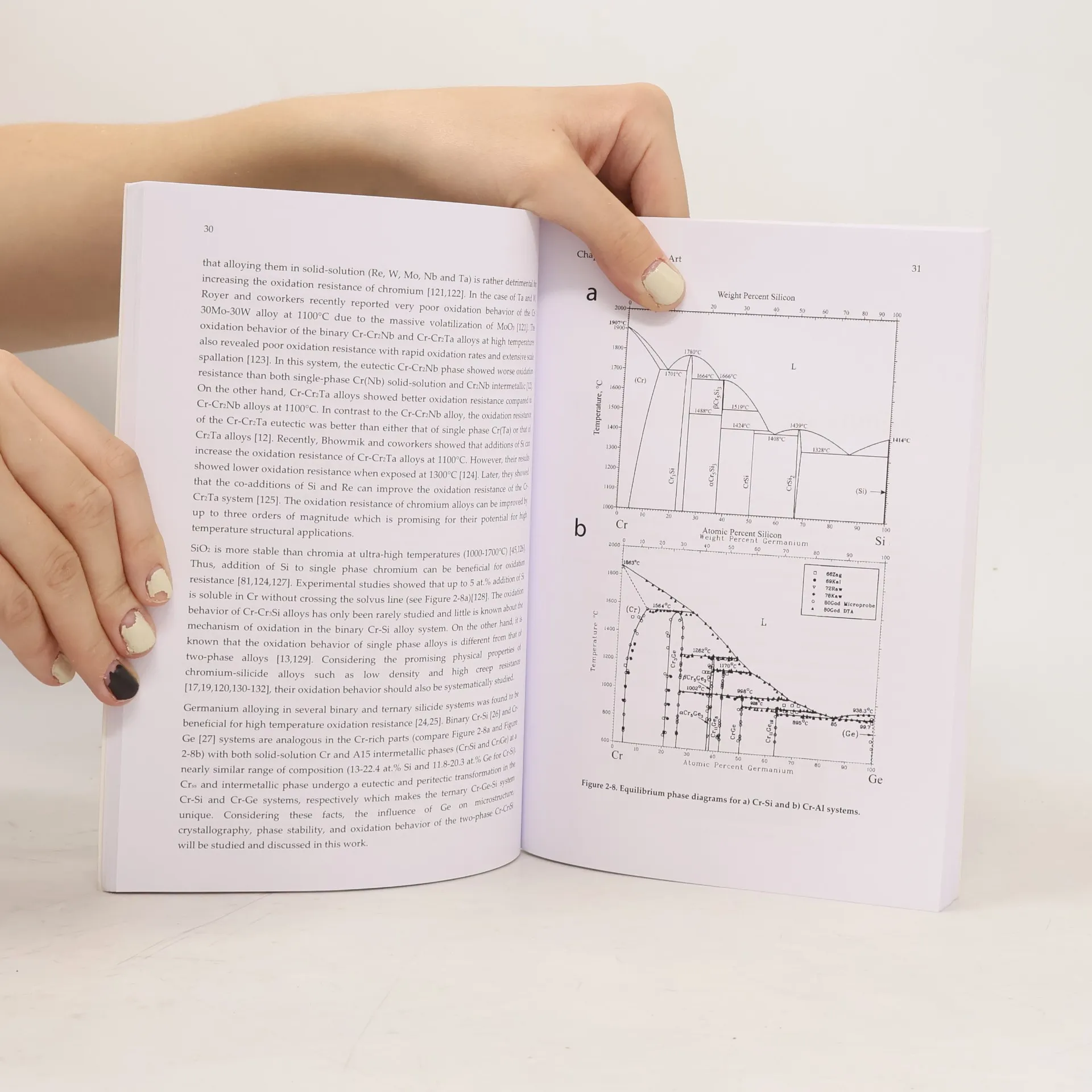
This work investigates oxidation and nitridation in the binary Cr-Si system, focusing on the kinetics and thermodynamics of oxidation through a systematic approach. The oxidation and nitridation behavior of individual phases—solid-solution phase (Crss) and silicide phase (A15)—were studied separately, examining short and long-term exposure kinetics, thermodynamic stability, and post-exposure characterization of scale and subscale morphologies. Results indicate that chromium is the primary element in the oxidation process, making these alloys significant chromia formers. Notably, localized SiO₂ formation plays a crucial role in reducing oxidation kinetics, with the oxidation rate of chromium decreasing dramatically with the addition of just 3 at.% Si. The A15 Cr₃Si phase developed a continuous SiO₂ layer during long-term exposure. In a two-phase eutectic alloy, both phases oxidized cooperatively, leading to chromium depletion and the formation of an A15 layer at the alloy-scale interface. The influence of nitrogen as an oxidant was also examined, revealing that a chromium subnitride layer grows via inward nitrogen diffusion, while Si significantly hinders nitridation. The A15 silicide remains stable under high nitrogen pressures and acts as a protective barrier. Further exploration of the ternary Cr-Ge-Si system showed that Ge stabilizes the A15 phase and maintains a fine-lamellar microstructure. This approach notably improved
Actualmente hay del libro Oxidation-Nitridation of chromium at high temperatures and its mitigation by alloying (2017) en stock.
Compra de libros
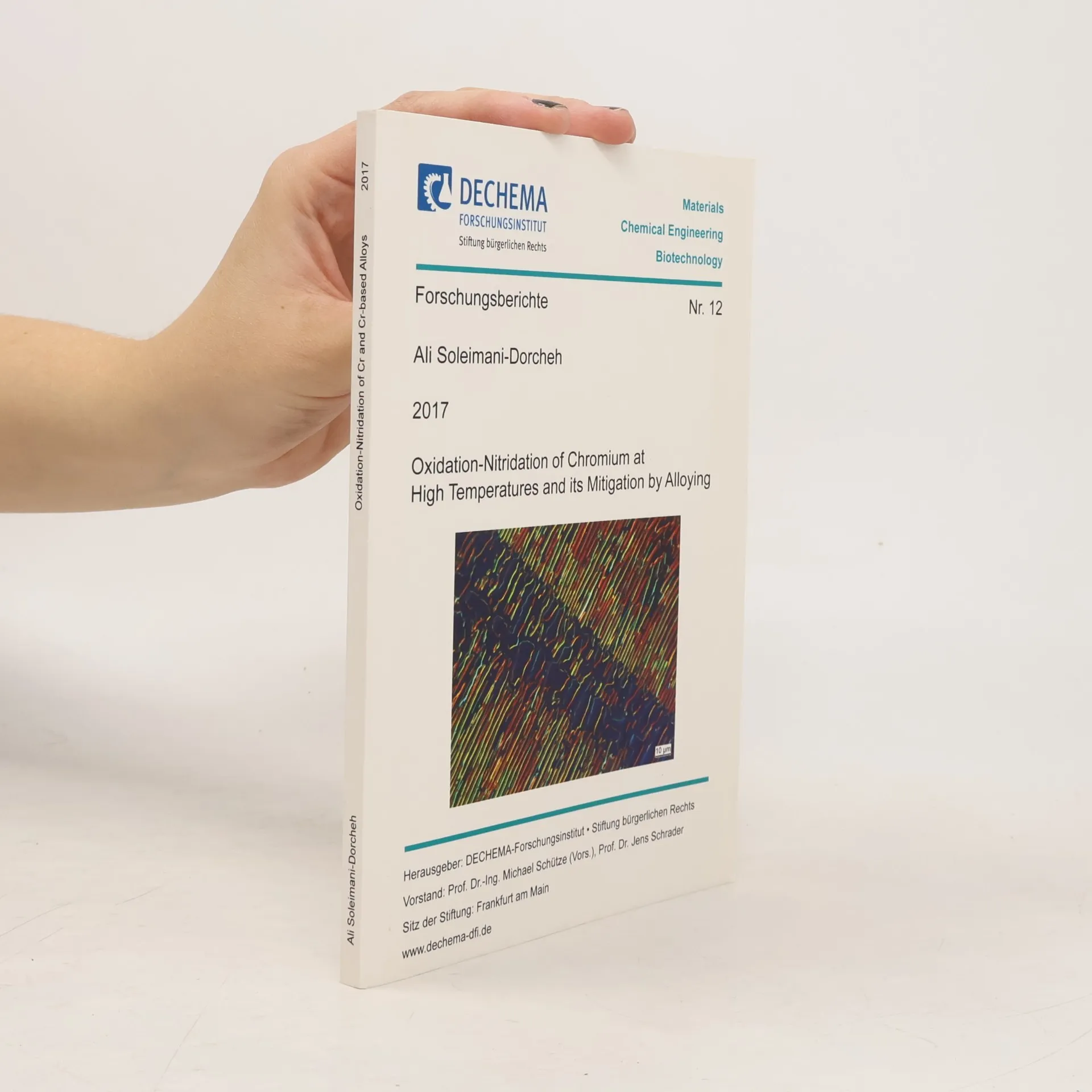
Oxidation-Nitridation of chromium at high temperatures and its mitigation by alloying, Ali Soleimani Dorcheh
- Idioma

- Publicado en
- 2017
- Encuadernación
- (Tapa blanda),
- Estado del libro
- Bueno
- Precio
- 8,09 €
Métodos de pago
Nadie lo ha calificado todavía.
- Título
- Oxidation-Nitridation of chromium at high temperatures and its mitigation by alloying
- Idioma
- Inglés
- Autores
- Ali Soleimani Dorcheh
- Editorial
- Shaker
- Publicado en
- 2017
- Formato
- Tapa blanda
- Páginas
- 130
- ISBN10
- 3844050787
- ISBN13
- 9783844050783
- Serie
- Categorías
- Descripción
- This work investigates oxidation and nitridation in the binary Cr-Si system, focusing on the kinetics and thermodynamics of oxidation through a systematic approach. The oxidation and nitridation behavior of individual phases—solid-solution phase (Crss) and silicide phase (A15)—were studied separately, examining short and long-term exposure kinetics, thermodynamic stability, and post-exposure characterization of scale and subscale morphologies. Results indicate that chromium is the primary element in the oxidation process, making these alloys significant chromia formers. Notably, localized SiO₂ formation plays a crucial role in reducing oxidation kinetics, with the oxidation rate of chromium decreasing dramatically with the addition of just 3 at.% Si. The A15 Cr₃Si phase developed a continuous SiO₂ layer during long-term exposure. In a two-phase eutectic alloy, both phases oxidized cooperatively, leading to chromium depletion and the formation of an A15 layer at the alloy-scale interface. The influence of nitrogen as an oxidant was also examined, revealing that a chromium subnitride layer grows via inward nitrogen diffusion, while Si significantly hinders nitridation. The A15 silicide remains stable under high nitrogen pressures and acts as a protective barrier. Further exploration of the ternary Cr-Ge-Si system showed that Ge stabilizes the A15 phase and maintains a fine-lamellar microstructure. This approach notably improved