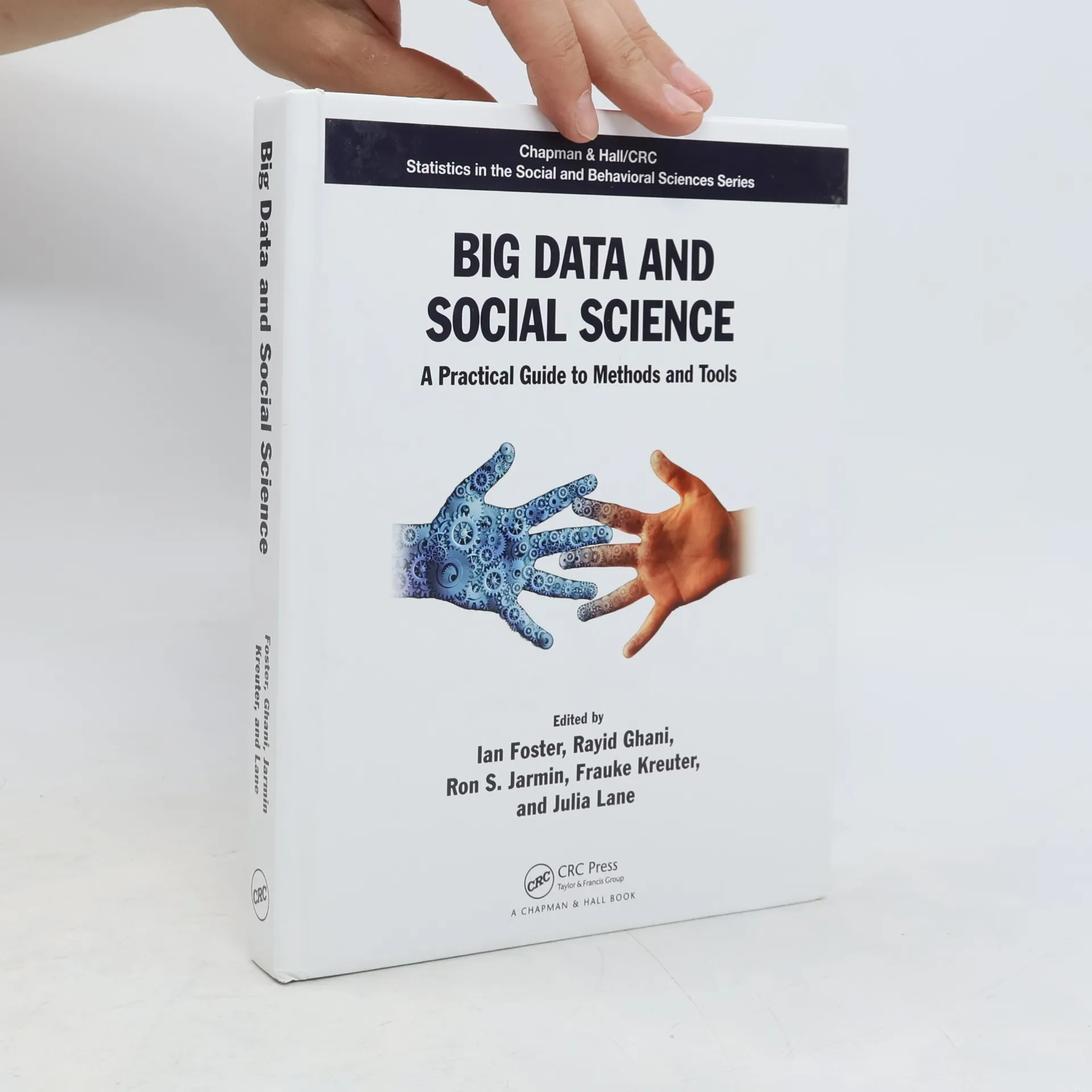
Both Traditional Students and Working Professionals Acquire the Skills to Analyze Social Problems. Big Data and Social Science: A Practical Guide to Methods and Tools shows how to apply data science to real-world problems in both research and the practice. The book provides practical guidance on combining methods and tools from computer science, statistics, and social science. This concrete approach is illustrated throughout using an important national problem, the quantitative study of innovation. The text draws on the expertise of prominent leaders in statistics, the social sciences, data science, and computer science to teach students how to use modern social science research principles as well as the best analytical and computational tools. It uses a real-world challenge to introduce how these tools are used to identify and capture appropriate data, apply data science models and tools to that data, and recognize and respond to data errors and limitations. For more information, including sample chapters and news, please visit the author's website.
Chapman & Hall/CRC Estadística en las Ciencias Sociales y del Comportamiento Serie
Esta serie explora el papel crucial de los métodos estadísticos para el análisis de conjuntos de datos grandes y complejos en las ciencias sociales y del comportamiento. Captura los desarrollos de vanguardia en la metodología estadística, enfatizando su relevancia para campos como la sociología, la psicología, la economía y la ciencia política. La colección promueve la aplicación sólida de herramientas estadísticas, econométricas y psicométricas a través de obras de referencia, libros de texto y manuales, que incluyen ejemplos del mundo real y estudios de caso. Está dirigida a estadísticos aplicados, estudiantes e investigadores en estas diversas disciplinas.