

Bookbot

Comunicación, Sociedad y Política

Esta serie profundiza en el impacto transformador de las nuevas tecnologías de comunicación en la política y las relaciones interpersonales en la sociedad global. Examina cómo los mensajes personalizados y los métodos sofisticados dan forma a los límites entre la información, el entretenimiento y la publicidad, e incluso trascienden las fronteras nacionales. La serie explora los efectos políticos y sociales de estos sistemas desde puntos de vista nacionales, comparativos y globales. Busca nuevas perspectivas teóricas, basadas en evidencia empírica, sobre el poder en el nuevo orden de la comunicación, enfatizando cuestiones de democracia, igualdad y justicia.

Cosmopolitan Communications
Young People and the Future of News
Comparing Media Systems
Reality Television and Arab Politics
A Virtuous Circle
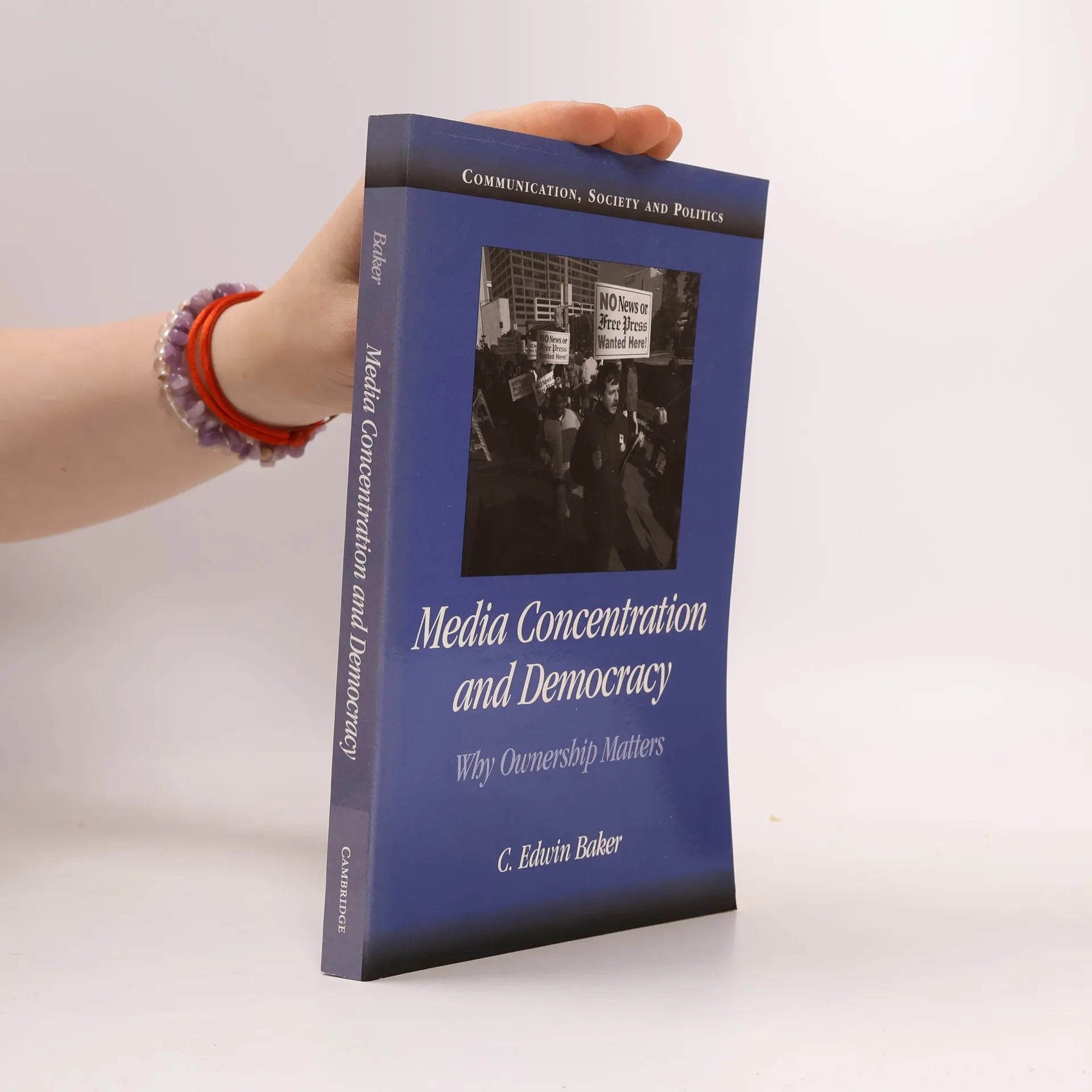
Media Concentration and Democracy
  • This book provides a normative critique of mass media ownership concentration. It emphasizes a democratic need to distribute communicative power more widely and to prevent abuse of media power. It also shows why ownership dispersal can be expected to improve the quality of media content.

    Media Concentration and Democracy
    3,3
  • A Virtuous Circle

    Political Communications in Postindustrial Societies

    • 420 páginas
    • 15 horas de lectura

    Challenging the conventional belief that news media and political parties are to blame for civic malaise, this book delves into the deeper societal factors contributing to public disengagement. It explores the interplay between media, politics, and civic participation, offering a fresh perspective on the roots of disillusionment in contemporary society. Through its analysis, the book encourages readers to reconsider the complexities of civic engagement and the role of various institutions in shaping public discourse.

    A Virtuous Circle
    3,7
  • The book explores the impact of reality television on cultural authenticity, gender relations, and political engagement in the Middle East. It delves into the heated debates sparked by these shows, examining how they reflect and influence societal norms and political dynamics in the region. Through critical analysis, the author highlights the intersection of media and culture, revealing the complexities of identity and representation in contemporary Middle Eastern society.

    Reality Television and Arab Politics
    4,1
  • Comparing Media Systems

    Three Models of Media and Politics

    • 360 páginas
    • 13 horas de lectura

    Focusing on the interplay between media and political systems, this book analyzes media institutions across eighteen West European and North American democracies. It highlights key variations in media systems influenced by political factors and delineates three primary models of media development: Polarized Pluralist, Democratic Corporatist, and Liberal. The author elucidates how these models lead to differing roles of media in politics, providing a comprehensive framework for understanding the complex relationship between media and governance.

    Comparing Media Systems
    3,7
  • Young People and the Future of News traces the practices that are evolving as young people come to see news increasingly as something shared via social networks and social media rather than produced and circulated solely by professional news organizations. The book introduces the concept of connective journalism, clarifying the role of creating and sharing stories online as a key precursor to collective and connective political action. At the center of the story are high school students from low-income minority and immigrant communities who often feel underserved or misrepresented by mainstream media but express a strong interest in politics and their communities. Drawing on in-depth field work in three major urban areas over the course of ten years, Young People and the Future of News sheds light on how young people share news that they think others should know about, express solidarity, and bring into being new publics and counter-publics.

    Young People and the Future of News
    5,0
  • Cosmopolitan Communications

    • 448 páginas
    • 16 horas de lectura

    Focusing on cosmopolitan communications, this book presents a novel theoretical framework that examines how global interactions can threaten cultural diversity. It explores the specific conditions that lead to these dangers, offering insights into the dynamics of communication in a globalized world.

    Cosmopolitan Communications
    4,0
  • Media and the Path to Peace

    • 292 páginas
    • 11 horas de lectura

    This book explores the media's complex role in peace processes, highlighting its impact over time and political contexts. Gadi Wolfsfeld analyzes the Oslo peace process, the Israel-Jordan agreement, and the Good Friday Agreement, revealing how media can hinder or help peace efforts based on varying circumstances.

    Media and the Path to Peace
    3,0
  • Networked News, Racial Divides

    • 282 páginas
    • 10 horas de lectura

    Exploring the dynamics of power and privilege, this book delves into how community trust is fostered within digital media environments. It specifically examines public discussions surrounding racial inequality, highlighting the processes that shape these dialogues and the impact of technology on community interactions and understanding.

    Networked News, Racial Divides
  • Digital Divide

    Civic Engagement, Information Poverty, and the Internet Worldwide

    • 320 páginas
    • 12 horas de lectura

    The book explores the growing divide between those who have access to information and those who do not, highlighting how the Internet may be intensifying these inequalities. It delves into the implications of this digital divide, examining the social, economic, and educational consequences for marginalized communities. Through critical analysis, the author presents potential solutions and calls for greater equity in information access to foster a more inclusive society.

    Digital Divide