

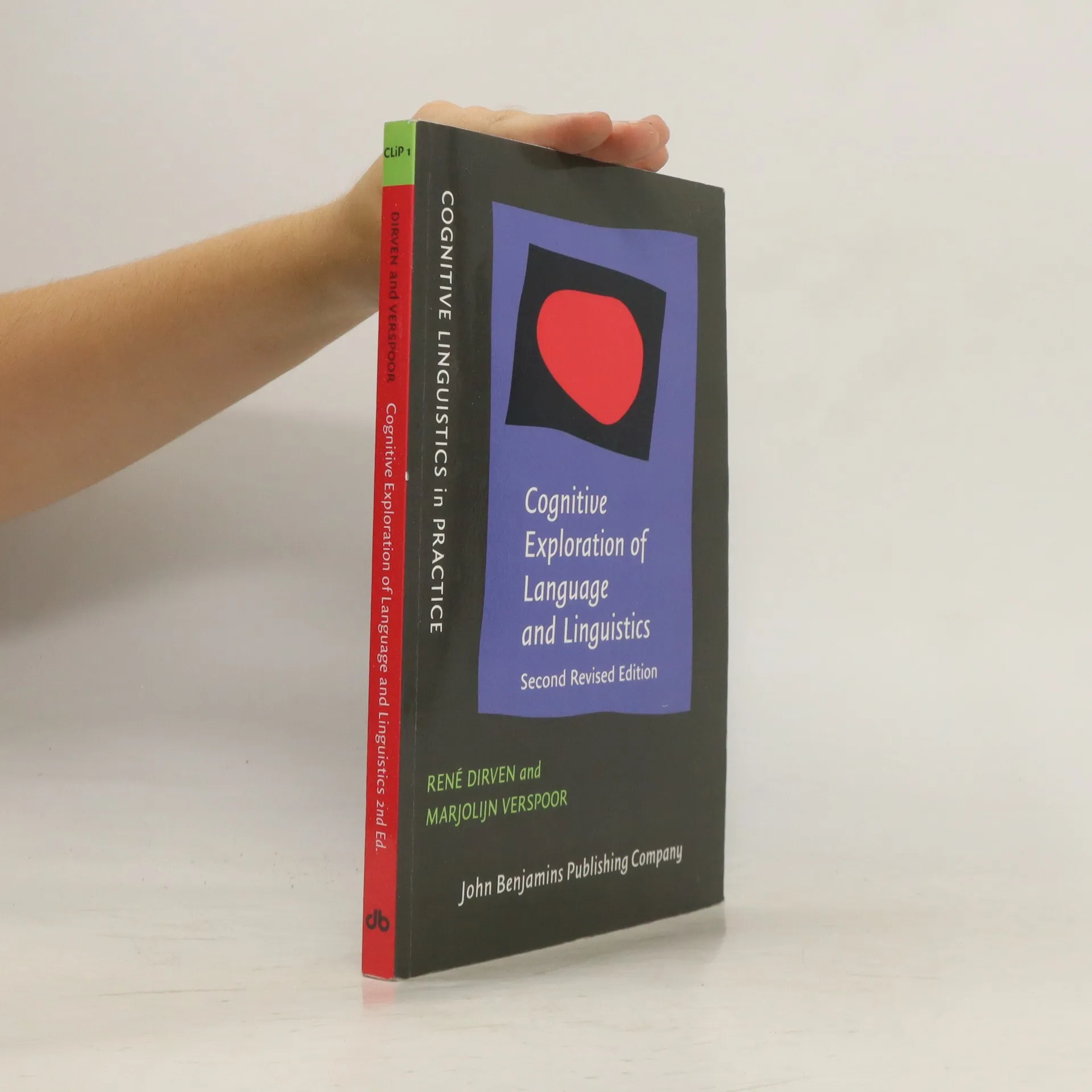
"Cognitive Exploration of Language and Linguistics "is designed as a comprehensive introductory text for first and second-year university students of language and linguistics. It provides a chapter on each of the more established areas in linguistics such as lexicology, morphology, syntax, phonetics and phonology, historical linguistics, and language typology and on some of the newer areas such as cross-cultural semantics, pragmatics, text linguistics and contrastive linguistics.In each of these areas language is explored as part of a cognitive system comprising perception, emotion, categorisation, abstraction processes, and reasoning. All these cognitive abilities may interact with language and be influenced by language. Thus the study of language in a sense becomes the study of the way we express and exchange ideas and thoughts.This Second Revised Edition is corrected, updated and expanded."Cognitive Exploration of Language and Linguistics "is clearly presented and organized after having been tested in several courses in various countries.Includes exercises (solutions to be found on the Internet).
Lingüística Cognitiva en la Práctica Serie
Esta serie se sumerge en el fascinante mundo de la lingüística cognitiva, explorando cómo nuestras mentes procesan y entienden el lenguaje. Ofrece introducciones claras a diversos enfoques teóricos y metodológicos que enfatizan la experiencia como clave para la adquisición, el uso y la comprensión del lenguaje. Escritos en un estilo accesible y con tareas prácticas, estos libros son ideales para estudiantes y académicos que buscan comprender la investigación lingüística contemporánea.

Orden recomendado de lectura
Cognitive English Grammar
- 374 páginas
- 14 horas de lectura
This textbook is designed for courses in English and general linguistics, introducing cognitive linguistic theory and demonstrating how Cognitive Grammar enhances our understanding of English grammar. Central to its approach are the concepts of motivation and meaningfulness. The book is divided into four parts with 12 chapters, integrating recent cognitive approaches into a coherent model for analyzing key English constructions. Part I outlines the cognitive framework, including conceptual and linguistic categories, their situational combinations, cognitive operations, and the organization of conceptual structures into linguistic forms. Part II focuses on the category of things, exploring their linguistic representation as nouns and noun phrases, and how they are grounded in reality through reference, quantified by set and scalar quantifiers, and modified. Part III examines situations as temporal units, both internally as types and externally in relation to the time of speech, grounded in reality or potentiality. Part IV addresses situations as relational units, structuring them as sentences, with a focus on event schemas and the metaphorical extensions of space. The book provides extensive linguistic data and explanations, ensuring clarity through definitions, examples, a glossary, overviews, chapter summaries, suggestions for further reading, and study questions.