Wittgenstein fue un filósofo austro-británico cuyo trabajo se centró en la lógica, la filosofía de las matemáticas, la mente y el lenguaje. Fue considerado un genio cuyas ideas inspiraron dos movimientos filosóficos principales del siglo XX. Sus obras se encuentran entre los textos filosóficos más importantes del siglo XX, destacando una como una obra maestra que atrae a diversas especializaciones y orientaciones filosóficas. La influencia de Wittgenstein se ha extendido a casi todos los campos de las humanidades y las ciencias sociales, aunque su pensamiento es objeto de interpretaciones muy divergentes.
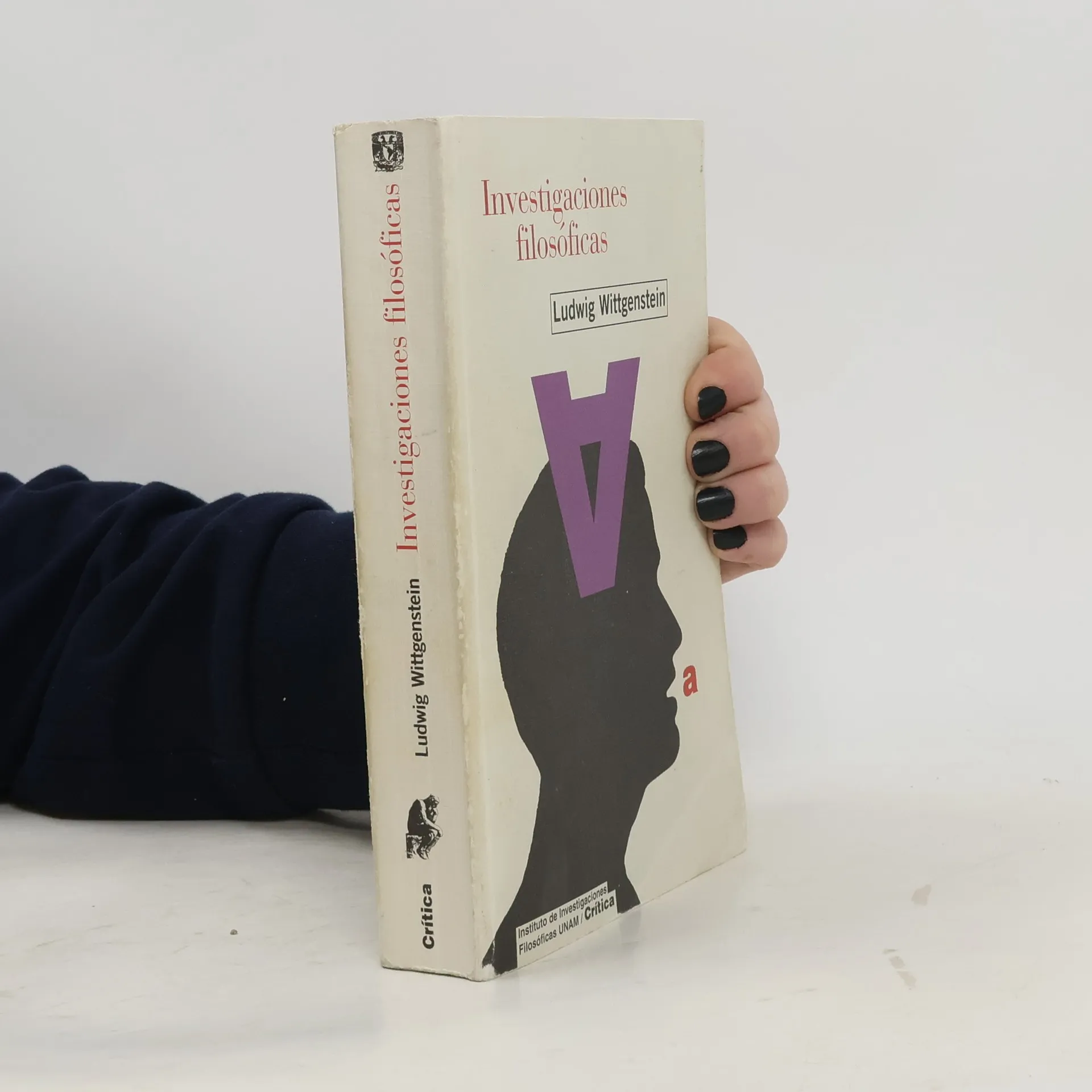
Edicion bilingue del texto mas leido y citado por los teoricos del lenguaje del siglo XX. En torno a la tesis central de que el significado esta en el uso del lenguaje, Wittgenstein desarrolla su pensamiento entendiendo el lenguaje como una nueva « forma de vida especifica del ser humano.
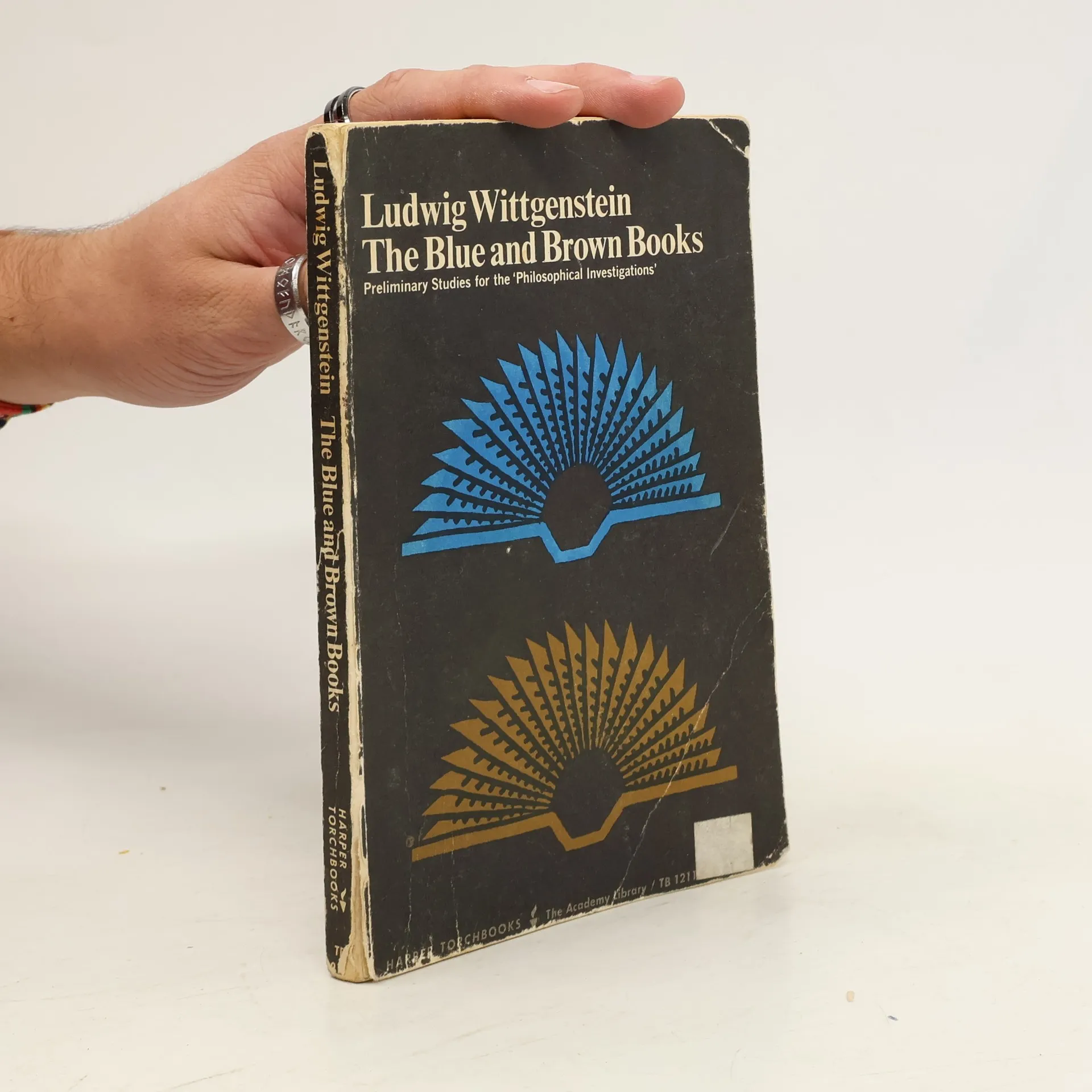
The collection "The Blue and Brown Books" explores significant themes of Wittgenstein's later philosophy: the relationship between use and meaning, the problem of understanding and mastering a particular technique, the question of rules, language games, and "forms of life," as well as the challenge to the possibility of a private language. The so-called Blue Book is a record of Wittgenstein's lectures at Cambridge from 1933 to 1934. During 1934-35, he dictated the Brown Book, initially intended for a select group of friends and students. The texts were not originally meant for publication but gradually circulated among his students. Wittgenstein attempted to prepare the Brown Book for publication but ultimately ceased work on it to focus on his later work, "Philosophical Investigations."
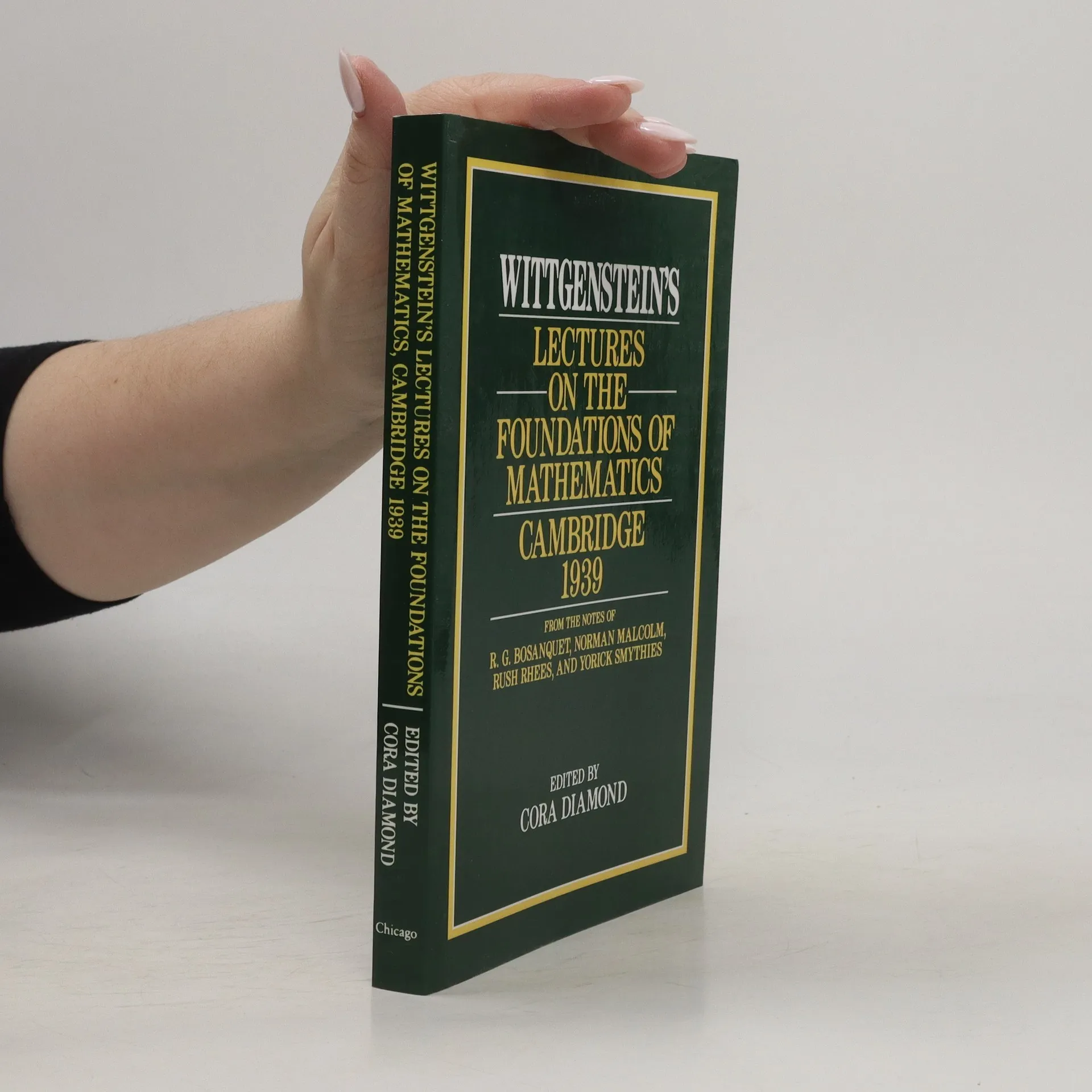
For several terms at Cambridge in 1939, Ludwig Wittgenstein lectured on the philosophical foundations of mathematics. A lecture class taught by Wittgenstein, however, hardly resembled a lecture. He sat on a chair in the middle of the room, with some of the class sitting in chairs, some on the floor. He never used notes. He paused frequently, sometimes for several minutes, while he puzzled out a problem. He often asked his listeners questions and reacted to their replies. Many meetings were largely conversation. These lectures were attended by, among others, D. A. T. Gasking, J. N. Findlay, Stephen Toulmin, Alan Turing, G. H. von Wright, R. G. Bosanquet, Norman Malcolm, Rush Rhees, and Yorick Smythies. Notes taken by these last four are the basis for the thirty-one lectures in this book. The lectures covered such topics as the nature of mathematics, the distinctions between mathematical and everyday languages, the truth of mathematical propositions, consistency and contradiction in formal systems, the logicism of Frege and Russell, Platonism, identity, negation, and necessary truth. The mathematical examples used are nearly always elementary.
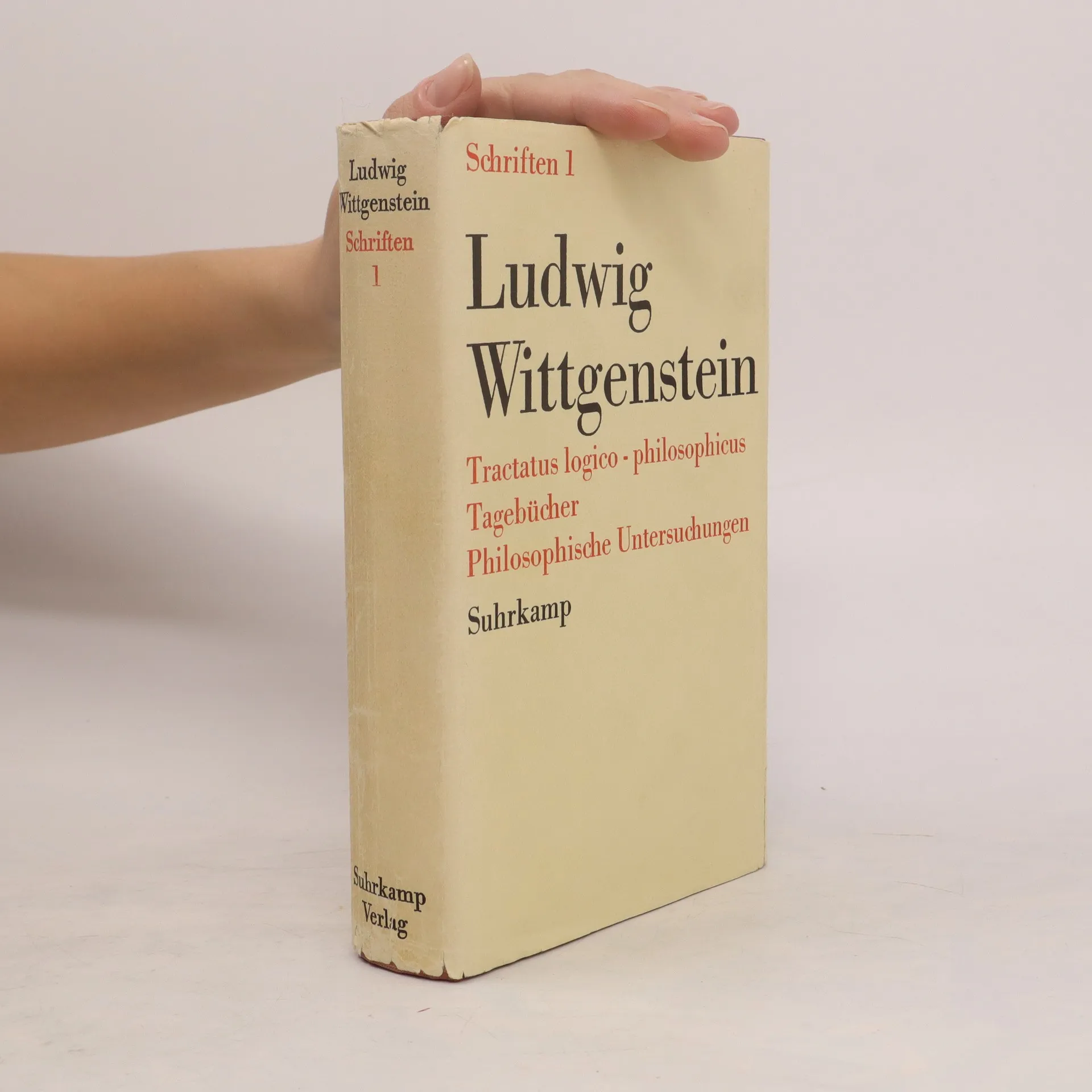
This anthology compiles the essential writings of influential philosopher Ludwig Wittgenstein, showcasing his evolution from early to later works. It includes complete texts of his key contributions, such as Tractatus Logico-Philosophicus, The Blue and Brown Books, and On Certainty. The collection highlights Wittgenstein's profound impact on philosophy, making it an invaluable resource for understanding his revolutionary ideas and insights across different phases of his career.
An essential resource for students of Wittgenstein, this collection contains faithful, in some cases expanded and corrected, versions of many important pieces never before available in a single volume, including Notes for the 'Philosophical Lecture', published here for the first time. Fifteen selections, with bi-lingual versions of those originally written in German, span the development of Wittgenstein's thought, his range of interests, and his methods of philosophical investigation. Short introductions, an index, and an updated version of Georg Henrik von Wright's The Wittgenstein Papers situate the selections within the broader context of the Wittgenstein corpus and the history of its publication.
Wittgenstein finished part 1 of the Philosophical Investigations in the spring of 1945. From 1946 to 1949 he worked on the philosophy of psychology almost without interruption. The present two-volume work comprises many of his writings over this period. Some of the remarks contained here were culled for part 2 of the Investigations; others were set aside and appear in the collection known as Zettel. The great majority, however, although of excellent quality, have hitherto remained unpublished. This bilingual edition of the Remarks on the Philosophy of Psychology presents the first English translation of an essential body of Wittgenstein's work. It elaborates Wittgenstein's views on psychological concepts such as expectation, sensation, knowing how to follow a rule, and knowledge of the sensations of other persons. It also shows strong emphasis on the "anthropological" aspect of Wittgenstein's thought. Philosophers, as well as anthropologists, psychologists, and sociologists will welcome this important publication.
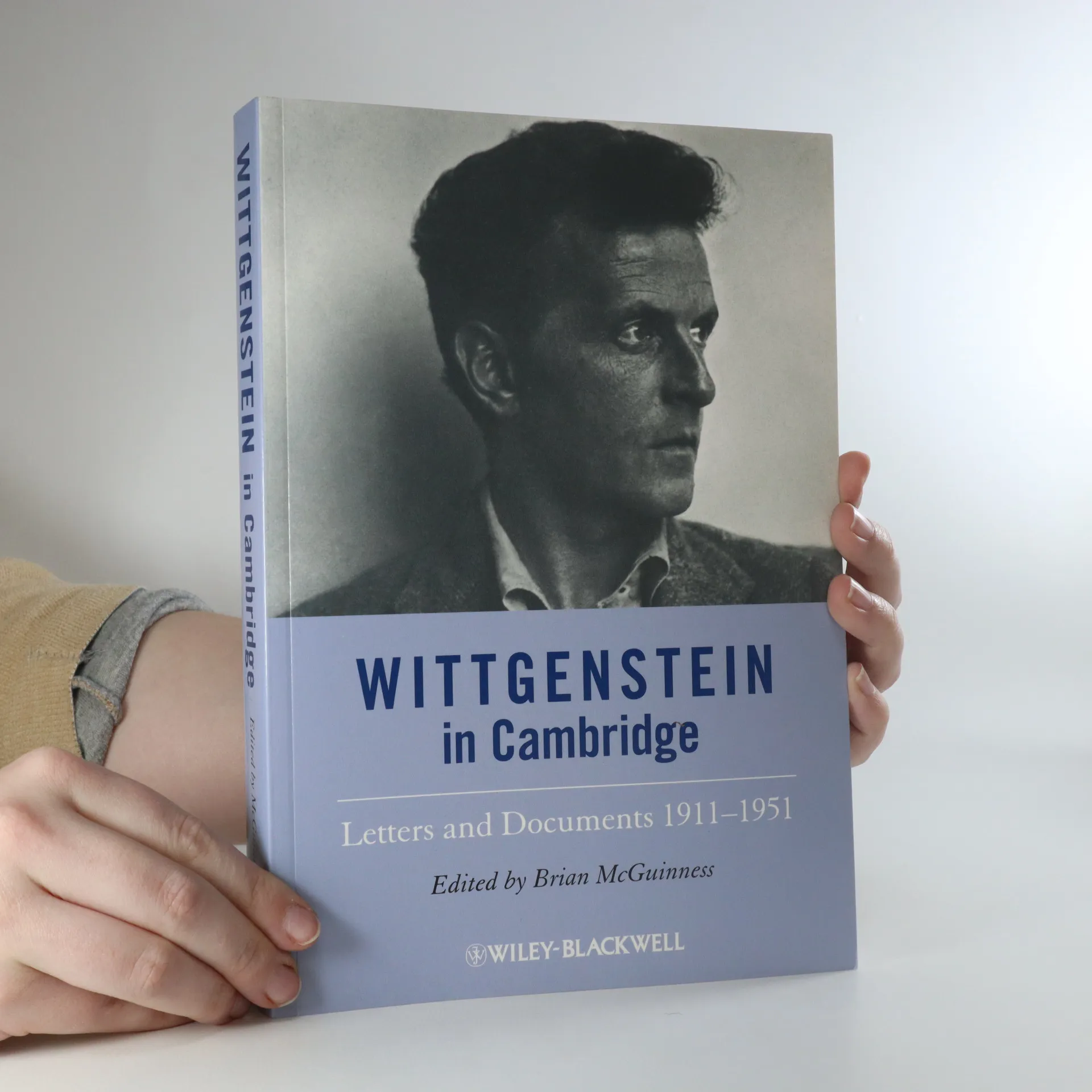
This volume collects the most substantial correspondence and documents relating to Wittgenstein's long association with Cambridge between the years 1911 and his death in 1951, including the letters he exchanged with his most illustrious Cambridge contemporaries Russell, Keynes, Moore, and Ramsey (and previously published as Cambridge Letters). Now expanded to include 200 previously unpublished letters and documents, including correspondence between Wittgenstein and the economist Piero Sraffa, and between Wittgenstein and his pupils Includes extensive editorial annotations Provides a fascinating and intimate insight into Wittgenstein's life and thought
Wittgenstein's diary from the 1930s contains the raw material for what could have been an incomparable spiritual autobiography. For the first time in an affordable edition, the volume includes updated and expanded editorial notes on Wittgenstein's many allusions, and an introd...
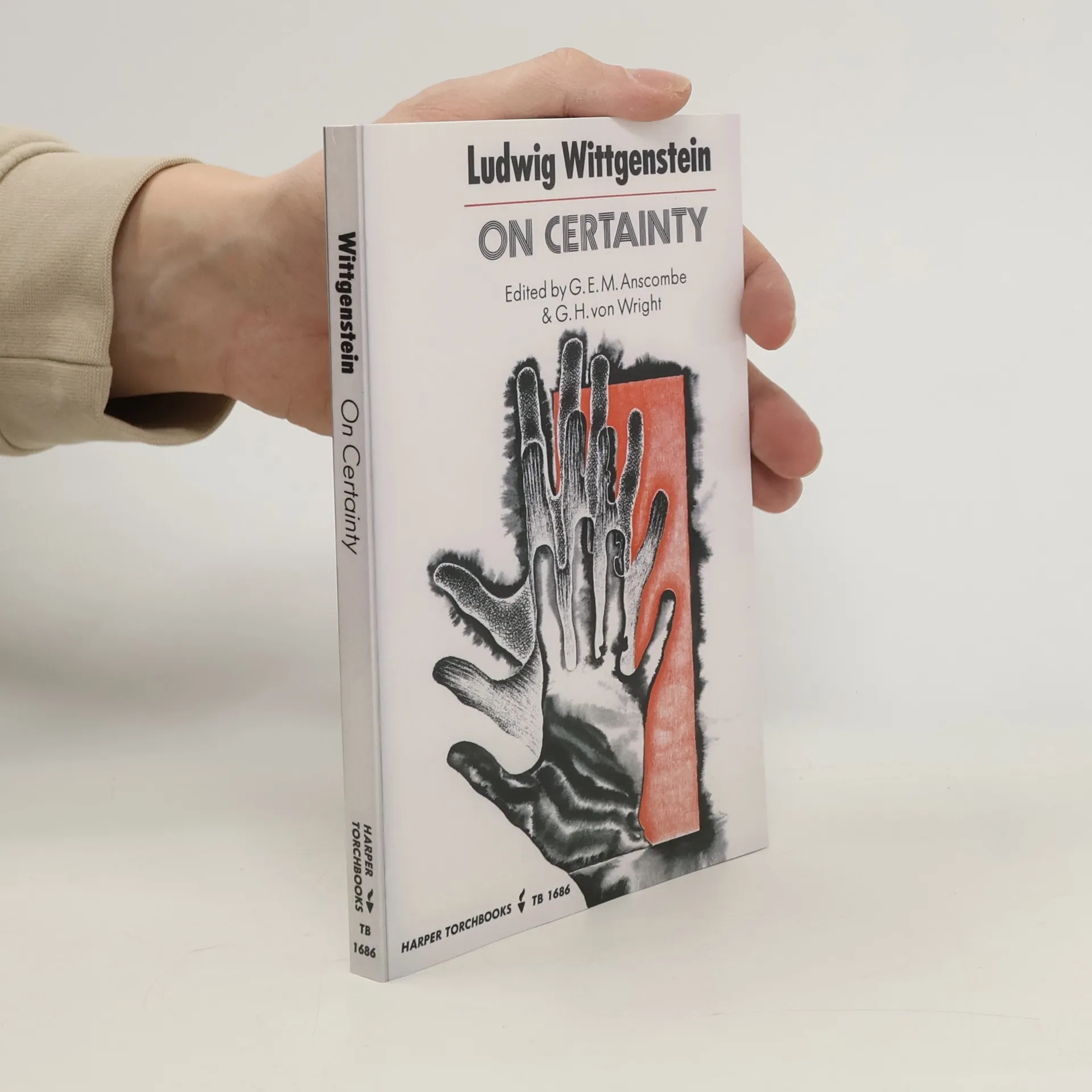
Written over the last 18 months of his life and inspired by his interest in G. E. Moore's defense of common sense, this much discussed volume collects Wittgenstein's reflections on knowledge and certainty, on what it is to know a proposition for sure.
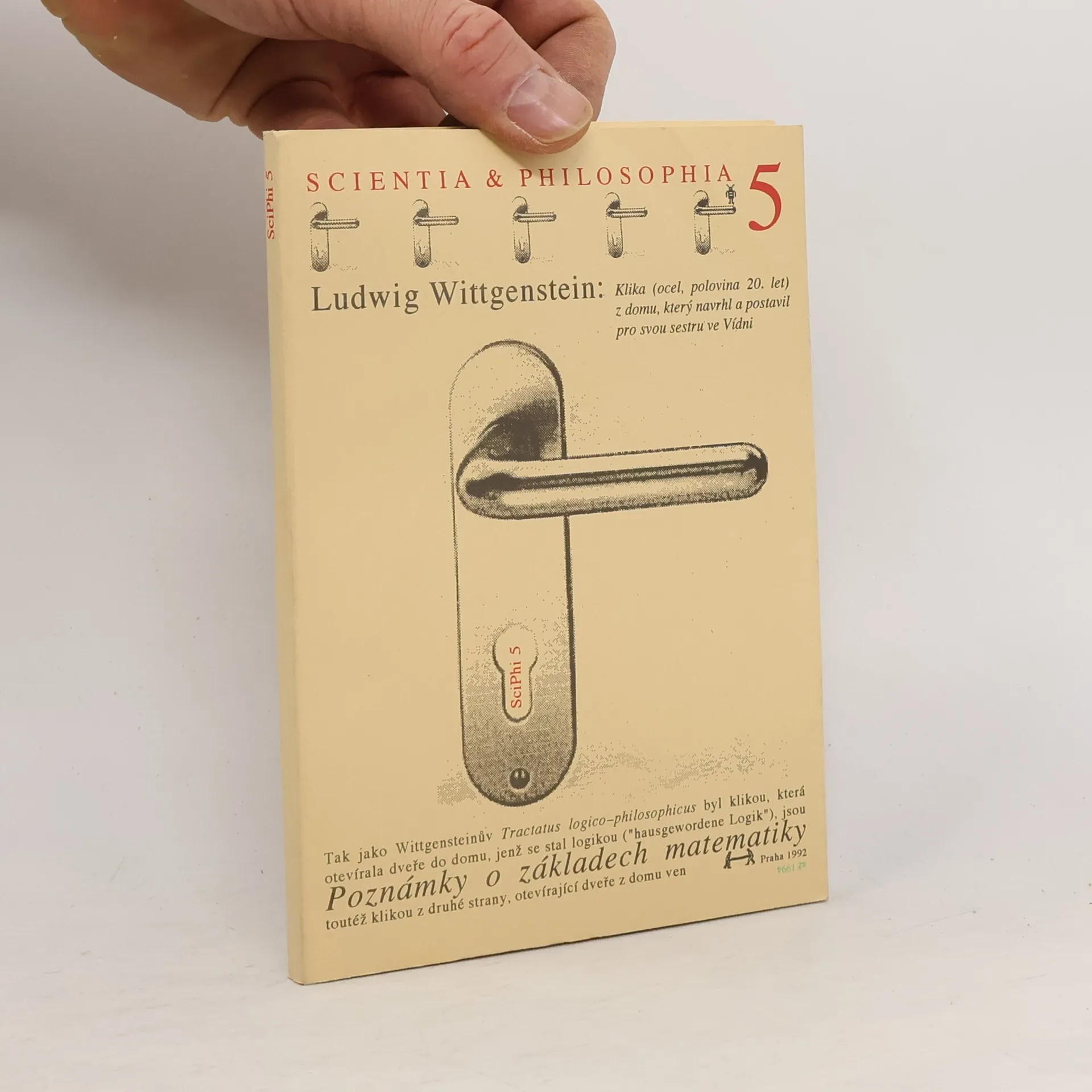
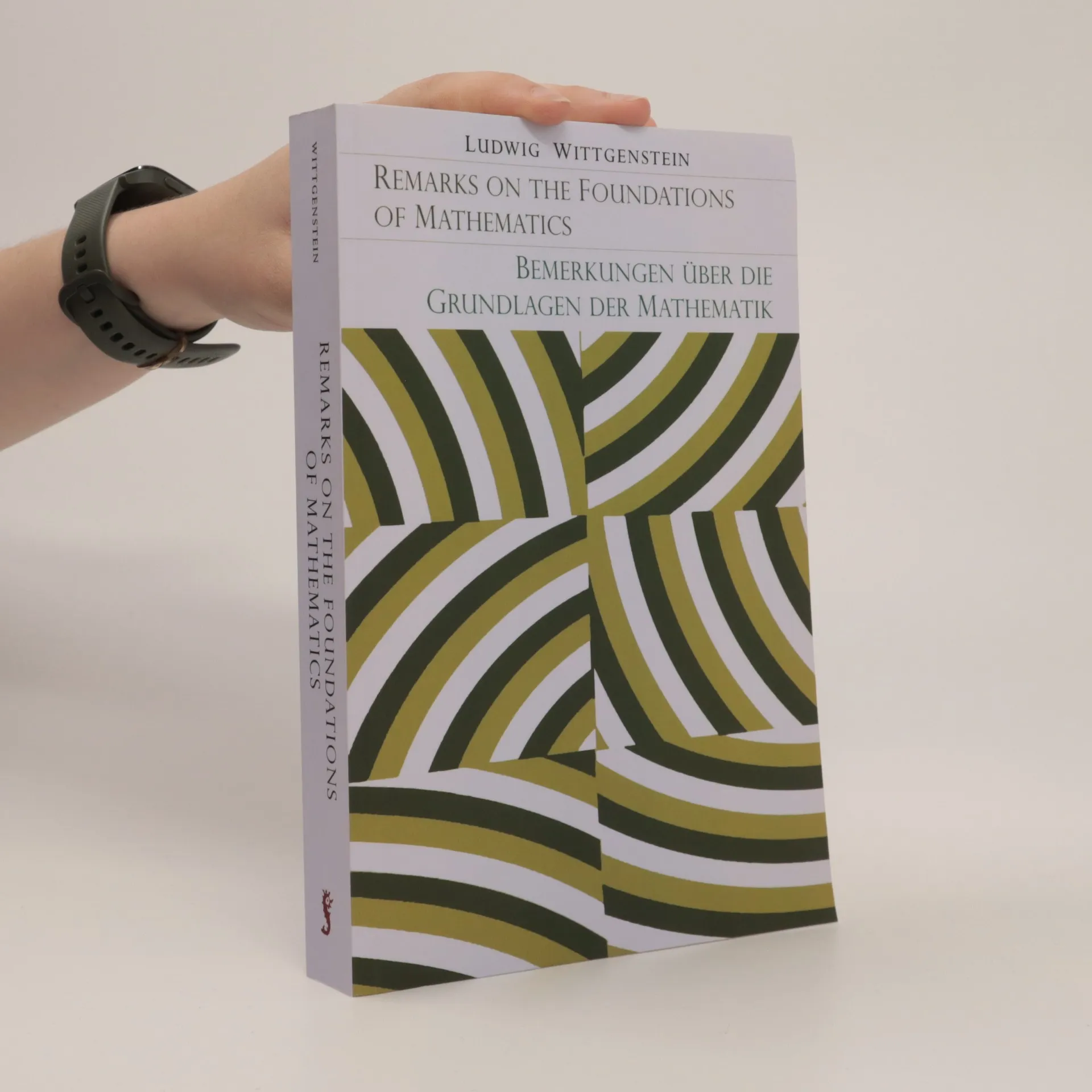
This analyzes in depth such topics as logical compulsion and mathematical conviction; calculation as experiment; mathematical surprise, discovery, and invention; Russell's logic, Gödel's theorem, Cantor's diagonal procedure, Dedekind's cuts; the nature of proof and contradiction; and the role of mathematical propositions in the forming of concepts.
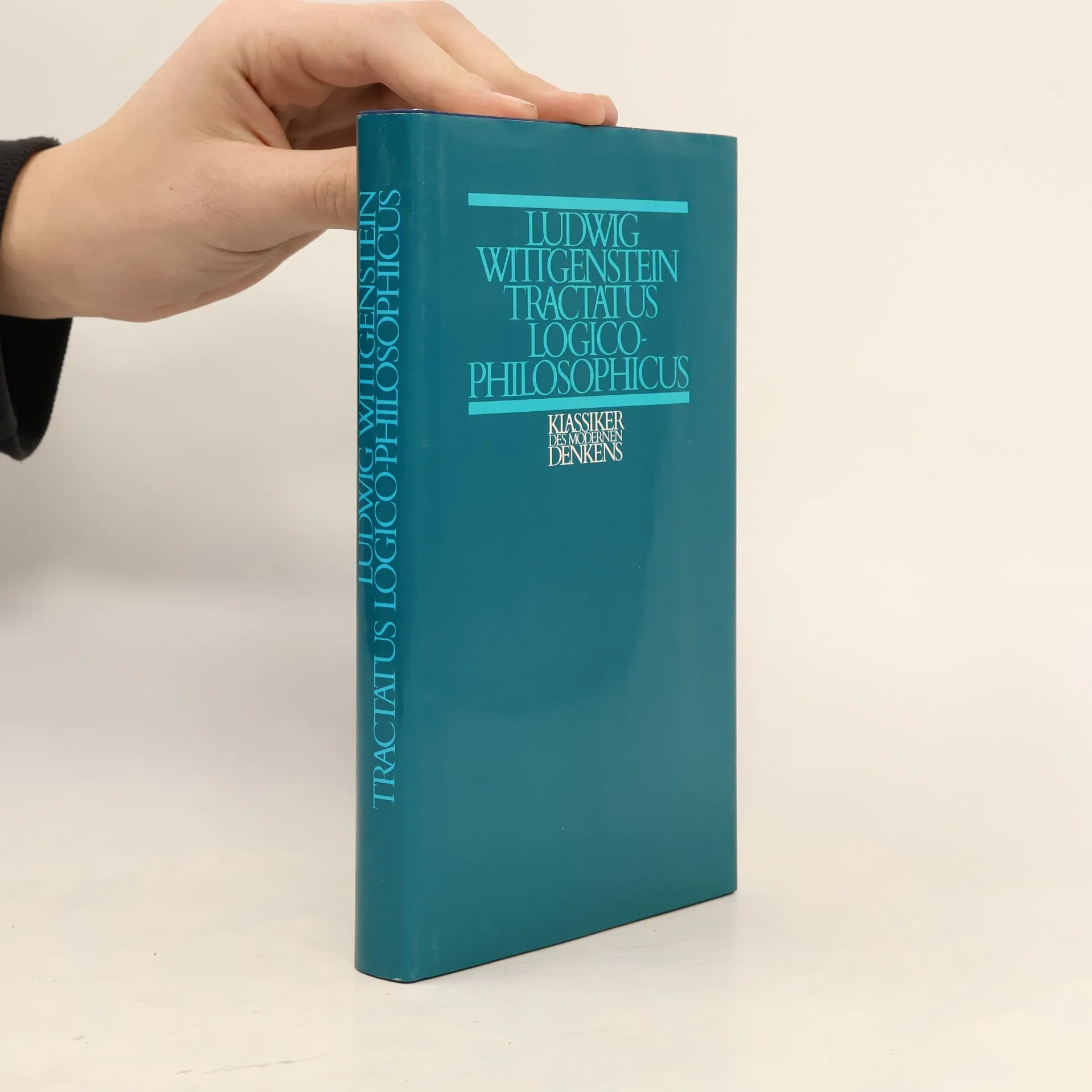
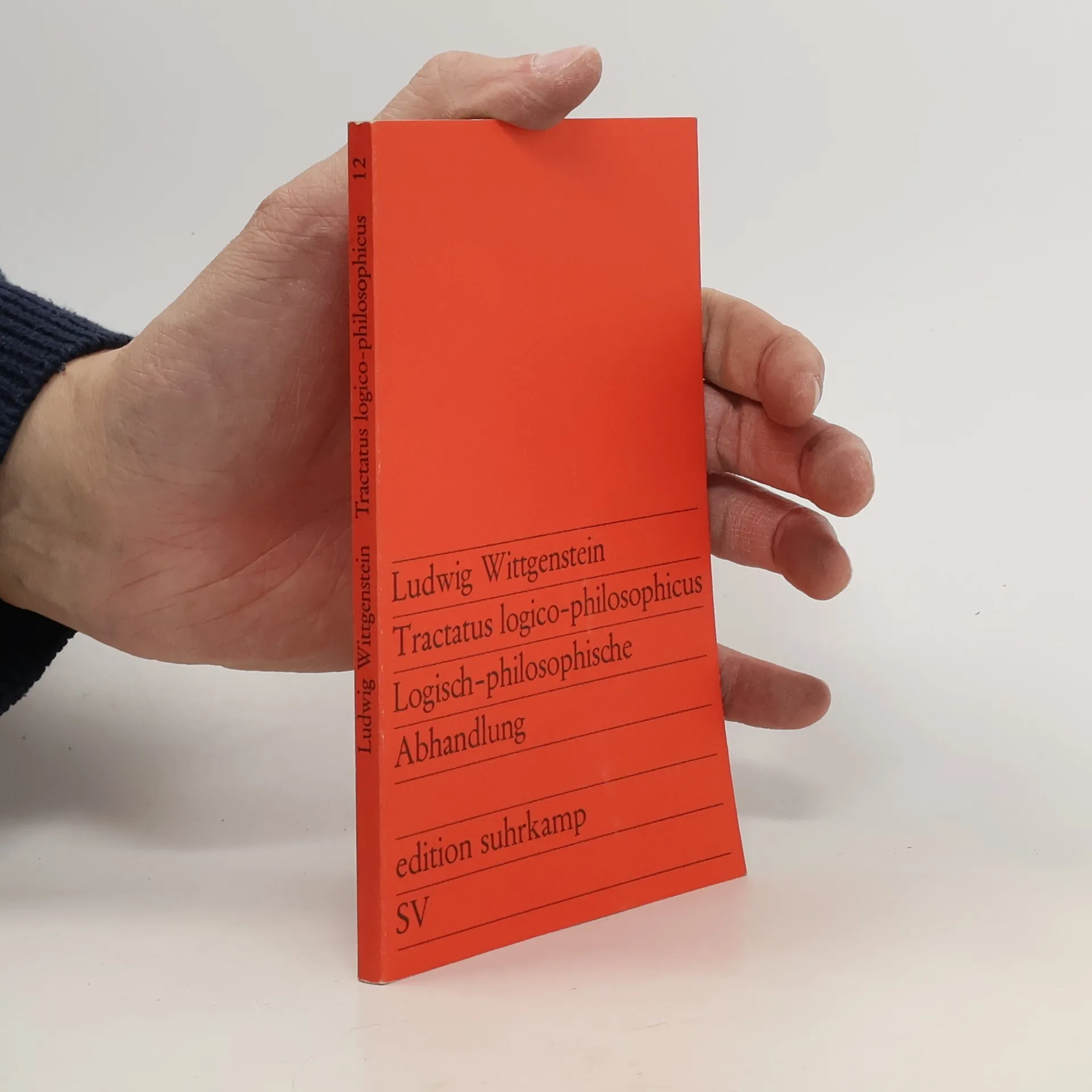
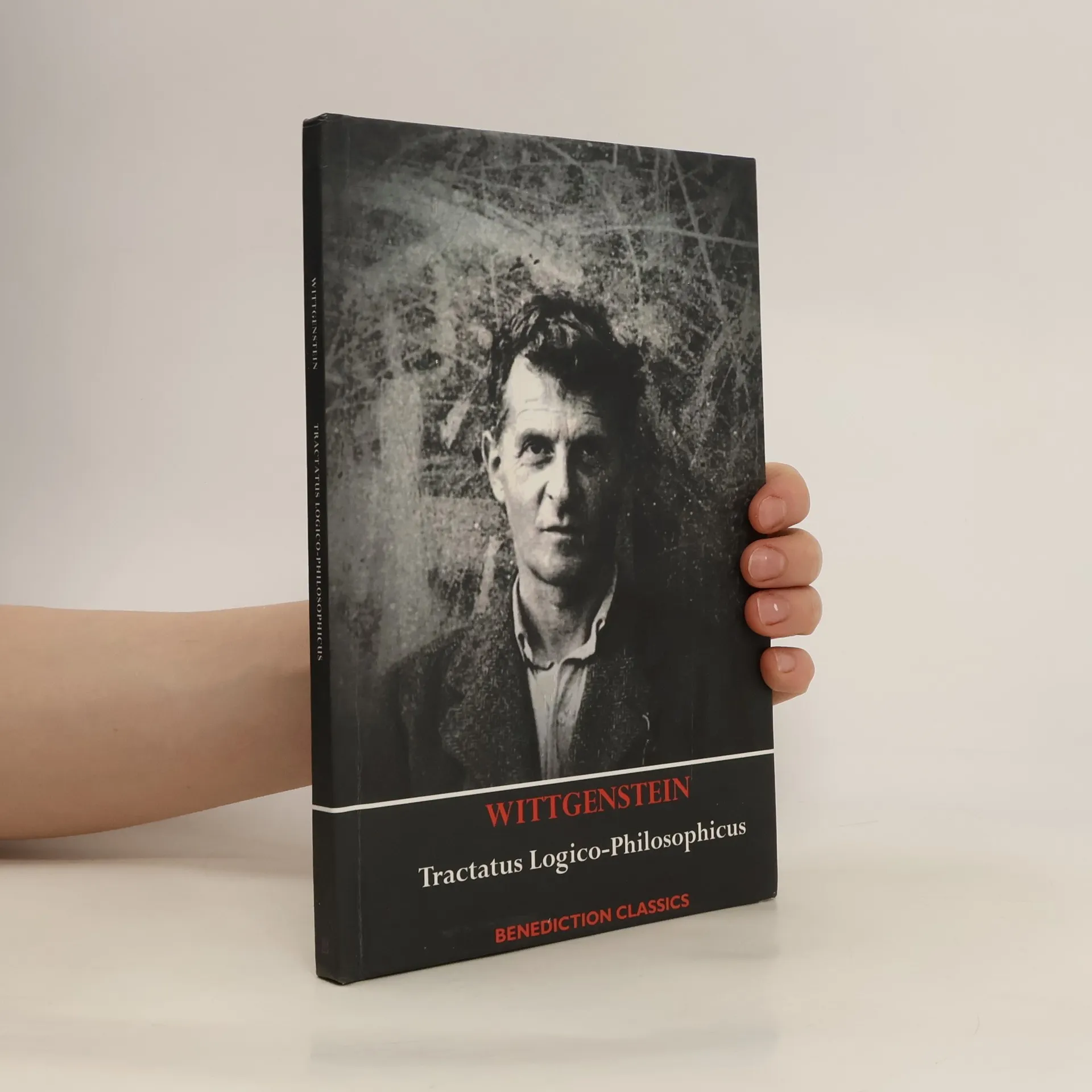
Ludwig Wittgenstein's influential Tractatus Logico-Philosophicus explores the assumption that it is philosophy's task to 'sanitize' language. Therefore, it is necessary for philosophy to develop an artificial language that avoids the pitfalls of ordinary language. This is the only philosophical work Wittgenstein published in his lifetime. Laid out in succinct well-numbered paragraph, it is an essential read for those interested in the philosophy of language or understanding the influential figure of Wittgenstein. From the introduction: "... to have constructed a theory of logic which is not at any point obviously wrong is to have achieved a work of extraordinary difficulty and importance.This merit, in my opinion, belongs to Mr Wittgenstein's book, and makes it one which no serious philosopher can afford to neglect." -- Bertrand Russell.
This text is a dynamic new translation of Wittgenstein’s most famous work — one of the most influential philosophy works of the Twentieth Century. Kolak’s translation is the first to read like an original work written in English and is the first to restore the poetical and lyrical qualities of the original Tractatus as intended by the author.
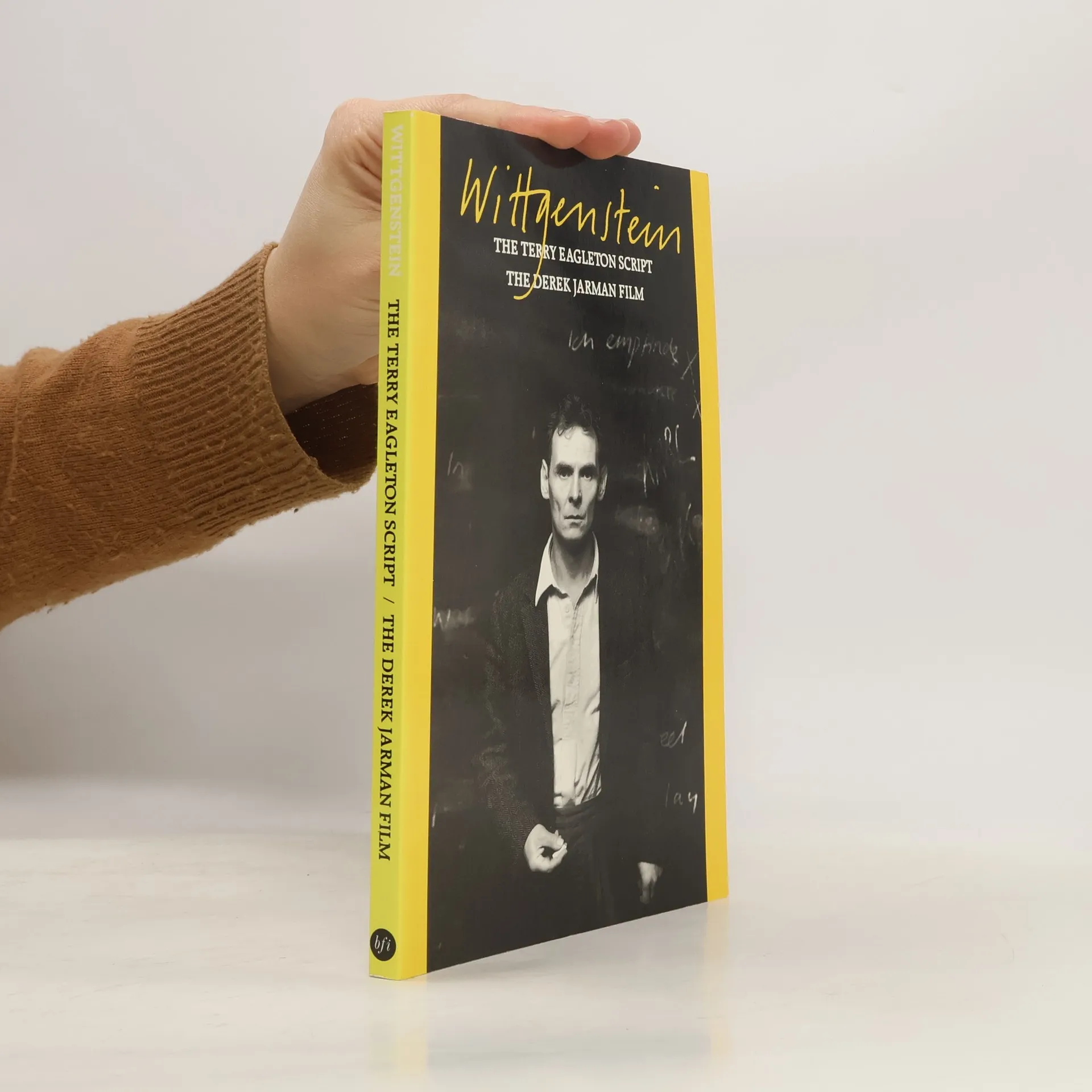
The Terry Eagleton Script and the Derek Jarman Film
151 páginas
6 horas de lectura
Derek Jarman's film "Wittgenstein" articulates the themes of this major 20th-century philosopher. Channel 4 television commissioned literary critic Terry Eagleton to write a television play which was eventually filmed by Derek Jarman. This illustrated book includes both the original screenplay & Jarman's very different shooting script. It also contains reflections on Wittgenstein, film & the problems of biography by both Derek Jarman & Terry Eagleton. Terry Eagleton is Britain's most influential radical literary critic. He's been a fellow of four Oxford & Cambridge colleges, & is presently Thomas Warton Professor of English Literature at Oxford. Derek Jarman was both a major film-maker & artist, a gay activist & an English patriot. Caravaggio & Blue were both acclaimed feature films. "An imaginative & serious attempt to render its subject's life in form & color."--The New Republic
This book comprises material on colour which was written by Wittgenstein in the last eighteen months of his life. It is one of the few documents which shows him concentratedly at work on a single philosophical issue. The principal theme is the features of different colours, of different kinds of colour (metallic colour, the colours of flames, etc.) and of luminosity—a theme which Wittgenstein treats in such a way as to destroy the traditional idea that colour is a simple and logically uniform kind of thing. This edition consists of Wittgenstein's basic German text, together with an English translation.
In 1931 Ludwig Wittgenstein wrote his famous Remarks on Frazer's Golden Bough,
published posthumously in 1967. At that time, anthropology and philosophy were
in close contact - thinkers drew heavily on anthropology's theoretical terms,
in order to help them explore the limits of human belief and imagination. This
is a translation of his work.
Ludwig Wittgenstein, l'un des plus grands philosophes du XXe siècle, était le dernier des huit enfants de l'une des familles les plus en vue de la Mitteleuropa. Les Wittgenstein étaient à l'avant-garde de la vie culturelle de Vienne : Maurice Ravel écrivit un célèbre concerto pour le pianiste Paul Wittgenstein, frère aîné de Ludwig ; Gustav Klimt a peint le tableau de mariage de sa soeur Margaret ; Gustav Mahler et Johannes Brahms donnaient régulièrement des concerts dans le salon de musique familial.D'un rayonnement social et culturel considérable, la famille Wittgenstein ne devait pas être épargnée par la tragédie. La soeur de Ludwig, Dora, mourut prématurément, son frère Paul perdit son bras au combat pendant la Première Guerre mondiale, et deux de ses frères se suicidèrent.Les lettres inédites réunies dans ce volume couvrent la période de 1908 à 1951, quelques semaines avant la mort de Ludwig. Elles sont un témoignage de première main sur les différentes étapes de sa vie si singulière et sur les liens qui l'unissaient aux siens.
Ludwig Wittgenstein (1889–1951) ist eine der Schlüsselpersonen der Philosophie des 20. Jahrhunderts, und sein Werk zählt zu den Hauptquellen der modernen analytischen Philosophie. Sein Denken erfüllt den universellen Anspruch der Philosophie und inspiriert auch Ethnologen und Linguisten durch seine Theorie der Bedeutung. Diese Überschreitung der Grenzen der Philosophie deutet sich auch in der vorliegenden Sammlung von Notizen an, die am Rand seiner philosophischen Arbeiten entstanden sind und sich sowohl mit der Natur philosophischer Arbeit als auch mit Fragen der Kunst und Religion befassen. Die Ausgabe der verschiedenen Notizen, die wie der Großteil von Wittgensteins Werk posthum veröffentlicht wurde, ist das Ergebnis der Arbeit seiner Herausgeber. Diese haben die Notizen chronologisch angeordnet, was es ermöglicht, die Entwicklung von Wittgensteins philosophischen und allgemeinen Ansichten nachzuvollziehen. Ein sachlicher Index erleichtert die thematische Orientierung in den Notizen.
Filosofické poznámky, vydané poprvé z pozůstalosti roku 1964 péčí Wittgensteinova žáka a blízkého přítele Rushe Rheese, soustřeďují autorovy úvahy z doby krátce po jeho návratu k filosofii, tj. z let 1929 a 1930. Wittgensteinovo myšlení se v té době dynamicky proměňovalo a Filosofické poznámky jsou v pravém slova smyslu slova momentkou, zachycující jeho přechodný tvar: mají tu podobu, v níž autor přerušil svou práci na strojopise, neboť potřeboval odevzdat kvalifikační práci na univerzitě v Cambridgi.
Своим сочинением я не стремился избавить других от усилий мысли. Мне хотелось побудить кого-нибудь, если это возможно, к самостоятельному мышлению, – так точно, емко и просто сформулировал свое кредо ученый Людвиг Витгенштейн в предисловии к "Философским исследованиям" – работе, оказавшей огромное влияние как на аналитическую философию, так и на философию постмодернизма. В ней он попытался развить идеи, изложенные им в "Логико-философском трактате", и вновь избрал объектом своего изучения язык – обыденный язык повседневного общения. Описывая различные стратегии "языковой игры", которые все мы, сознательно или нет, используем, пытаясь в чем-то убедить собеседника, или воздействовать на него, добиться какой-либо цели или просто выразить свои мысли и чувства, он анализирует эту игру и пытается понять ее логику. Но, парадоксальный во многих своих утверждениях, Витгенштейн и здесь остается верен себе. Ведь если, по Витгенштейну, критерий смысла – всегда и только логика, то каков смысл языка, учитывая, что большая часть произносимого человеком в той или иной степени противоречит законам логики?
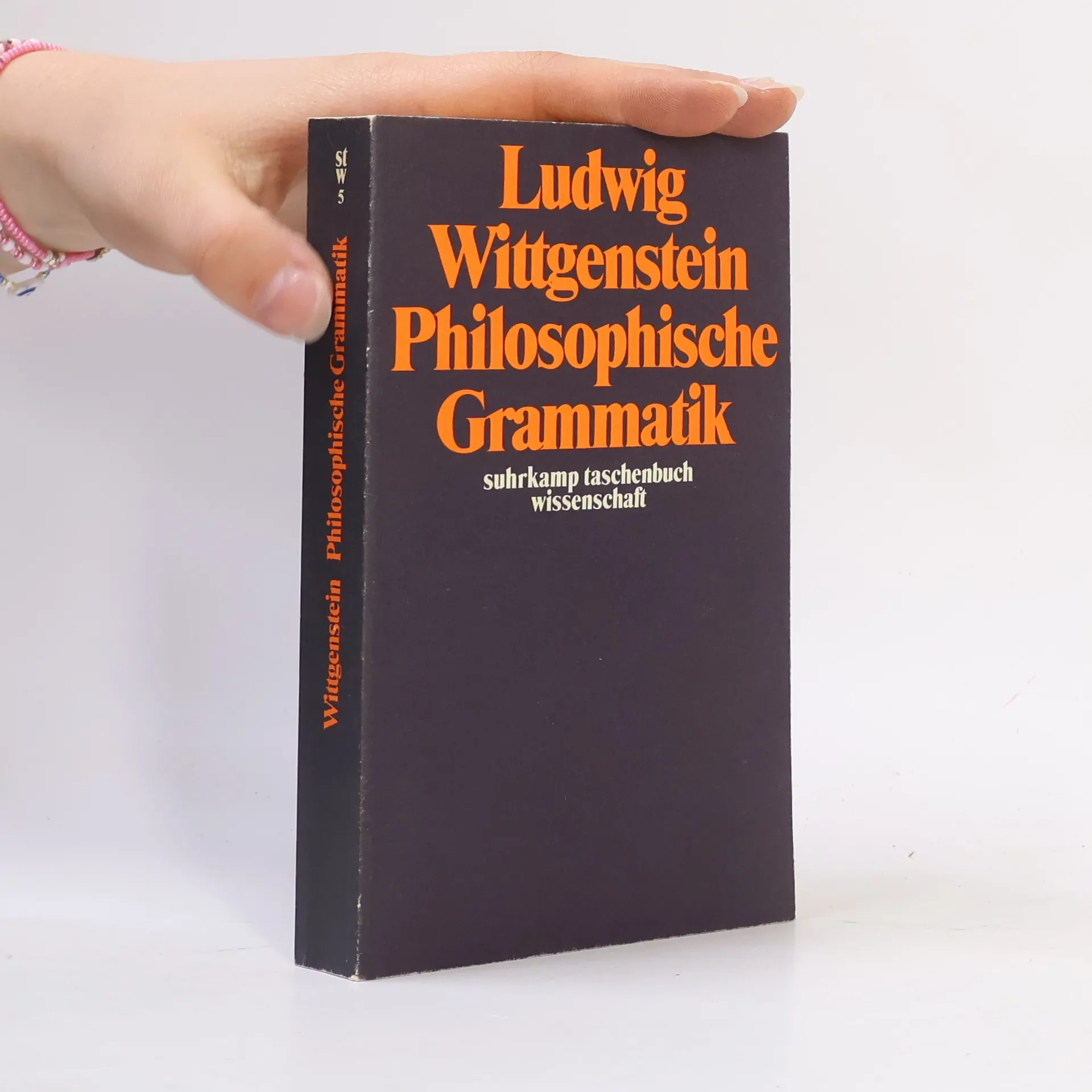
Wittgenstein schrieb die Philosophische Grammatik in den Jahren 1931 bis 1934 - in der Zeit kurz bevor er begann, das Blaue Buch zu diktieren. Obwohl sie in einigen Punkten den Untersuchungen und in anderen den Philosophischen Bemerkungen nahe steht, ist die Philosophische Grammatik ein eigenständiges Werk, das Neuland betritt. Es ist Wittgensteins umfassendste Behandlung von Logik und Mathematik in Verbindung mit seinem späteren Verständnis von 'Satz', 'Zeichen' und 'System'. Er diskutiert auch Inferenz und Allgemeinheit - kritisiert Ansichten von Frege und Russell sowie frühere Ansichten seiner selbst - und die Behandlung des mathematischen Beweises in diesem Buch, insbesondere von induktiven oder rekursiven Beweisen, ist tiefer und umfangreicher als zuvor.
Was ist ein „philosophisches Leben“? Im Fall eines Philosophen wie Wittgenstein, der in einem der hier übersetzten Texte erklärt, „perfekt sein zu wollen“, gewinnt diese Frage eine besondere Dringlichkeit. Das Buch versammelt einige der wichtigsten Zeugnisse aus erster Hand über den Menschen Wittgenstein: die Gespräche mit Drury, die Erinnerungen seiner Schwester Hermine, der Freundin Fania Pascal, des Literaturkritikers Leavis und des Schülers John King. Wir hören nicht nur, durch die sorgfältigen Transkriptionen von Drury, Wittgenstein, der über Dostojewski und Freud, über den heiligen Paulus und Lenin, über Brahms und Augustinus spricht, sondern dringen plötzlich in seine Intimität ein, wie im berühmten Episode der „Beichte“ bei Fania Pascal, in der Wittgenstein gesteht, seine jüdischen Wurzeln verborgen gehalten zu haben und ein Mädchen geschlagen zu haben, um dann zu leugnen, es getan zu haben. Nie zuvor hat sich ein Denkstil so vollständig in einer Geste, in einem Satz, in einer Obsession offenbart.
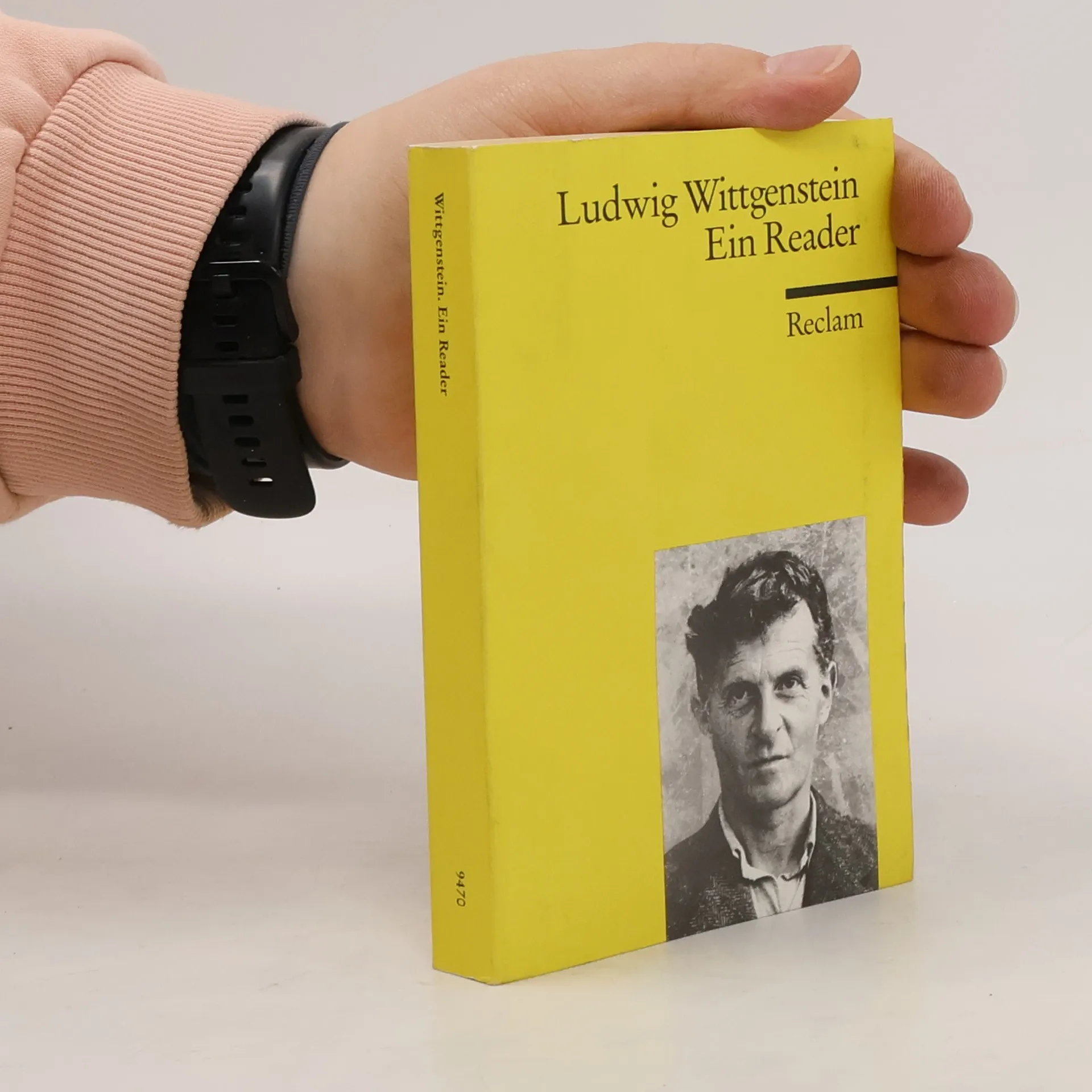
Stuttgart. 391 S. 15 cm. Encuadernacin en tapa blanda de editorial. Idioma Alemn. Sammlung. 1. Aufl. Universal-Bibliothek. 9470. Hier auch spter erschienene, unvernderte Nachdrucke. Lizenz des Suhrkamp-Verl. , Frankfurt am Main. Literaturverz. S. [375] - 379. Analytische Philosophie. Wissenschaftstheorie. 7. 01. CI 5003. SB 140. Rec. Phil 955. Wit. HKDw7840. BO .. Este libro es de segunda mano y tiene o puede tener marcas y seales de su anterior propietario. 3150094704
Composti da Wittgenstein sul fronte orientale tra il 1914 e il 1916, in mezzo agli orrori della Grande Guerra, questi Diari segreti «mettono in luce il vertice di una riflessione in cui le sofferenze, le ossessioni e i tormenti nei quali ad ogni uomo è data la vita si convertono in espressioni filosofiche e queste, a loro volta, retroagiscono su quel materiale primario, grezzo dell'esistenza per penetrarlo, analizzarlo e per guidarlo, ma anche fatalmente per esaltarne la forza incontrollabile» (Aldo G. Gargani).
Bemerkungen über die Philosophie der Psychologie: Band 1. Bemerkungen 1-1.137 (Index) / Band 2. Bemerkungen 1-737 (Index) Letzte Schriften über die Philosophie: der Psychologie 1-979 (Index) Entsprechungen zwischen den Bemerkungen über die Philosophie der Psychologie und den Philosophischen Untersuchungen Entsprechungen zwischen den Letzten Schriften über die Philosophie der Psychologie und den Philosophischen Untersuchungen
In Bezug auf den Glauben umfasst einen Großteil der Notizen von Wittgenstein in den letzten achtzehn Monaten seines Lebens und enthält seine letzten erkenntnistheoretischen Ansichten.
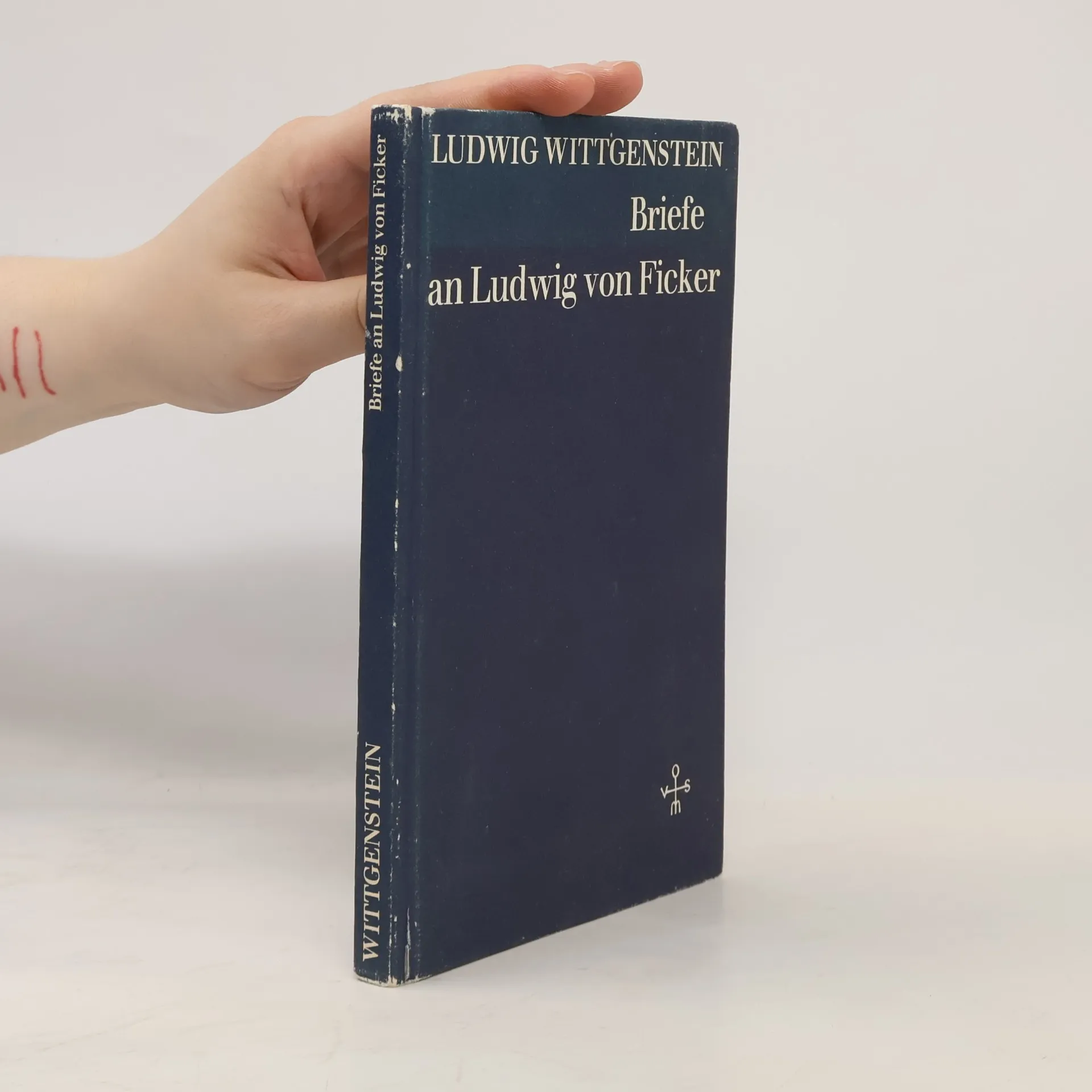
Bislang sind etwa 1.700 Briefe von und an Wittgenstein bekannt, von denen ein Teil veröffentlicht wurde. Der Herausgeber Joachim Leilich hat 243 Briefe gesammelt, die der berühmteste Philosoph unserer Zeit an seine Schwestern Hermine und Helene, seinen ehemaligen Studienkollegen Eccles, seine Freunde Hänsel, Von Ficker, Malcolm, Keynes, den Architekten Engelmann, seinen Übersetzer Ogden und seine Kollegen Moore, Ramsey, Russell und von Wright schrieb. In den Briefen kommen viele Facetten von Wittgensteins komplexem Charakter zur Sprache: seine Kämpfe mit dem Leben, sein Hang zur Abgeschiedenheit und Askese, seine düstere Sicht auf das menschliche Dasein, aber auch sein Verlangen nach Ehrlichkeit, sein Humor und seine entwaffnende Offenheit. Die Briefe bieten eine einzigartige Möglichkeit für eine Begegnung mit Wittgenstein: dem Menschen, dem Philosophen und dem Schriftsteller. Joachim Leilich, Professor für Philosophie an der Universität Antwerpen, hat die Briefe mit Einleitungen, einem Nachwort und erläuternden Anmerkungen versehen. Er hat auch biografische Skizzen von Wittgensteins Korrespondenten und ein Personenverzeichnis erstellt. Abbildungen der Korrespondenten vervollständigen diese Ausgabe.
Briefwechsel Ludwig Wittgenstein – Ben Richards 1946–1951
Ludwig Wittgenstein zählt zu den bedeutendsten Philosophen des 20. Jahrhunderts. Sein „Tractatus logico-philosophicus“ und seine „Philosophischen Untersuchungen“ haben die moderne Philosophie grundlegend verändert. Trotz seines philosophischen Ruhms bleibt er als Mensch weniger greifbar. Im Herbst nach dem Zweiten Weltkrieg lernt Wittgenstein in Cambridge den Medizinstudenten Ben Richards kennen, und ihre Beziehung prägt sein Leben bis zu seinem Ende. 374 erhaltene Briefe, Ansichtskarten und Telegramme aus den Jahren 1947 bis 1951 sind stille, aber bewegende Zeugen dieser tiefen Freundschaft und Liebe. Wittgenstein teilt seine Freude über schöne Erlebnisse und Musikstücke mit Richards und sendet ihm Blumen, um ihm den Tag zu erhellen. Ihre Liebe ist beglückend, doch das Warten auf Antworten belastet ihn. Die ständige Angst vor dem Ende der Beziehung zu einem jüngeren Mann verfolgt ihn. In dieser Zeit reflektiert er oft über seinen seelischen Zustand und sein Verhältnis zu Richards, notiert seine Gedanken in einem Code, um den Inhalt zu verbergen. Wittgensteins Briefe geben Einblick in die individuelle Liebesgeschichte zweier Menschen und zeugen von der Liebe zwischen zwei Männern in einer Zeit, in der diese nicht geduldet wurde.
Der vorliegende Band dokumentiert die Korrespondenz zwischen Paul Engelmann und Ludwig Wittgenstein, die von 1916 bis 1937, mit einer längeren Unterbrechung, stattfand. Diese Freundschaft spiegelt sich in ihren Gedanken über Literatur, Kunst, Religion und Philosophie wider. Neben dem Briefwechsel sind auch Auszüge aus Engelmanns Erinnerungen an Wittgenstein enthalten. Ein zentrales Gesprächsthema der beiden war das oft zitierte „Unaussprechliche“, das sowohl Kunst als auch Religion betrifft. Engelmann hatte die Fähigkeit, Gedanken zu formulieren, die Wittgenstein schwerfielen, und er konnte die Dinge aus der richtigen Perspektive betrachten, wodurch er das Besondere im Alltäglichen erkannte und das Leben als Kunstwerk wahrnahm. Die veröffentlichten Briefe und Erinnerungen erweitern das Bild von Wittgenstein und lenken gleichzeitig den Blick auf das Leben und Werk Engelmanns, einer vielseitig begabten und hochintellektuellen Persönlichkeit des 20. Jahrhunderts. Herausgegeben von Ilse Somavilla mit Unterstützung von Brian McGuinness. Engelmann, geboren 1891 in Olmütz, war Architekt und Literat, studierte in Wien bei Adolf Loos und lebte bis zu seiner Auswanderung nach Palästina 1934 vorwiegend in Wien und Olmütz, bevor er 1965 in Tel Aviv starb.
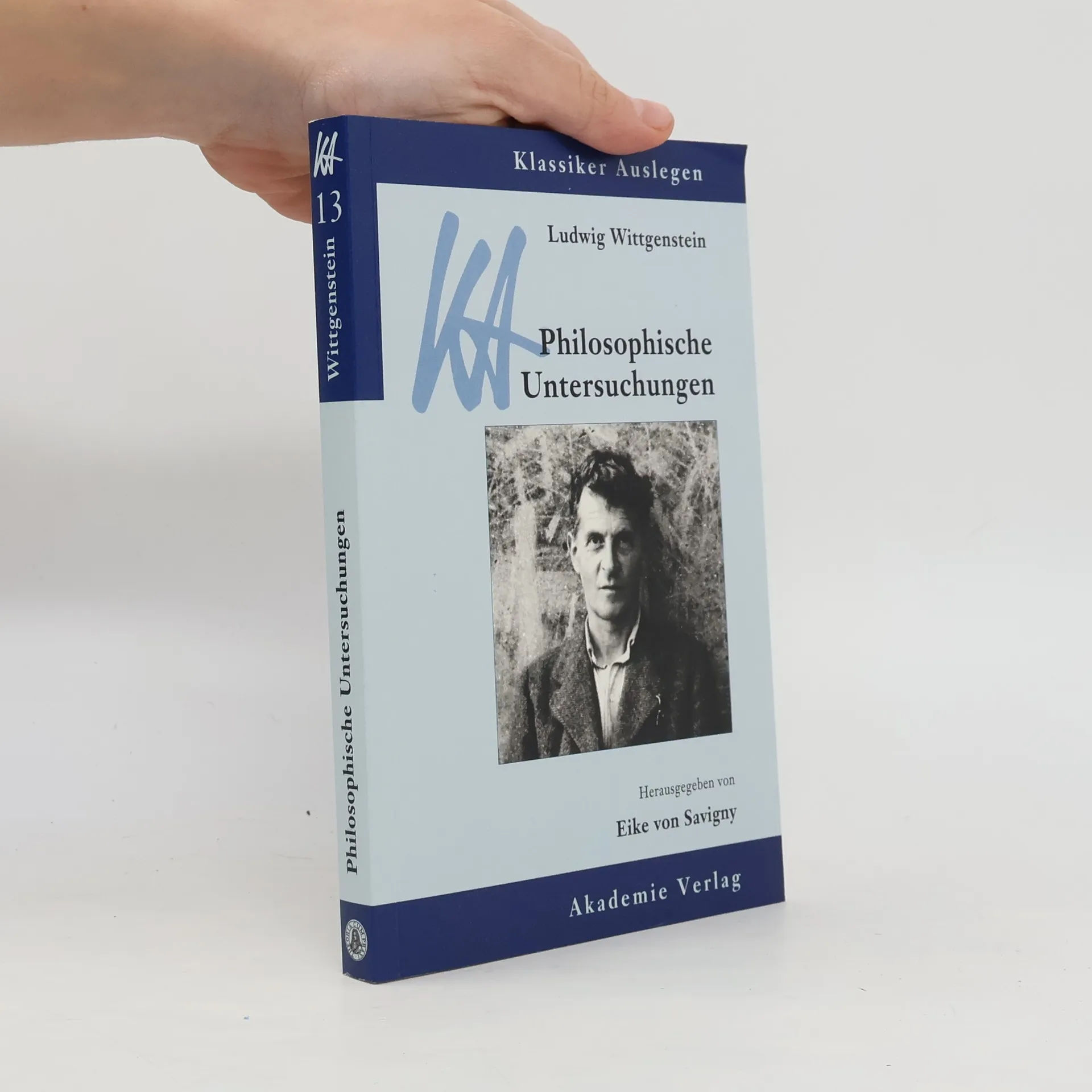
Wittgensteins „Philosophische Untersuchungen“ sind mit ihrem philosophiekritischen Feuer, ihrer aphoristischen Brillanz, ihren griffigen Bildern, ihrer argumentativen Verbissenheit zum mehrdeutig verwendbaren Kultbuch geworden, das unterschiedliche Bekenntnisse zu Aufgabe und rechtem Stil der Philosophie eint. Darüber wird leicht vergessen, dass die klare Sprache, die manifeste Ernsthaftigkeit und die gedankliche Strenge dem Leser die Aufgabe stellen, sich um ein begründetes Textverständnis zu bemühen. Die Beiträge dieses Bandes zeigen, wie sehr es sich lohnt, die großen sprachphilosophischen und anthropologischen Themen des Werkes methodisch diszipliniert zu erschließen.
Bemerkungen zur Musik ziehen sich durch Wittgensteins gesamtes Werk. Das Hören einer Melodie und die Unmöglichkeit, ihren Eindruck zu beschreiben, beschäftigte den Philosophen im Zuge seiner endlosen Versuche, sich über den Charakter des Verstehens und des Meinens klar zu werden. Ob der Wechsel einer Tonart mit der Veränderung des Gesichtsausdrucks vergleichbar ist oder ob Musik überhaupt etwas mitteilt – durch die Hintertür der philosophischen Untersuchung kommt Wittgenstein ihrem Sprachcharakter auf die Spur.Der Komponist Walter Zimmermann hat die Notizen thematisch geordnet und aus Stichwörtern wie »Gesang«, »Grammophon«, »Harmonik« bis »Stille«, »Thema« und »Töne« ein musikalisches Wittgenstein-ABC geschaffen. Das inspirierende, höchst originelle Buch ist unentbehrlich für alle, die noch immer rätseln, warum es so schwer ist, sich redend über musikalische Eindrücke zu verständigen, während beim Spielen alles ganz klar und einfach ist.
In May 1930, the Council of Trinity College, Cambridge, sought Bertrand Russell's assessment to decide on renewing Wittgenstein's research grant. Russell noted the originality and importance of Wittgenstein's new work, suggesting it might lead to a new philosophy, despite his uncertainty about its truth. The text contains foundational elements of Wittgenstein's later thoughts on mind and mathematics. It critiques Russell's "The Analysis of Mind" and revises the picture theory of meaning from the "Tractatus," emphasizing that the link between propositions and reality is not inherent in the picture itself. Wittgenstein explores generality in mathematics, the concepts of proof and experiment, and presents a pain/private-language argument while addressing behaviorism and the verifiability principle. Though challenging, this work is crucial for any philosophy collection. It serves as a key transitional text between Wittgenstein's major works, making it essential for those aiming for a comprehensive understanding of his philosophy.
=Lecture on ethics and other small writings Neben dem Frühwerk Tractatus logico-philosophicus, den erst nach dem Tod Wittgensteins veröffentlichten Philosophischen Untersuchungen und einer Reihe weiterer umfangreicher Schriften gibt es einige kleinere Arbeiten, die bisher nicht in Buchform vorgelegt wurden. Dazu gehören ein 1930 in Cambridge gehaltener Vortrag über Ethik und die 1929 geschriebenen Bemerkungen über logische Form, die den ersten Ansatz der langsamen Abwendung von einigen zentralen Thesen des Tractatus enthalten. Aus den 30er Jahren stammen die Aufzeichnungen über Sinnesdaten und Privatheit, die Notizen über Ursache und Wirkung und zumindest Teile der Bemerkungen über Frazers Golden Bough. Diese kürzeren Schriften geben nicht nur ergänzend Aufschluß über Wittgensteins Entwicklung und seine Gedanken während der sogenannten »mittleren« Periode des Umdenkens und der Formulierung einer radikal neuen Philosophie, sondern bieten in mancher Hinsicht - etwa im Fall des Vortrags über Ethik und der ethnologisch-gesellschaftstheoretische Themen streifenden Bemerkungen über Frazer - die einzigen bzw. die wichtigsten erhaltenen Zeugnisse für Wittgensteins Auffassung.
„Die Nachschriften von Wittgensteins Cambridger Vorlesungen aus den Jahren 1930-1935 sind eines der eindringlichsten Zeugnisse der Entwicklung seines Denkens. In diesen Nachschriften erleben wir Wittgenstein als Lehrer und im Gespräch: die erörterten Themen reichen vom Wesen des Satzes, den Farbausdrücken und Problemen des Gesichtsraums bis zu Diskussionen mathematischer Grundlagenfragen und Gedanken über den Zeitbegriff. Manches, was in den Schriften nur angedeutet ist, wird hier erläutert und mit Hilfe von Beispielen vertieft. Stets wechselt der Aspekt der Betrachtung, und nie ist ein Gegenstand des Denkens für Wittgenstein wirklich derselbe; immer entdeckt er eine neue Schwierigkeit, eine neue Facette.“
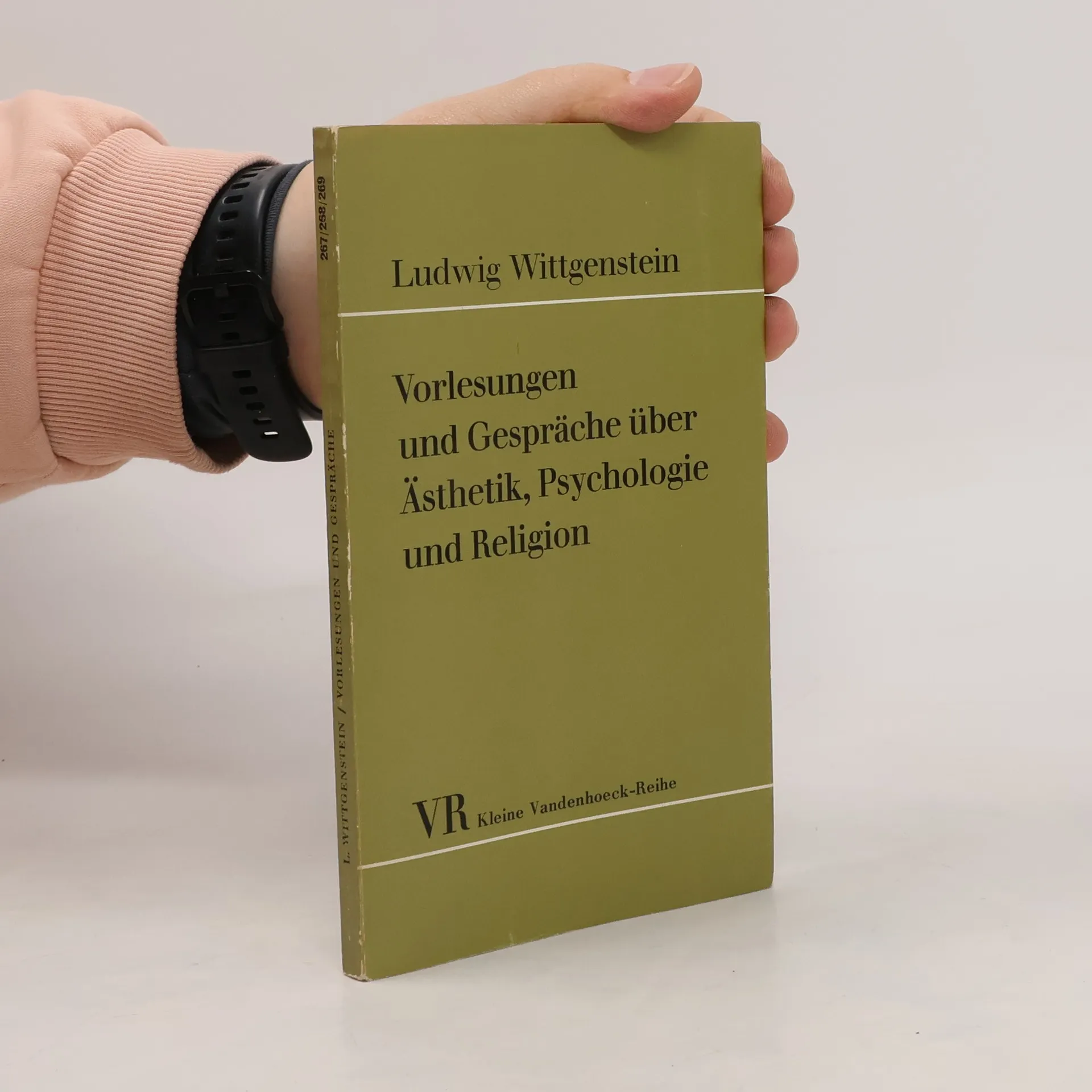
Der Band enthält Mitschriften von zwei Vorlesungen, die Ludwig Wittgenstein im Jahr 1938 in Cambridge gehalten hat. Die „Vorlesungen über Ästhetik“ gab Wittgenstein einer kleinen Gruppe von Studenten in seinem Privaträumen, die „Vorlesungen über den religiösen Glauben“ waren Teil einer allgemeinen Vorlesungsreihe über den Glauben („Belief“). Hinzu kommen „Gespräche über Freud“, die Wittgenstein zwischen 1942 und 1946 mit Rush Rees führte (der sie auch aufzeichnete). Die Zusammenstellung dieser Themen, also die Auswahl gerade dieser Mitschriften, ist keineswegs zufällig, sondern entspricht Wittgensteins Neigung, religiöse, psychologische und künstlerische Fragen nicht voneinander zu trennen. Sie führt eine wichtige Facette von Wittgensteins Denken vor Augen, wie man sie in vergleichbarer Deutlichkeit in der Edition seiner nachgelassenen Schriften nicht findet.
Die Studien Texte zur "Wiener Ausgabe" der Schriften Ludwig Wittgensteins bieten erstmals eine preiswerte Primärtranskription. Die fünf handlichen Bände sind vollständig in die Gesamtausgabe integriert und zeichnen sich durch Werktreue und hochwertige Ausstattung aus. Zunächst erscheinen sieben Studien Texte aus den etwa 35 Text- und Apparate-Bänden der ersten Abteilung, die das Korpus der "Philosophischen Bemerkungen" umfassen, an dem Wittgenstein von 1929 bis 1934 arbeitete. Dazu gehören die Manuskriptbände I bis X sowie das "Big Typescript". Diese Studien Texte ergänzen die Gesamtausgabe und ermöglichen einen vollständigen Zugang zu den Apparaten und zukünftigen Kommentaren. Wittgensteins "Philosophische Bemerkungen" und "Philosophische Grammatik" basieren auf den Manuskriptbänden I-X, die erstmals vollständig und exakt in der "Wiener Ausgabe" veröffentlicht wurden. Die Texte bilden ein netzwerkartiges Gedankengeflecht, das dem Leser ermöglicht, eigene Erkenntnispfade zu erkunden. Die "Studien Texte" sind seitenidentisch mit den Texten der Gesamtausgabe und somit vollständig integriert. Band 1 umfasst die Manuskriptbände I und II, verfasst zwischen dem 2. Februar 1929 und Anfang Oktober 1929.
In diesem Buch wird Wittgensteins Prozess der Entwicklung seiner philosophischen Gedanken von 1929 bis 1933 dokumentiert. Es zeigt seine Manuskriptbände, Synopsen und die Entstehung des Big Typescripts. Viele handschriftliche Anmerkungen bleiben unvollständig und werden in einem elektronischen Apparat bereitgestellt.
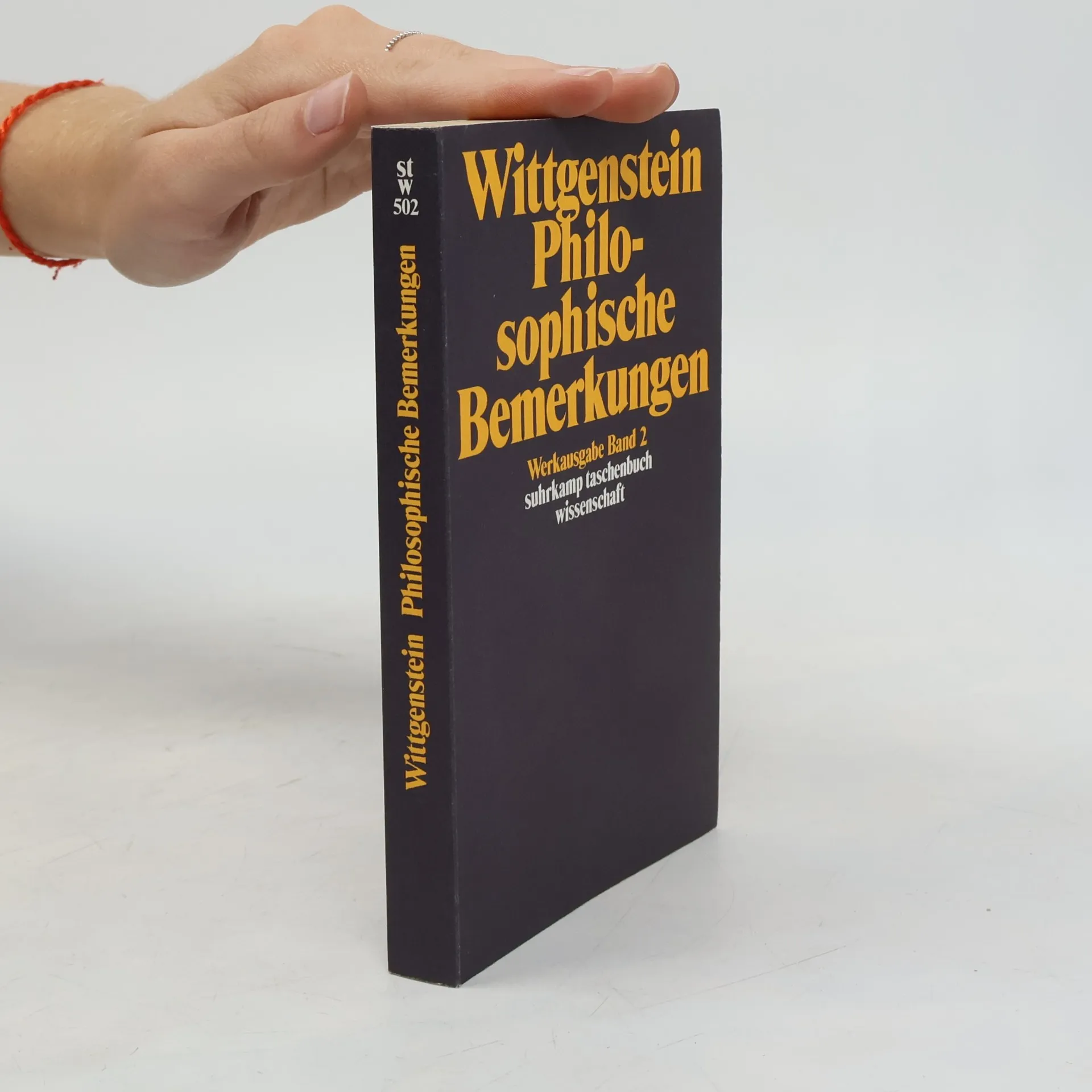
Band 2: Philosophische Betrachtungen. Philosophische Bemerkungen.
333 páginas
12 horas de lectura
Wittgensteins "Philosophische Bemerkungen" und seine "Philosophische Grammatik" basieren auf den zwischen 1929 und 1932 entstandenen Manuskriptbänden I–X. Diese Texte wurden erstmals vollständig und absolut werktreu in der "Wiener Ausgabe" veröffentlicht: ein netzwerkartiges Gedankengeflecht, in dem der Leser, kreuz und quer wandernd, eigene Pfade der Erkenntnis erkunden kann. Die "Studien Texte" sind seitengleich mit den jeweiligen Texten der Gesamtausgabe und somit komplett in die "Wiener Ausgabe" mitsamt ihren Apparaten und zukünftigen Kommentaren integriert. Band 2 enthält die Manuskriptbände III und IV – Mss 107 und 108, geschrieben zwischen 6. Oktober 1929 und 9. August 1930.
Band 4: Bemerkungen zur Philosophie. Bemerkungen zur philosophischen Grammatik
240 páginas
9 horas de lectura
Wittgensteins "Philosophische Bemerkungen" und seine "Philosophische Grammatik" basieren auf den zwischen 1929 und 1932 entstandenen Manuskriptbänden I–X. Diese Texte wurden erstmals vollständig und absolut werktreu in der "Wiener Ausgabe" veröffentlicht: ein netzwerkartiges Gedankengeflecht, in dem der Leser, kreuz und quer wandernd, eigene Pfade der Erkenntnis erkunden kann. Die "Studien Texte" sind seitengleich mit den jeweiligen Texten der Gesamtausgabe und somit komplett in die "Wiener Ausgabe" mitsamt ihren Apparaten und zukünftigen Kommentaren integriert. Band 4 enthält die Manuskriptbände VII und VIII – Mss 111 und 112, geschrieben zwischen 7. Juli 1931 und 29. November 1931.
"Anstatt zu sagen, »die Ethik ist die Untersuchung dessen, was gut ist«, hätte ich sagen können, die Ethik ist die Untersuchung dessen, was wertvoll ist oder was sehr wichtig ist; oder aber ich hätte sagen können, die Ethik ist die Untersuchung des Sinns des Lebens oder des lebenswerten Lebens oder des richtigen Lebens." Wittgenstein in seiner "Lecture on Ethics" vor Studierenden der Heretics Society an der University of Cambridge. Gröls-Klassiker (Edition Werke der Weltliteratur)
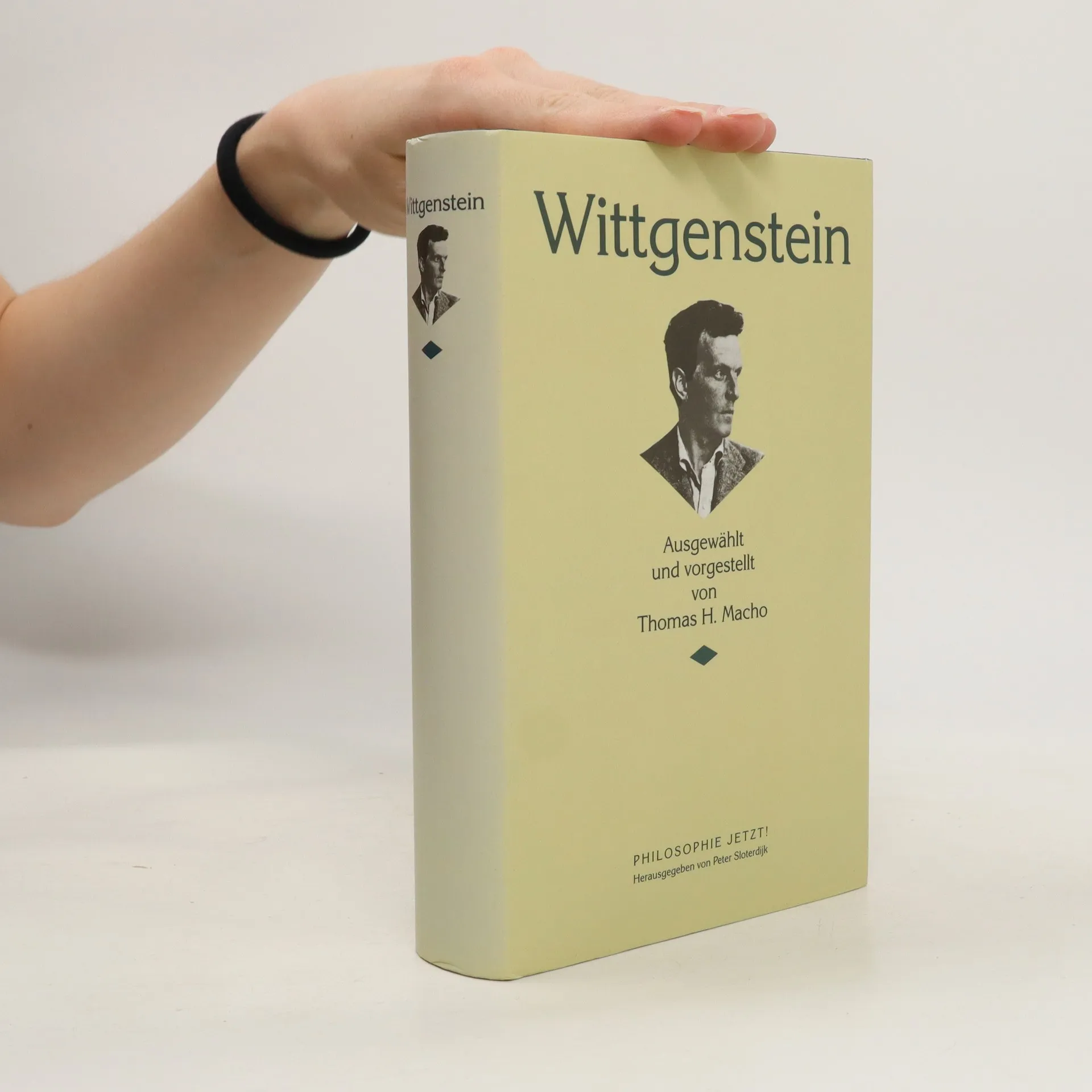
»Ein eigenwilliger Ästhet, ein Mönch mit asketischen Ambitionen und ein radikal exzentrisches Genie, oft nahe dem Selbstmord oder dem Wahnsinn« Ludwig Wittgenstein ist eine Ausnahmeerscheinung unter den Philosophen der westlichen Welt, und Thomas H. Macho behandelt ihn außergewöhnlich: Er hat um die prominenten Texte des Philosophen eine Vielzahl kleiner Abhandlungen und Notizen geschart, die schlaglichtartig erhellen, woran er sich gedanklich rieb: Sprache, Logik, Mathematik, Farben, Ethik, Religion, Literatur, Freud, Heidegger, Frazer ... Macho setzt die Punkte miteinander in Beziehung, dringt radikal in die Biographie Wittgensteins ein, präsentiert ihn in einem dichten, tiefen Text, indem er ihn kongenial perspektivistisch zu ergreifen sucht.
Mit seiner Rückkehr nach Cambridge und zum philosophischen Schreiben Ende Januar 1929 plant Wittgenstein, seine neueren Gedanken in einem zweiten Buch zu veröffentlichen. In den zehn Manuskriptbänden, die er von 1929 bis 1932 verfasst hat (WA 1 bis 5), kennzeichnet er die Bemerkungen, die er übernehmen möchte, und diktiert sie in zwei Synopsen (WA 7 und 8). Vor dem Zerschneiden der Synopsen in einzelne Zettel macht er handschriftliche Anmerkungen, wie Seitenreferenzen, Umstellungen und Ergänzungen. Diese Zettel ordnet er neu und bündelt sie unter handschriftlichen Titeln in 19 Kapitel mit 140 Sektionen, aus denen er im März 1933 in Wien das sogenannte Big Typescript diktiert (WA 11). Der Band WA 10 verdeutlicht eindrucksvoll Wittgensteins gedankliche Entwicklung von den Manuskriptbänden über die Synopsen hin zu seinem geplanten Buch. Nur wenige der handschriftlichen Anmerkungen aus den Synopsen wurden in diesen Band aufgenommen, da sie den Text unnötig belastet hätten. Viele dieser Anmerkungen sind aufgrund des Zerschneidens unvollständig, und es bedarf weiterer Forschungsarbeit zu ihrer richtigen Einordnung. Daher werden sie in einem begleitenden elektronischen Apparat veröffentlicht.
Im Vorwort zur Logisch-Philosophischen Abhandlung schreibt Wittgenstein: "Wenn diese Arbeit einen Wert hat, so besteht er in Zweierlei. Erstens darin, daß in ihr Gedanken ausgedrückt sind, und dieser Wert wird um so größer sein, je besser die Gedanken ausgedrückt sind. Je mehr der Nagel auf den Kopf getroffen ist." Diese Präzisierung wird besonders sichtbar in Wittgensteins Taschennotizbüchern, wo seine Bemerkungen oft in mehreren Versionen existieren, zumeist in sprunghafter Abfolge, in einer Art status nascendi. Die den Manuskriptbänden VI bis IX (WA3 bis WA5) voraufgehenden Notizbücher MSS 153a, 153b, 154 und 155 aus der Zeit von 1931 bis 1932 sind erhalten und werden mit diesem Band erstmals veröffentlicht. Bei der Übernahme in die Manuskriptbände ändert Wittgenstein die Abfolge der Bemerkungen, mit dem Zweck, wie er im Vorwort zu den Philosophischen Untersuchungen schreibt, "daß darin die Gedanken von einem Gegenstand zum andern in einer natürlichen und lückenlosen Folge fortschreiten sollten". Und damit einher gehen oftmals weitere Präzisierungen, nicht zuletzt auch in einem poetischen Sinn, denn, wie Wittgenstein schreibt: "Den richtigen Stil schreiben heißt, den Wagen genau aufs Geleise setzen." [2. März 1940]
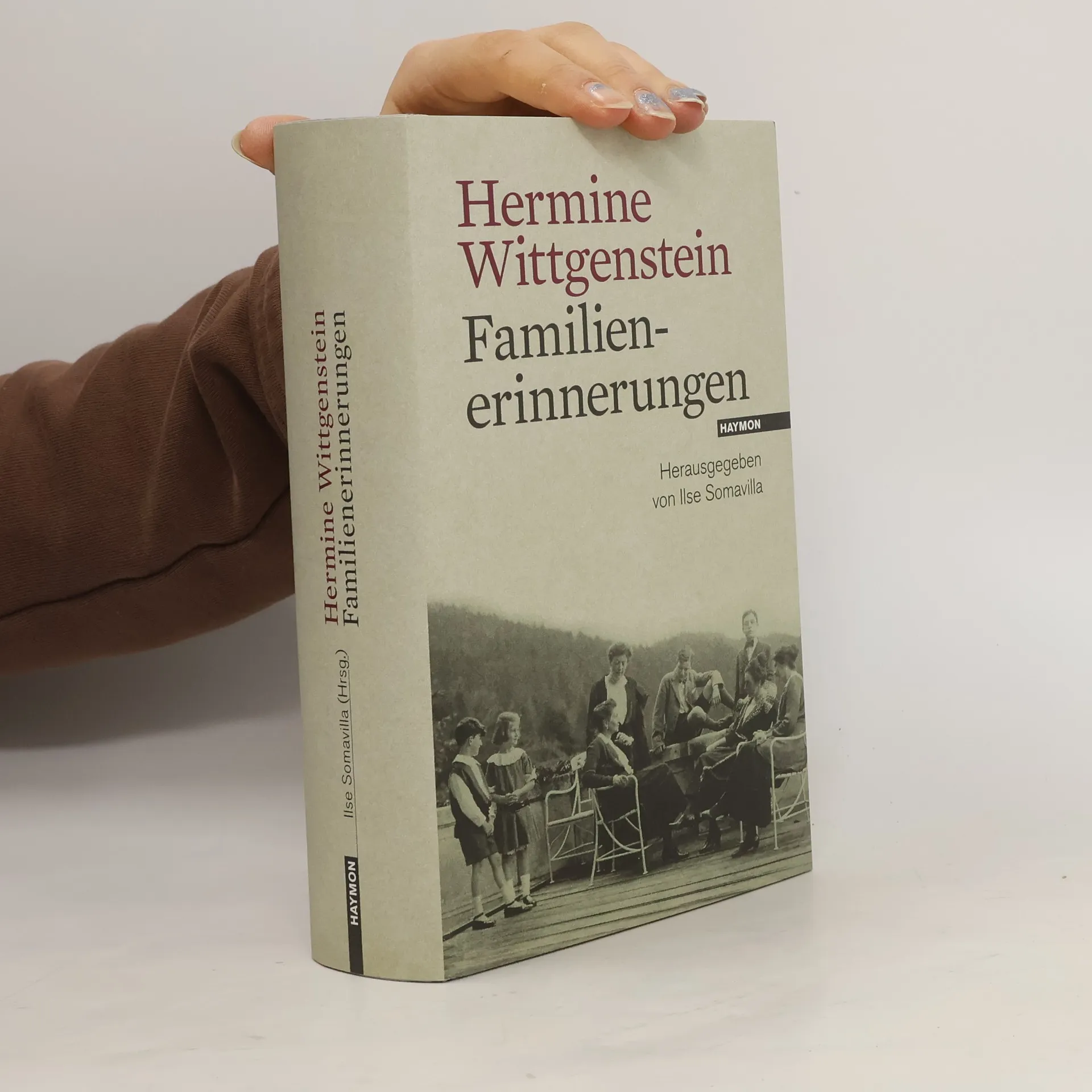
Die Chronik der berühmten Familie Wittgenstein. Die spannende Geschichte einer außergewöhnlichen Familie. Seit Jahrzehnten ist der Name Wittgenstein nicht nur in Intellektuellen- und Philosophen-Kreisen, sondern auch der breiteren Öffentlichkeit ein Begriff. Doch während mit diesem Namen in erster Linie der Philosoph Ludwig Wittgenstein, in zweiter Linie der Pianist Paul Wittgenstein sowie deren Vater, der Stahlmagnat Karl Wittgenstein, verbunden wird, gibt es über weitere Mitglieder der Familie vergleichsweise wenig Literatur. Beeindruckende Aufzeichnungen von Hermine Wittgenstein über ihre Familie werden zugänglich gemacht. Ausführlich und lebendig beschreibt sie die einzelnen Mitglieder der Familie, deren spannende Lebensgeschichten sowie ihre besonderen Eigenschaften, Neigungen und Interessen. Sie erzählt von Schicksalsschlägen und den vielfältigen soziokulturellen Beziehungen, die die Familie mit bekannten Persönlichkeiten pflegte. Die neu zugänglichen Schriftstücke belegen das Kulturverständnis Ludwig Wittgensteins sowie den Einfluss seiner Familie auf seine philosophischen Reflexionen. Die Chronik beschränkt sich jedoch nicht nur auf private Geschichten der Familie. Die Aufzeichnungen, die Hermine Wittgenstein von August 1944 bis Juli 1947 verfasste, spiegeln lebhaft das Bild einer konfliktreichen Zeit wider - der Zeit der beiden Weltkriege und des Nationalsozialismus.
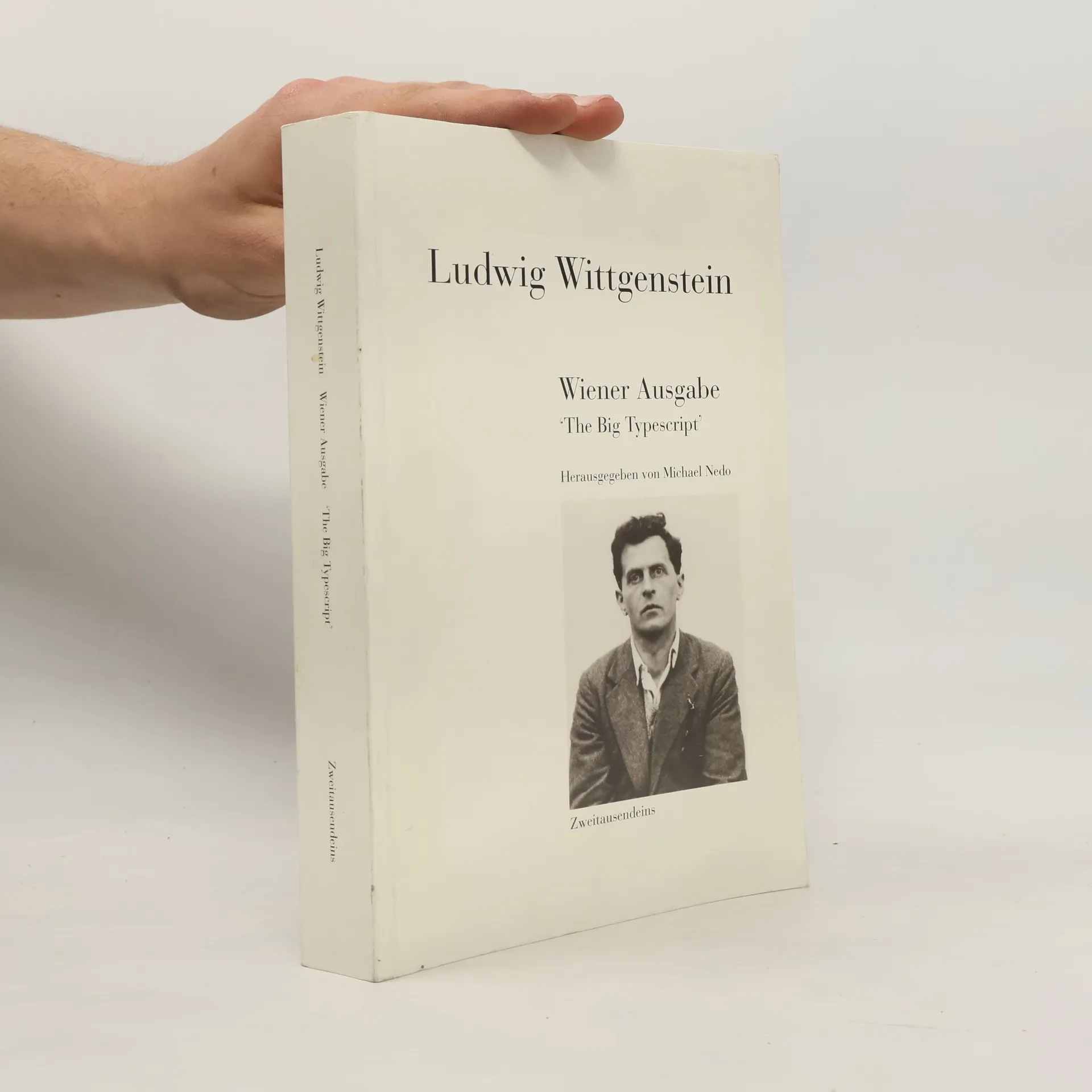
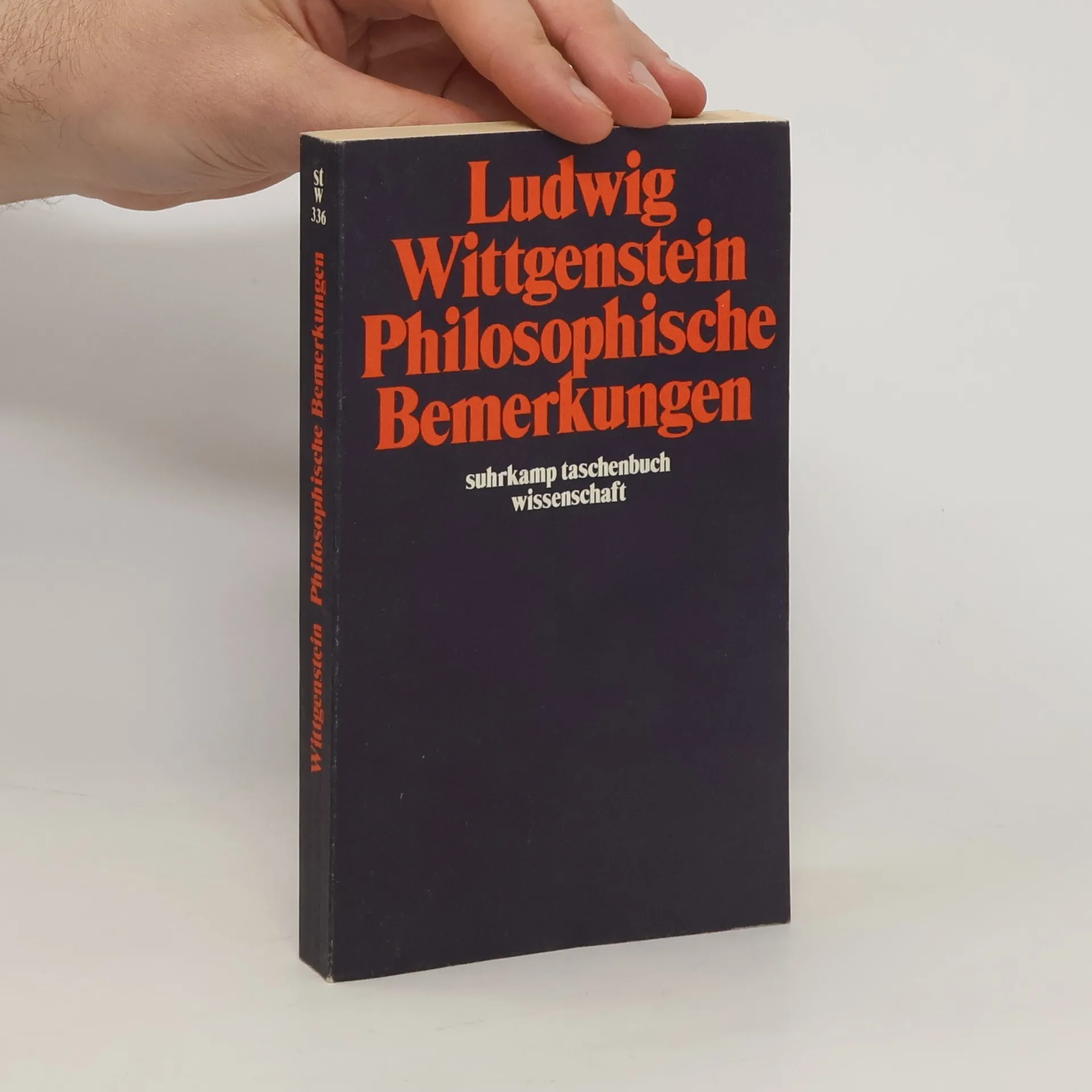
Wittgenstein revidiert Wittgenstein: The Big Typescript. Sein „Tractatus logico-philosophicus“ schien die philosophischen Probleme „im Wesentlichen endgültig gelöst“ (Wittgenstein) zu haben. Doch dann machte Wittgenstein Notizen für ein „zweites Buch“, das die, so Wittgenstein, „schweren Irrtümer“ seines Frühwerkes korrigieren sollte. Vieles davon vernichtete er, doch in seinem Nachlass fanden sich noch immer ca. 20.000 beschriebene Blätter. „‚The Big Typescript‘ ist deswegen bedeutsam, weil in ihm die enge Verbindung von mathematisch-logischer und sprachphilosophischer Reflexion in Wittgensteins Denken geradezu exemplarisch vorgeführt wird“ (Börsenblatt). Der komplette Text der Originalausgabe (deutscher Text) zu 155,94 EUR als Sonderedition im Format 16,5x24 cm. Nur bei uns.
Band 5 der "Wiener Ausgabe" enthalt den Manuskriptband IX und den ersten Teil des Manuskriptbandes X, Mss 113 und 114 aus dem literarischen Nachlass von Ludwig Wittgenstein. Ms 113 befindet sich in der Handschriften- und Inkunabelsammlung der Osterreichischen Nationalbibliothek, Wien, Cod. Ser. n. 22.022. Ms 114 ist im Besitz der Nachlassverwalter, Wren Library, Trinity College, Cambridge. Den Band "IX. Philosophische Grammatik" hatte Wittgenstein am 27. Mai 1931 in Osterreich begonnen. Das letzte Datum von Band "X. Philosophische Grammatik," das wohl dem letzten Eintrag dieses Korpus entspricht, ist der 5. Juni 1931. Beide Manuskripte werden in der "Wiener Ausgabe" jetzt zum ersten Mal veroffentlicht. Der zweite Teil von Band X enthalt eine "Umarbeitung" des sogenannten Big Typescript aus dem Jahre 1933/34. Er wird zu einem spateren Zeitpunkt veroffentlicht."
Tri denníky z rokov 1914–1916, v ktorých je uchovaná kontinuita Wittgensteinovej myšlienkovej práce. Predkladané denníky ponúkajú detailnú podobu cesty, ktorá viedla k vzniku strohých téz jeho Traktátu. Kniha obsahuje tiež Úvod k Tractatus logico-philosophicus od Bertranda Russella.
Perhaps the most important work of philosophy written in the twentieth century, Tractatus Logico-Philosophicus was the only philosophical work that Ludwig Wittgenstein published during his lifetime. Written in short, carefully numbered paragraphs of extreme brilliance, it captured the imagination of a generation of philosophers. For Wittgenstein, logic was something we use to conquer a reality which is in itself both elusive and unobtainable. He famously summarized the book in the following words: 'What can be said at all can be said clearly; and what we cannot talk about we must pass over in silence.' David Pears and Brian McGuinness received the highest praise for their meticulous translation. The work is prefaced by Bertrand Russell's original introduction to the first English edition.
Der zweisprachige Band führt in die "Wiener Ausgabe" der Werke Ludwig Wittgensteins (1889-1951) ein, in der erstmals dessen Manuskripte vollständig und in getreuer Wiedergabe erscheinen werden. In jahrzehntelanger Arbeit wurde der Nachlass mithilfe einer Editionsmethode ediert, die für dieses ungewöhnliche Werk speziell entwickelt wurde. Der Einführungsband erklärt diese Methode wie die editorische Situation des Nachlasses und stellt darüber hinaus Arbeitsunterlagen für das Studium von Wittgensteins Texten zur Verfägung: Eine biographische Skizze zeigt die Verbindung von Leben und Werk, eine schematische Chronologie erleichert die Zuordnung der jeweiligen Manuskriptseiten und Typoskripte. Die Gegenüberstellung von Faksimileabdrucken einzelner Manuskriptseiten und der edierten Seiten läßt die einzelnen Schritte der Textedition transparent werden.
Ein nächtliches (Traum-) Erlebnis und ein Brief-Fragment
80 páginas
3 horas de lectura
Die Beziehung von Wittgenstein zum Glauben war ambivalent. Einerseits verband er ihn mit etwas Dunklem, das sich in dem Gefühl zeigt, völlig der Macht eines göttlichen, strengen Richters ausgeliefert zu sein, wie es im Alten Testament erscheint. Andererseits bedeutete der Glauben Licht, ein Symbol für reine Spiritualität, Wahrheit und Transparenz, Dinge, nach denen er in seiner Philosophie strebte. Im persönlichen Leben scheint der Glauben mit der Erlösung innerer Bedürfnisse, mit Erleuchtung im Bestreben, philosophische Probleme zu lösen, verbunden zu sein. Zwei Texte des großen Philosophen, die bis jetzt unveröffentlicht sind, ermöglichen die Untersuchung der Spannungsbeziehung von Wittgenstein zur Religion und zu den kulturellen Werten der Zivilisation. Der eine ist das Tagebuch eines nächtlichen (traumhaften) Erlebnisses aus dem Jahr 1922, der andere ein Fragment eines Briefes, den Wittgenstein wahrscheinlich 1925 an seine Schwester Hermine schrieb.












![Vorlesungen 1930 [neunzehnhundertdreissig] - 1935](https://rezised-images.knhbt.cz/1920x1920/54265832.webp)