Hobbes
- 368 páginas
- 13 horas de lectura


Este filósofo británico es un pensador fundamental de la filosofía política moderna. Sus ideas, arraigadas en el materialismo mecanicista, caracterizan la naturaleza humana como impulsada por la codicia y el miedo a la muerte, abogando así por una monarquía absoluta. Sentó las bases de gran parte de la filosofía política occidental a través de la teoría del contrato social, siendo además un distinguido erudito de la historia y la literatura griegas clásicas.




The Original Texts from Hobbes, Locke, Rousseau and The Founding Fathers of the United States
Exploring the evolution of political thought, this collection includes foundational texts that shaped modern governance. It begins with Hobbes' view of the necessity of a strong central authority, followed by Locke's arguments for natural rights and government by consent. Rousseau's work introduces the concept of collective will and social agreements, while the Constitution of Pennsylvania exemplifies practical application of these theories in establishing a democratic framework. Together, these works highlight the transition from absolute rule to democratic principles.
The correspondence of Thomas Hobbes, a pivotal figure in European thought, is presented in this comprehensive edition, offering a fresh perspective on his intellectual contributions. Each letter is accompanied by detailed explanatory notes, along with extensive biographical and bibliographical information. This landmark publication enhances understanding of Hobbes's life and ideas, reflecting the growing interest in his work and the context in which he wrote.
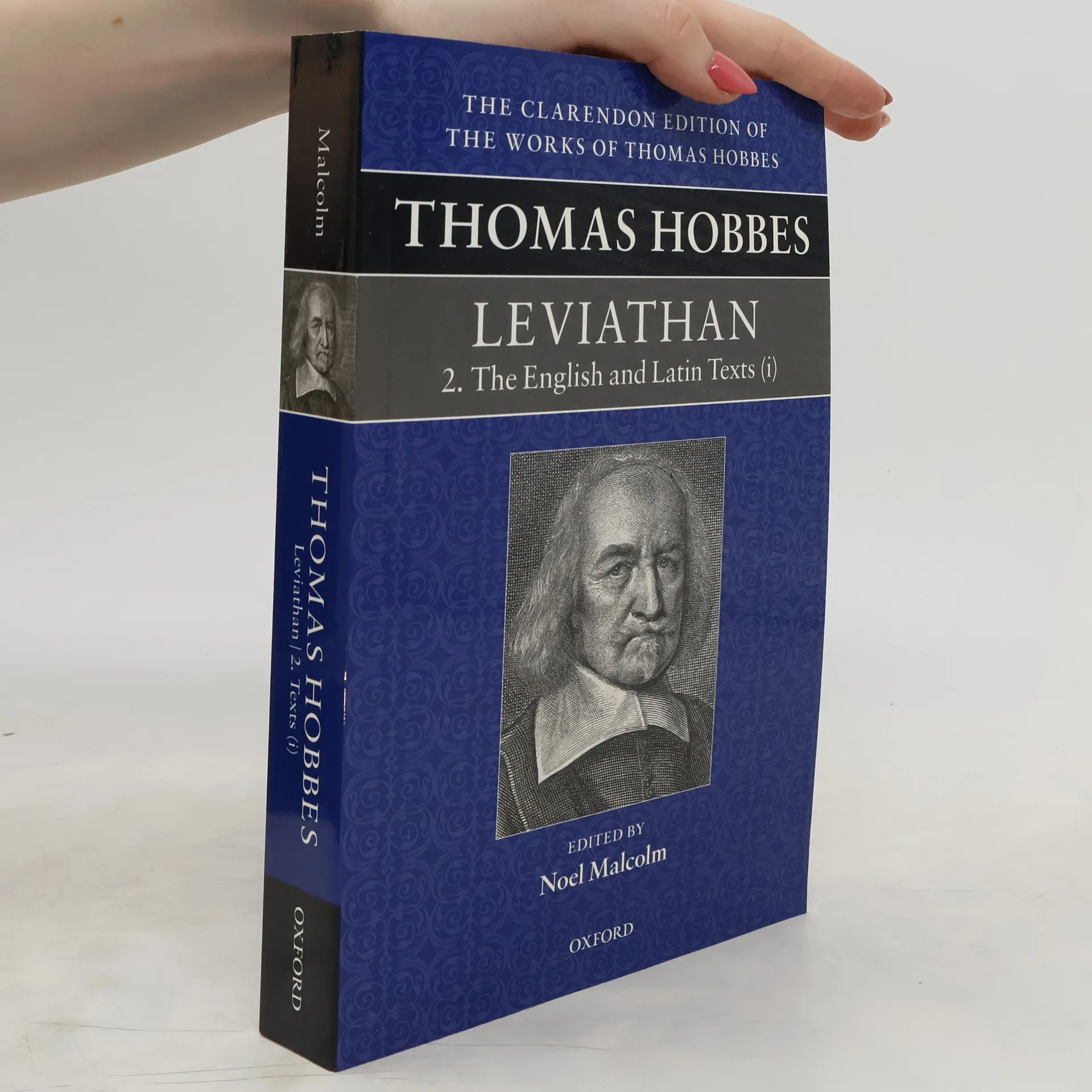
"The first volume contains the editorial introduction and the second and third volumes contain the texts, with annotations." from back cover.
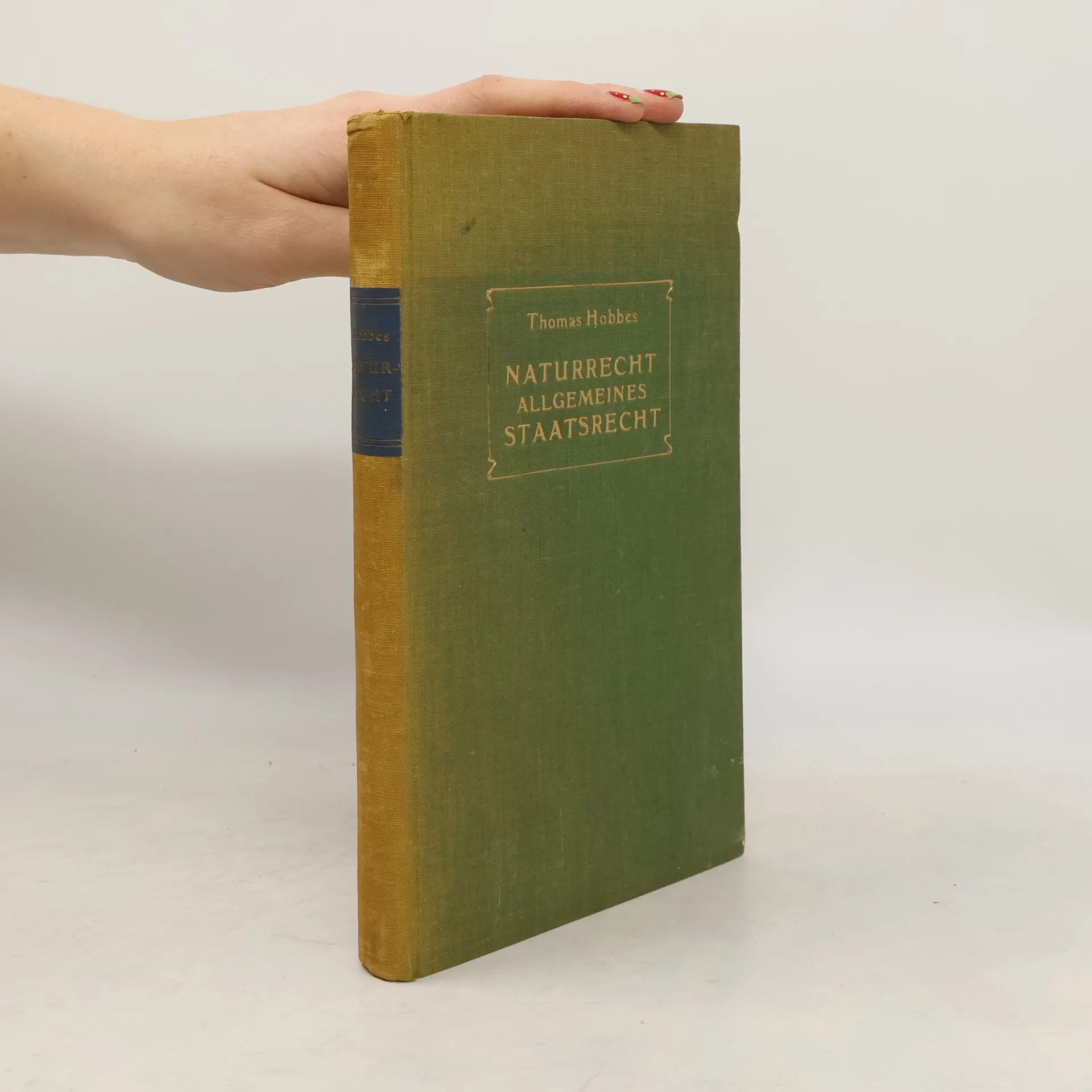
Ferdinand Tonnies presents two works by Thomas Hobbes, highlighting "The Elements of Law," Hobbes's inaugural systematic political treatise completed in 1640. This foundational text offers insight into Hobbes's philosophical development, serving as a precursor to his later political theories. It explores the intricacies of his thought process and lays the groundwork for understanding his contributions to political philosophy.
HarperCollins is proud to present its incredible range of best-loved, essential classics... Despite dating from the 4th century BC, The Art of Rhetoric continues to be regarded by many as the single most important work on the art of persuasion. As democracy began emerging in 5th-century Athens, public speaking and debate became an increasingly important tool to garner influence in the assemblies, councils, and law courts of ancient Greece. In response to this, both politicians and ordinary citizens became desperate to learn greater skills in this area, as well as the philosophy behind it. This treatise was one of the first to provide just that, establishing methods and observations of informal reasoning and style, and has continued to be hugely influential on public speaking and philosophy today. Aristotle, the grandfather of philosophy, student of Plato, and teacher of Alexander the Great, was one of the first people to create a comprehensive system of philosophy, encompassing logic, morality, aesthetics, politics, ethics, and science. Although written over 2,000 years ago, The Art of Rhetoric remains a comprehensive introduction for philosophy students into the subject of rhetoric, as well as a useful manual for anyone today looking to improve their oratory skills of persuasion.
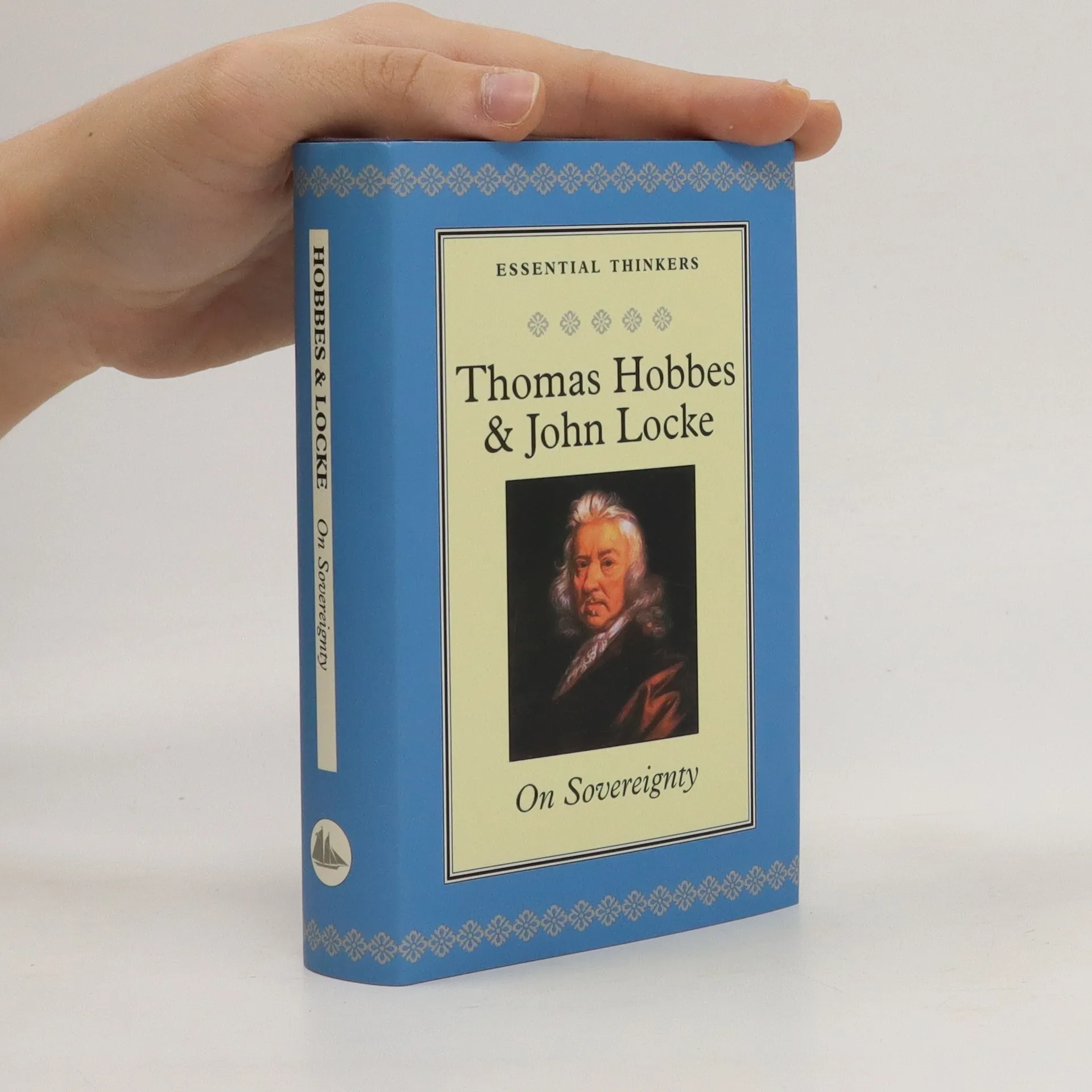
Thomas Hobbes, the royalist, is above all famous for his 'social contract theory', the appeal to the agreement that would be made among rational, free, and equal persons. His conclusion - that we should submit to the authority of an absolute and unlimited sovereign power - may not have found many followers, but his analysis remains unchallenged. John Locke, by contrast, was a parliamentarian. He argued that sovereignity resides with the people, and that the state is supreme only when bound by civil and natural law. It follows that revolution is not only a right, but sometimes an obligation. He was a strong supporter of religious freedom, and of a system of checks and balances in government. Many of his ideas were later embodied in the US constitution.
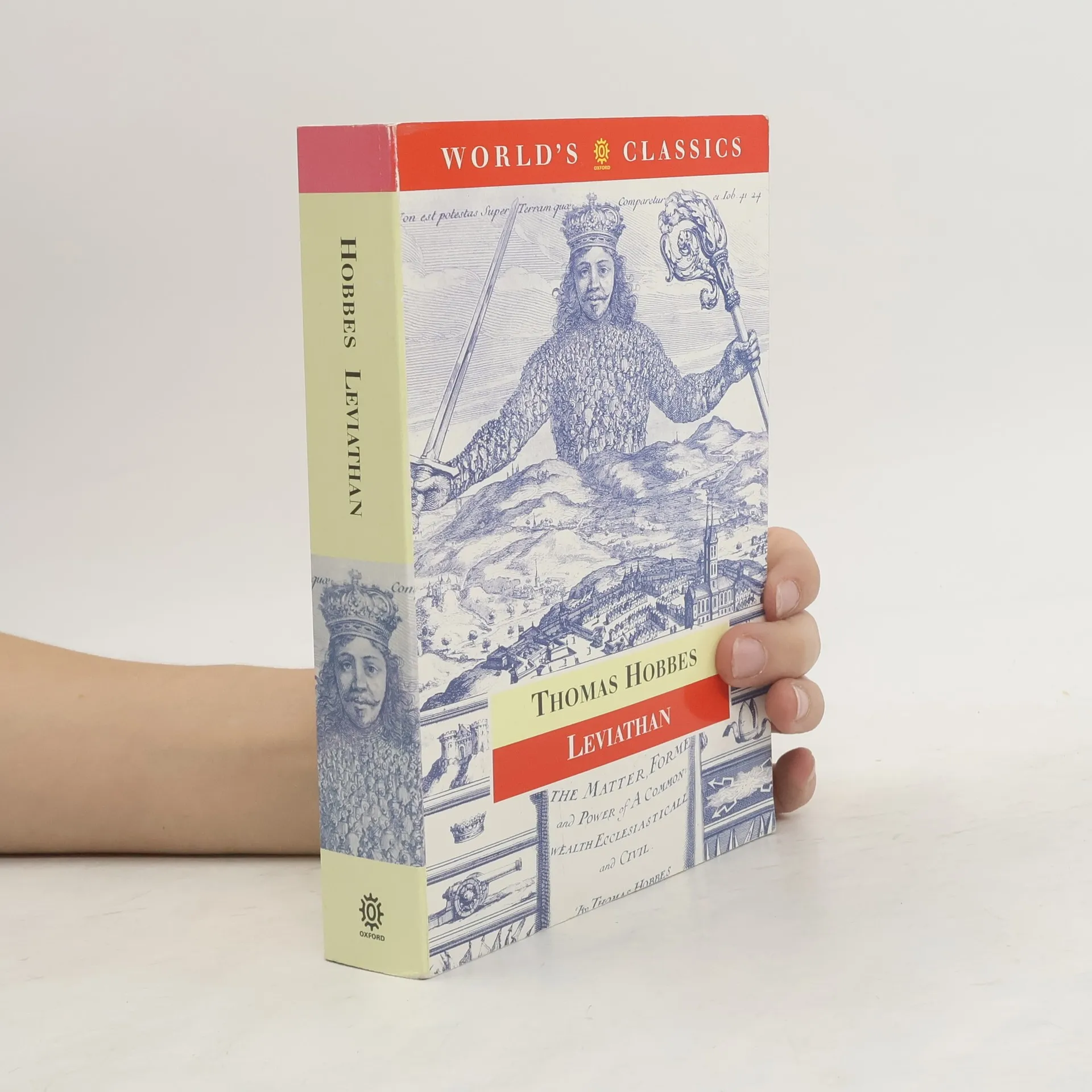
Leviathan is both a magnificent literary achievement and the greatest work of political philosophy in the English language. Permanently challenging, it has found new applications and new refutations in every generation. Hobbes argues that human beings are first and foremost concerned with their own individual desires and fears. He shows that a conflict of each against every man can only be avoided by the adoption of a compact to enforce peace. The compact involves giving up some of our natural freedom to a sovereign power which will enforce the laws of peace on all citizens. Hobbes also analyses the subversive forces - religion, ambition, private conscience - that threaten to destroy the body politic, Leviathan itself, and return us to the state of war. . This new edition reproduces the first printed text, retaining the original punctuation but modernizing the spelling, and incorporating the corrections found in the best copies. It offers exceptionally thorough and useful annotation, and introduction that guides the reader through the complexities of Hobbes's arguments, and a substantial index.
"Thomas Hobbes's essay on the social contract is both a founding text of western thought and a masterpiece of wit and imagination" -Robert McCrum ; The Guardian Leviathan is a book written by Thomas Hobbes (1588-1679) and published in 1651. Its name derives from the biblical Leviathan. The work concerns the structure of society and legitimate government, and is regarded as one of the earliest and most influential examples of social contract theory. Leviathan ranks as a classic Western work on statecraft comparable to Machiavelli's The Prince. Written during the English Civil War (1642-1651), Leviathan argues for a social contract and rule by an absolute sovereign. Hobbes wrote that civil war and the brute situation of a state of nature ("the war of all against all") could only be avoided by strong, undivided government. A True Classic for All Lovers of Political Philosophy!
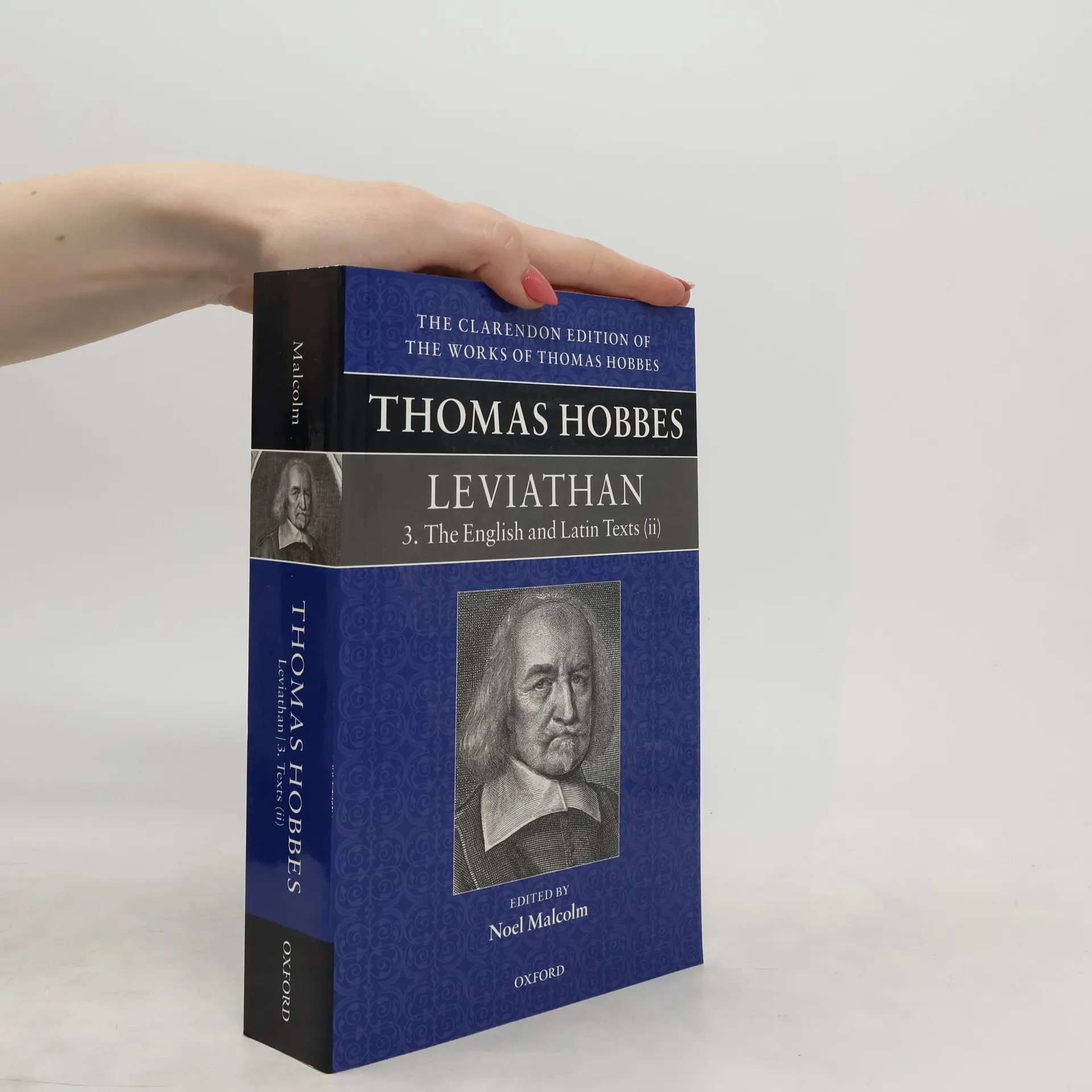
"The first volume contains the editorial introduction and the second and third volumes contain the texts, with annotations." from back cover.
Exploring the structure of society and legitimate governance, this classic Western work delves into social contract theory, positioning itself alongside Machiavelli's The Prince. Written amidst the turmoil of the English Civil War, it advocates for a powerful, absolute sovereign as the solution to the chaos of a state of nature, where conflict prevails. Hobbes emphasizes that only through a strong, unified government can civil war be averted, making a compelling case for the necessity of authority in maintaining order.
The Original Texts from Machiavelli, Hobbes, Locke, Rousseau and The Founding Fathers of the United State
Exploring foundational political theories, this collection features seminal texts from influential thinkers such as Machiavelli, Hobbes, Locke, and Rousseau, alongside the Constitution of Pennsylvania. Each work delves into themes of power, governance, and social contract theory, offering insights into the evolution of political thought from the Renaissance to the Enlightenment. Readers will encounter diverse perspectives on authority, individual rights, and the role of government, reflecting the complex interplay between philosophy and the formation of modern democratic principles.
The 100 best nonfiction books: No 94 - Leviathan by Thomas Hobbes (1651)
Exploring the foundations of political philosophy, this work delves into the social contract theory and the necessity of a strong central authority to prevent chaos. Hobbes argues that in the state of nature, life is "solitary, poor, nasty, brutish, and short," necessitating an absolute sovereign to maintain order and protect individuals. The book critiques human nature and examines the relationship between morality and governance, making it a seminal text in understanding the evolution of modern political thought.
The Matter, Forme and Power of a Commonwealth Ecclesiasticall and Civil
Exploring the structure of society and governance, this influential work by Thomas Hobbes presents a compelling argument for social contract theory and the necessity of an absolute sovereign. Written amid the turmoil of the English Civil War, it addresses the chaos of a state of nature, advocating that only a strong, undivided government can prevent civil conflict. The book's title, derived from the biblical creature, symbolizes the immense power and authority Hobbes believes is essential for societal stability.
Exploring the foundations of political philosophy, this work argues for a strong centralized government to address humanity's brutish tendencies. Written amid political turmoil, it examines the balance between liberty and authority, emphasizing the need for societal structures to ensure peace and protection. Its insights have significantly influenced modern political theory and continue to resonate in both historical and contemporary governance discussions.
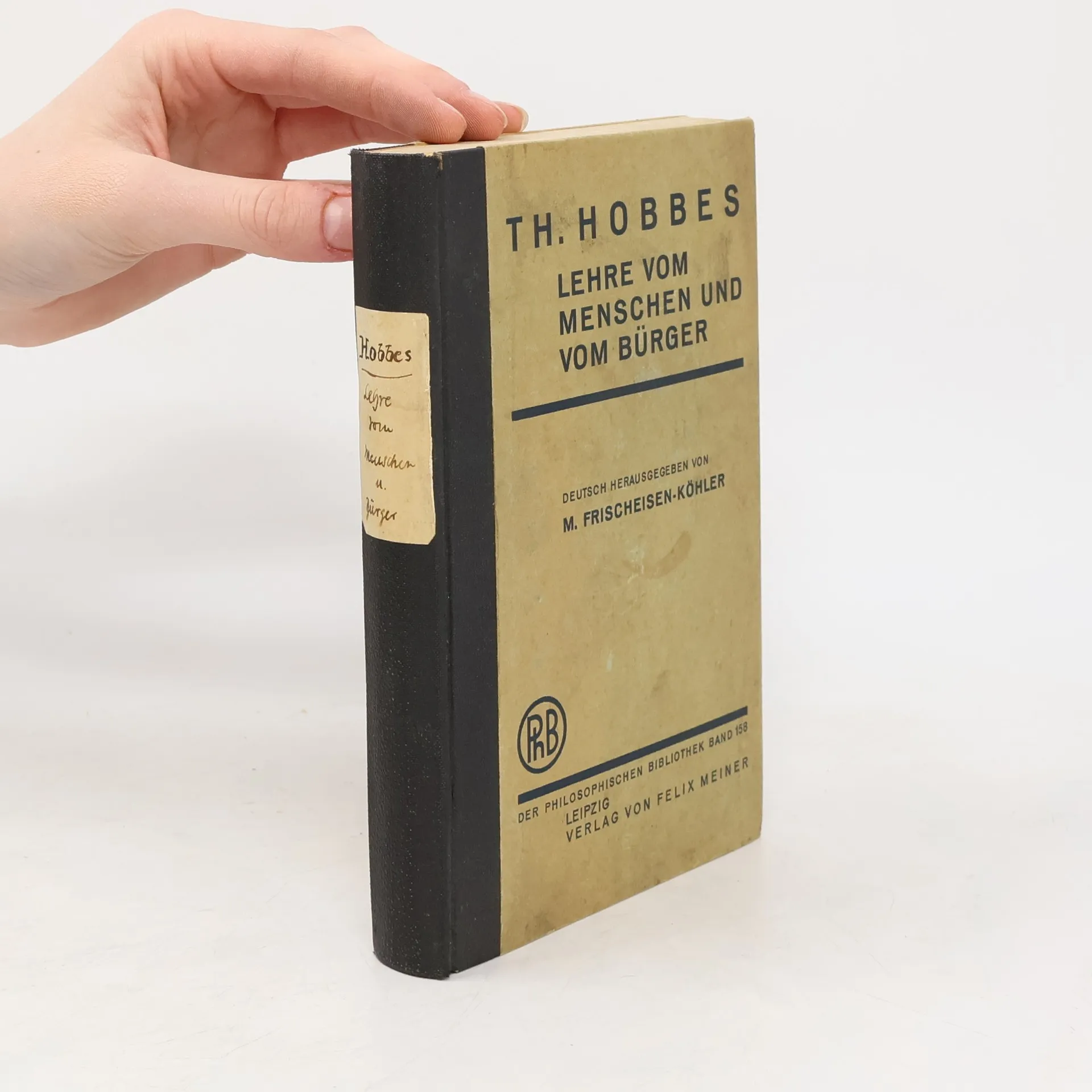
Verlagsinfo: In "Vom Menschen" (1658) zeichnet Hobbes (1588-1679) ein illusionsloses Bild von der Unfreiheit des Menschen, der in seinen Handlungen gesteuert wird von der Macht der Affekte, also einem natürlichen, auf Selbsterhaltung und Lustgewinn gerichteten Egoismus. Es ist daher ein Gebot des recht verstandenen Selbsterhaltungstriebs, dass die Menschen aus Vernunft übereinkommen, sich Gesetze zu geben und der Macht eines frei gewählten Staates zu unterwerfen, wie Hobbes in "Vom Bürger" (1642) ausführt - seinem Werk mit der gröt︢en Wirkung auf die Rechts- und Staatsphilosophie der Neuzeit
Sans avoir la facture définitive du Léviathan, Le Citoyen (De cive) publié à Paris en 1642, en contient toutes les prémisses et en annonce les thèses ; la même logique politique y est le creuset de l'extraordinaire mutation que Hobbes opère dans le champ de la philosophie politique et dans le domaine de l'univers juridique. A la référence cosmologique et théologique du droit naturel classique, Hobbes substitue une référence anthropologique. Mais si l'homme est un loup pour l'homme en l'état de nature, il peut accéder au domaine du juste non pas contre l'empire de l'Etat, mais grâce à lui. Outre le texte du Citoyen, ce volume comprend l'article " Hobbes " du Dictionnaire historique et critique de Bayle et l'article " Hobbisme " que Diderot rédigea pour l'Encyclopédie.
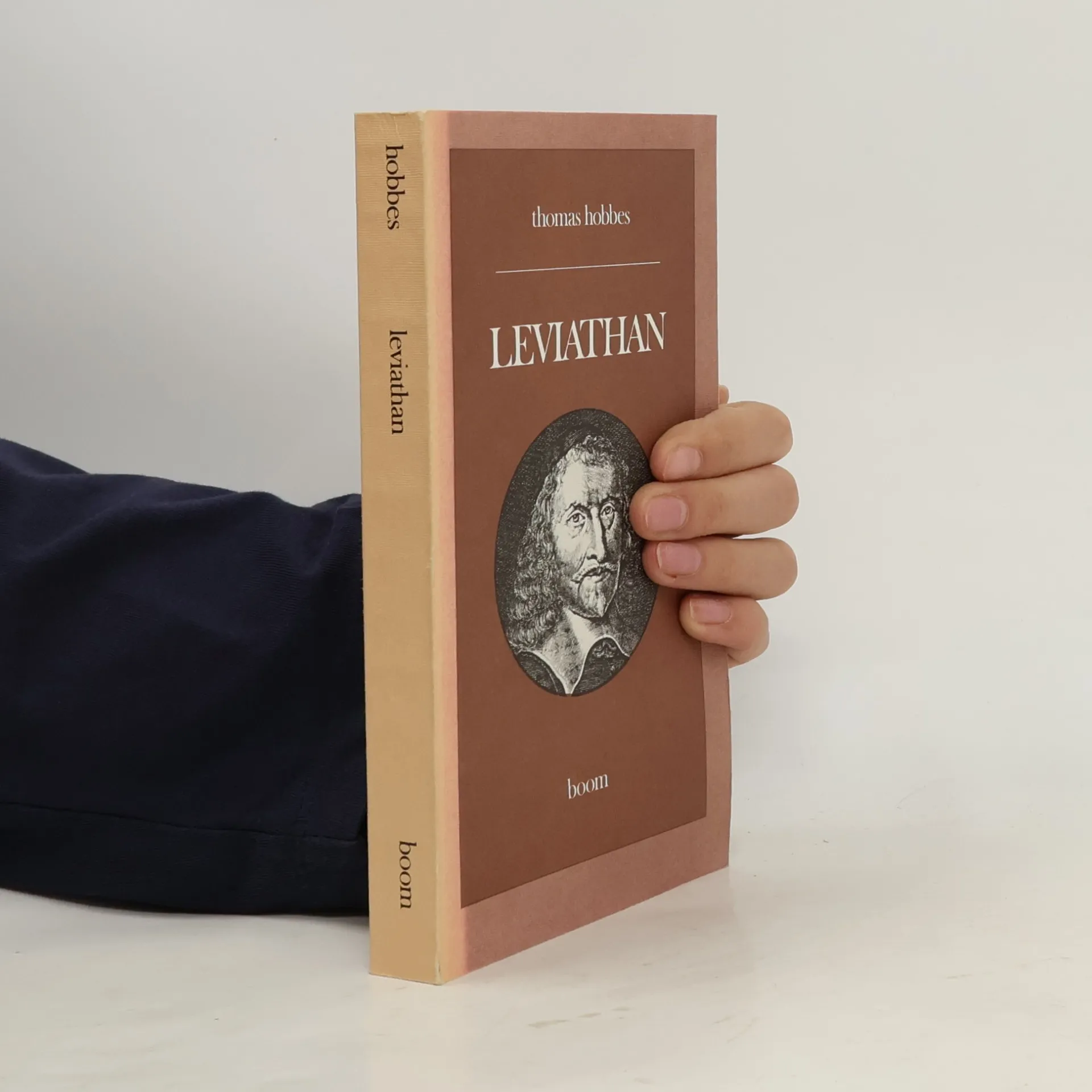
Hobbes’ »Leviathan« ist neben Rousseaus »Contrat social« und Hegels »Philosophie des Rechts« eines der drei folgenreichsten Werke der politischen Theorie.
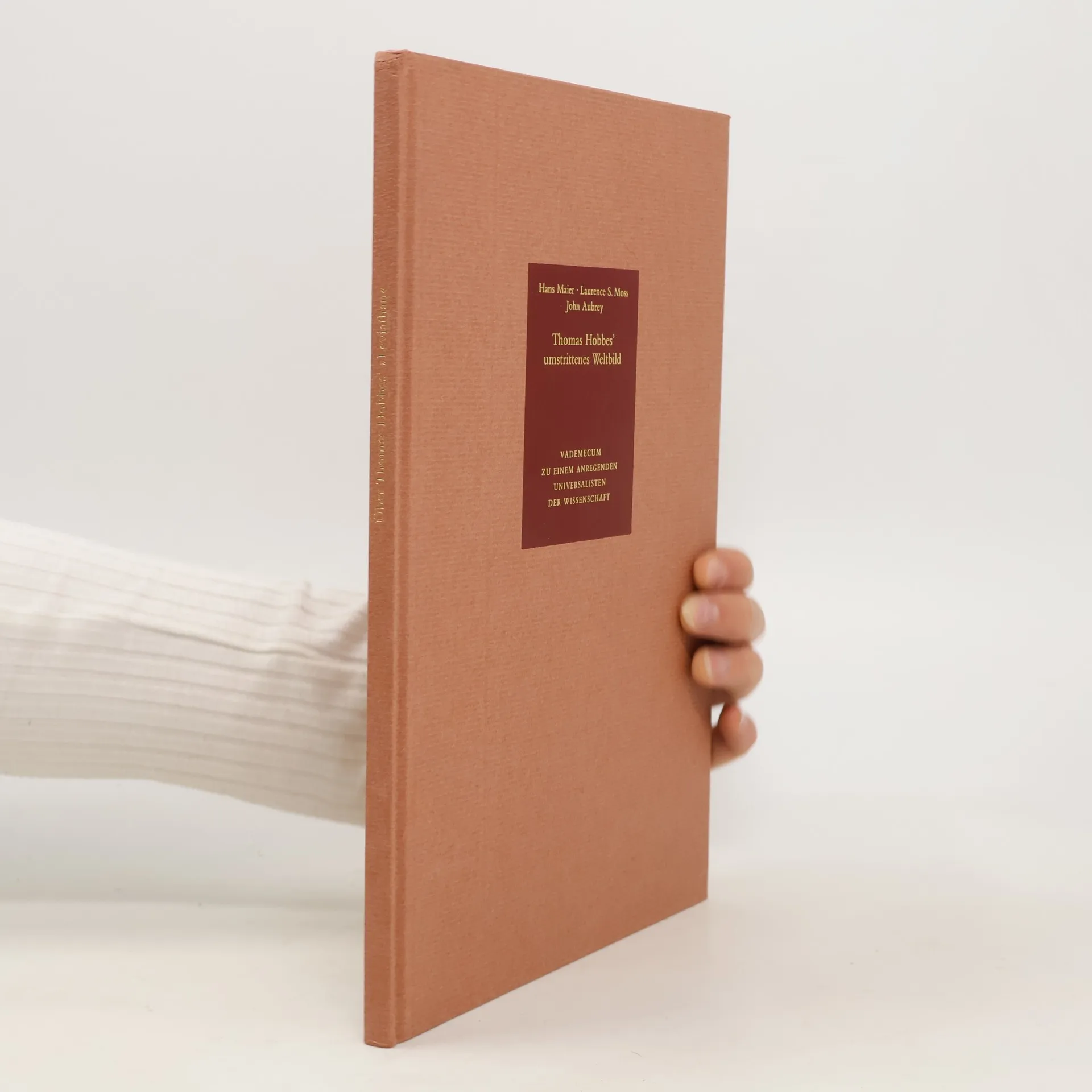
Enthält: Die reine und die böse Macht ... / Hans Maier. Thomas Hobbes' Leviathan ... / Laurence S. Moss. Thomas Hobbes / John Aubrey. Hobbes' Bild der Welt ... / Horst Claus Recktenwald
Übersetzt, eingeleitet und herausgegeben von Alfred J. Noll
Übersetzt, eingeleitet und herausgegeben von Alfred J. Noll
Thomas Hobbes übersetzte 1628 das große Geschichtswerk des Thukydides über den Peloponnesischen Krieg ins Englische. Im Vorwort hebt er Thukydides' Geschichtsschreibung hervor und führt Themen ein, die später Grundsteine seines staatsphilosophischen Denkens und Wirkens werden. Thukydides erkennt nicht nur Rhetorik und Demagogie als Ursachen des Bürgerkriegs, sondern auch die zentrale Rolle, die Aberglaube hierbei spielt. Vor allem aber die Objektivität der Geschichtsschreibung und die subtile Didaktik sind zentrale Aspekte, die für Hobbes das humanistische Ideal darstellen und ihn stark in seinem Schaffen prägten.
Die Auseinandersetzung mit Bischof Bramhall
Während des englischen Bürgerkrieges fand 1645 im Pariser Exil eine kontroverse Debatte zwischen Thomas Hobbes und dem anglikanischen Bischof John Bramhall über Willensfreiheit statt. Diese Auseinandersetzung spiegelte zwei unterschiedliche Weltmodelle und Auffassungen über Materialismus, Freiheit und das Verständnis des „Willens“ wider. Hobbes’ fundamentale Angriffe auf das „liberum arbitrium“, das seit Augustinus als Grundlage für persönliche Verantwortung galt, stießen auf starken Widerspruch. Sein neuartiges Freiheitsverständnis, das Freiheit als die Fähigkeit definierte, ungehindert zu handeln, ging über die traditionelle theologische Debatte hinaus und beantwortete die Frage nach dem freien Willen negativ. Der Vorwurf, er würde die Religion und das Fundament der Gesellschaft untergraben, wurde später auch Spinoza gemacht. Die Diskussion zwischen Hobbes und Bramhall dokumentiert die philosophischen Umbrüche, die mit dem Aufstieg der Naturwissenschaften in der Frühen Neuzeit einhergingen, und markiert den Beginn der modernen Debatte über Willensfreiheit. Viele Aspekte dieser komplexen Problematik sind bereits in dieser Auseinandersetzung zu finden. Die Ausgabe enthält Hobbes’ Werke „On Liberty and Necessity“ sowie Auszüge aus „The Questions Concerning Liberty, Necessity, and Chance“ mit Kommentaren von Bramhall, ergänzt durch eine Einleitung, Anmerkungen des Herausgebers, ein Register und ein Verzeichnis der angeführten Bi
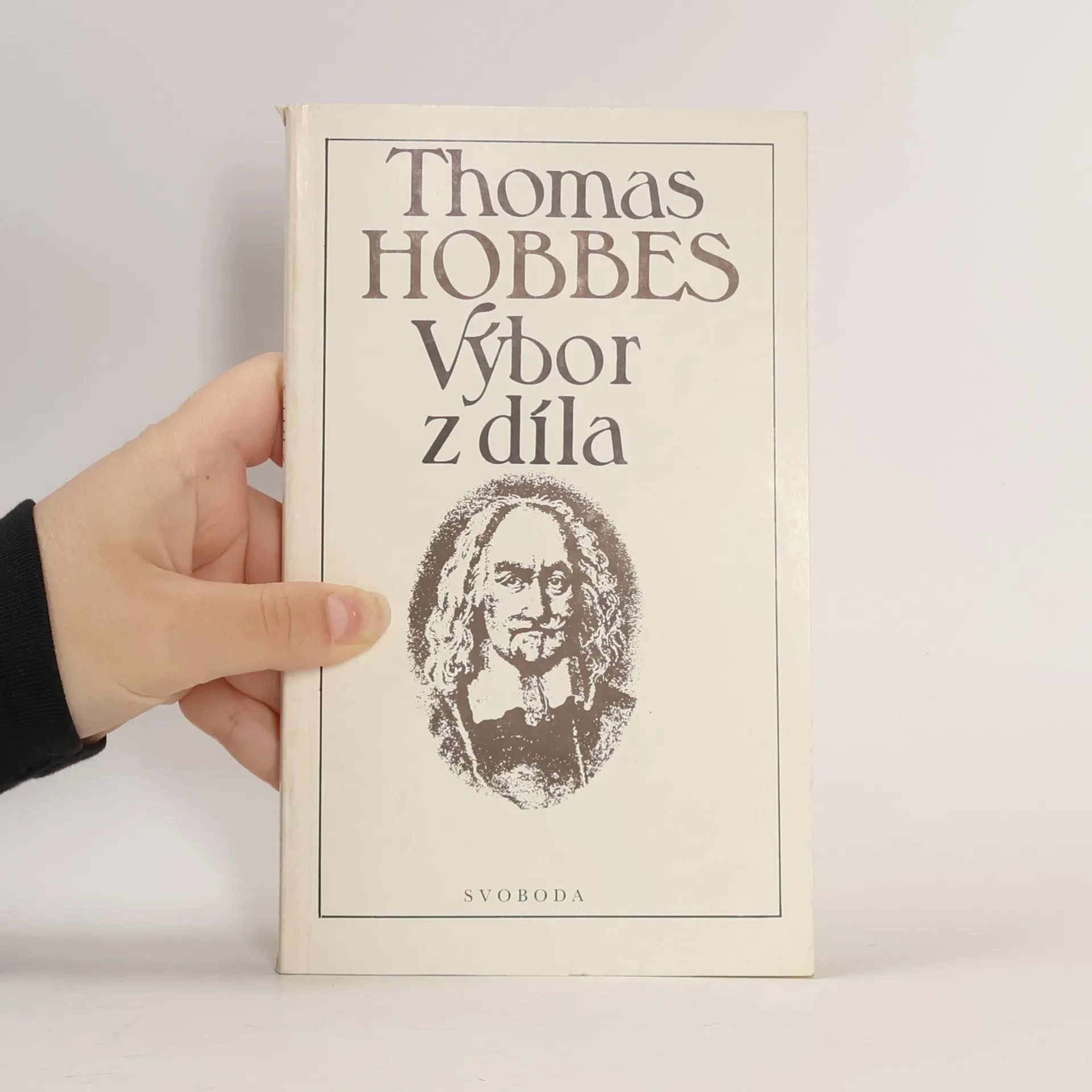
Výbor z díla anglického filozofa materialisty, sociálního myslitele a teoretika státu obsahuje spisy O tělese, O člověku, O občanu a je doplněn Hobbesovými Námitkami k úvahám o první filozofii René Descarta.
De laatste decennia is er sprake van een renaissance van deze klassieke filosoof. Dit komt door het feit dat de vragen die Hobbes heeft gesteld naar de verhouding tussen staat en burger, tussen geweld, macht en gezag, en naar de grenzen van het overheidsgezag actueler zijn dan ooit tevoren. In Leviathan, uit 1651 presenteert Hobbes zich als de theoreticus van de opkomende burgerlijke staat. De behoefte aan een politieke theorie door de Republiek der Zeven Provinciën heeft in grondslag gelegen aan de eerste Nederlandse vertaling, uit 1667. De hernieuwde belangstelling voor politieke theorie ook in ons land vormt de aanleiding tot deze nieuwe vertaling van wat uit de zeventiende eeuw.
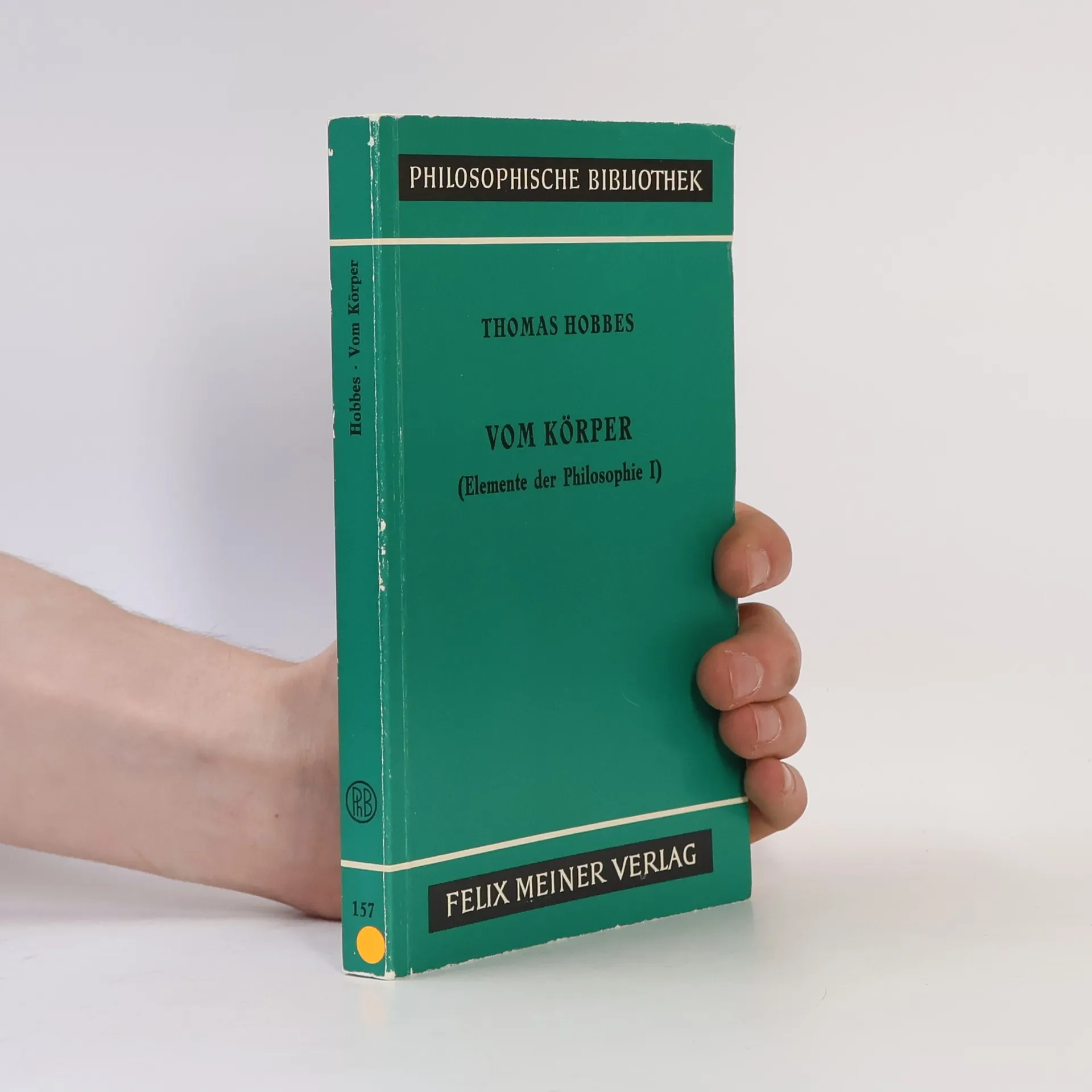
Lehre vom Körper
Elemente der Philosophie I.
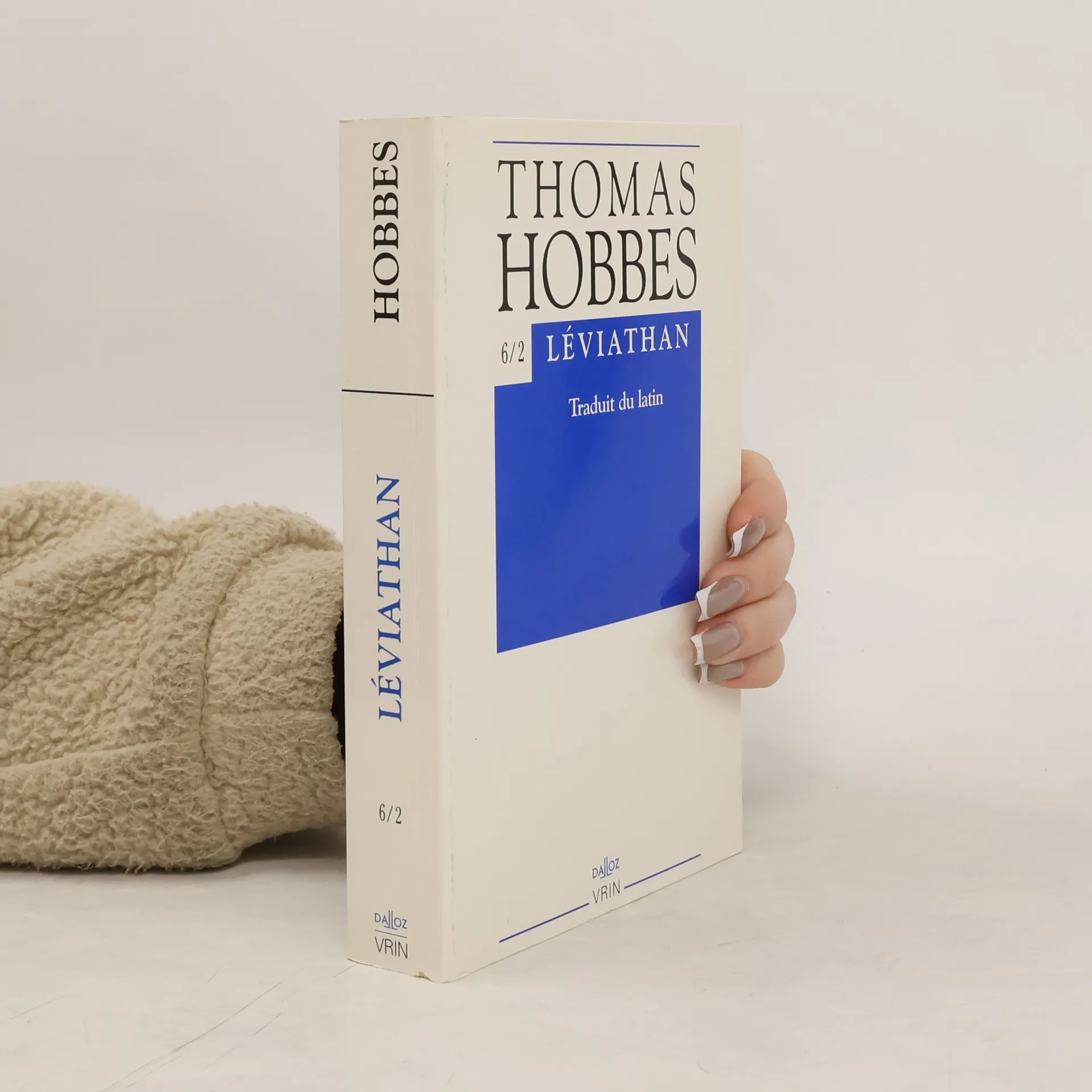
Le Leviathan, en langue latine, qui se trouve ici traduit pour la premiere fois dans son integralite en francais, n'a vu le jour qu'en 1668, mais son contenu ne se reduit aucunement a la version anglaise publiee 17 ans auparavant. Au lieu de constituer une transposition fidele du texte de 1651, ce deuxieme Leviathan doit etre tenu, de plein droit, comme un autre Leviathan. La connaissance achevee de la philosophie politique de Hobbes exige ainsi de ne pas laisser ce texte latin dans l'ombre du texte anglais. En effet, apres les critiques d'atheisme et d'opportunisme qui lui furent adressees, ce nouvel ouvrage premunit Hobbes contre toute accusation d'heresie, en dotant d'une fonction doctrinale essentielle le refus de subordonner le pouvoir politique au pouvoir ecclesiastique. Le Leviathan latin a ainsi pour originalite l'accentuation de la dimension theologico-politique de son enseignement moral et politique, d'ou le caractere indispensable de ce texte pour la connaissance de l'oeuvre de Hobbes.