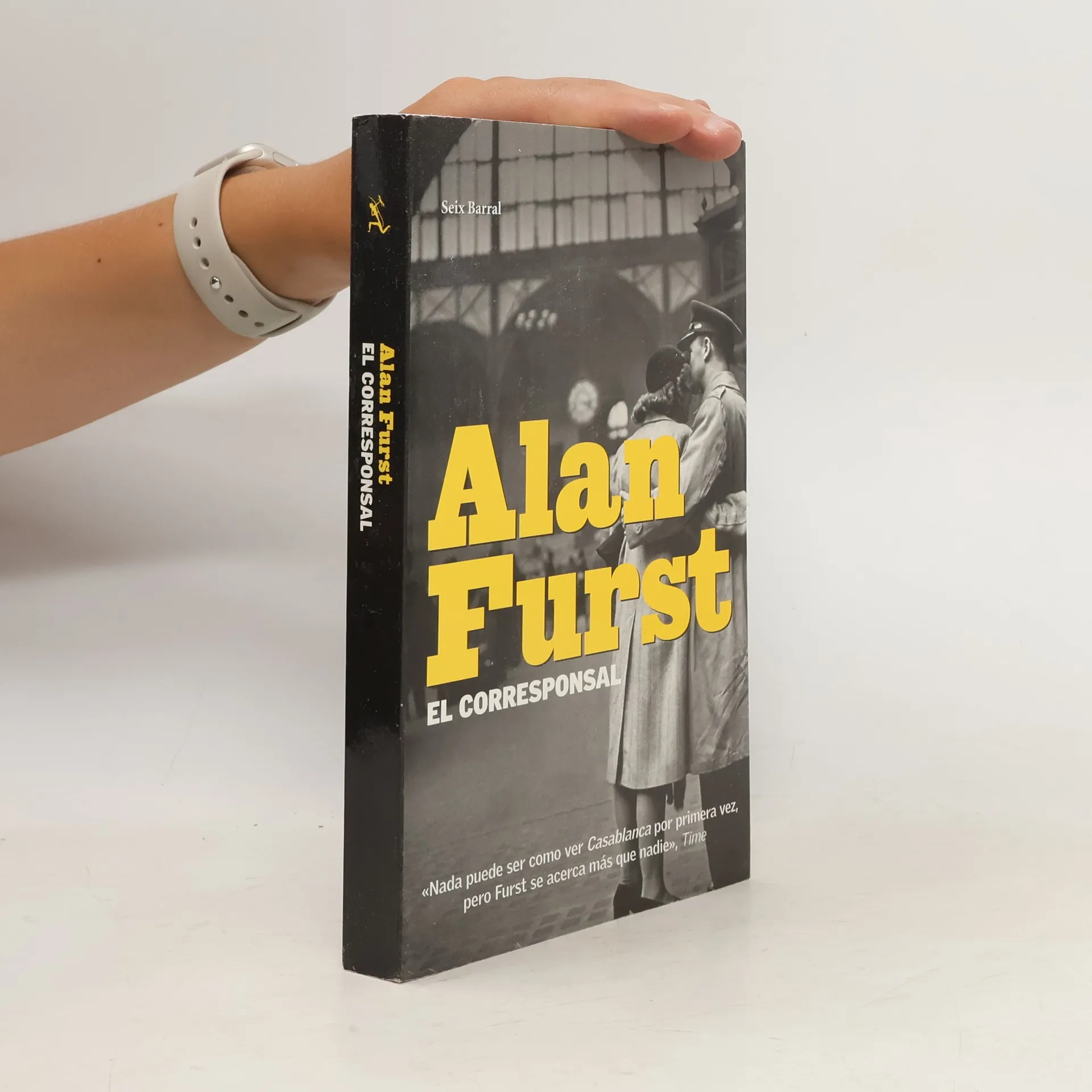
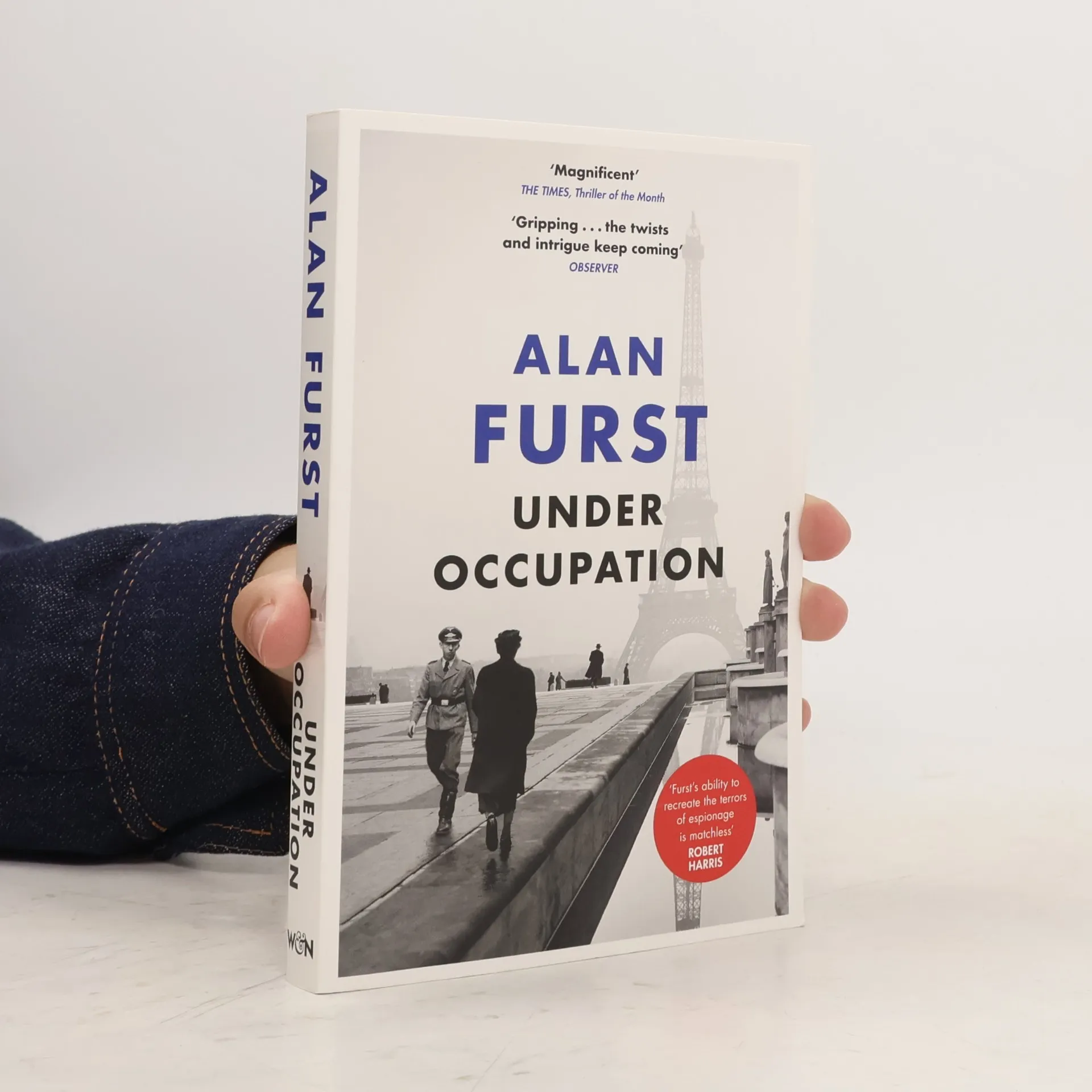
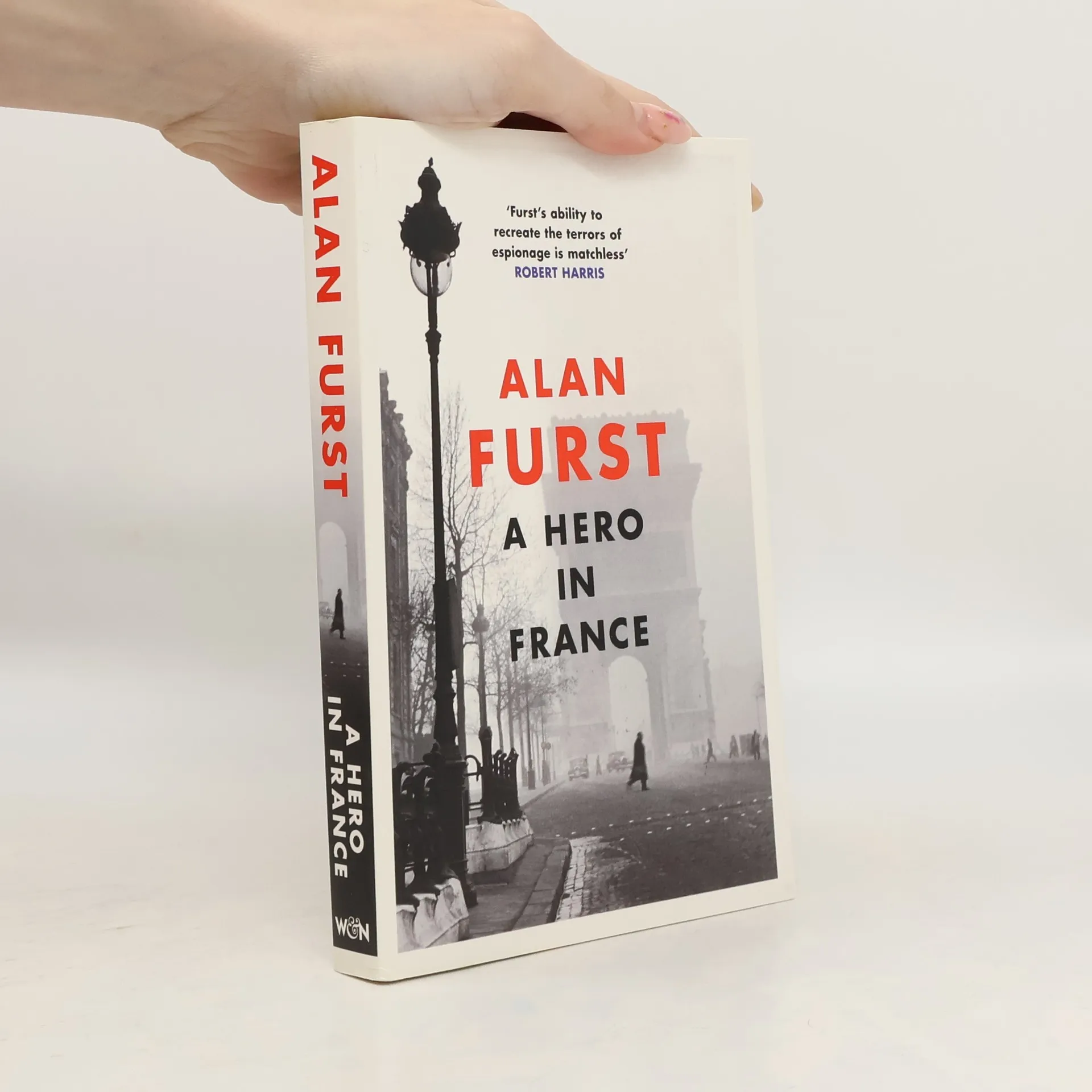
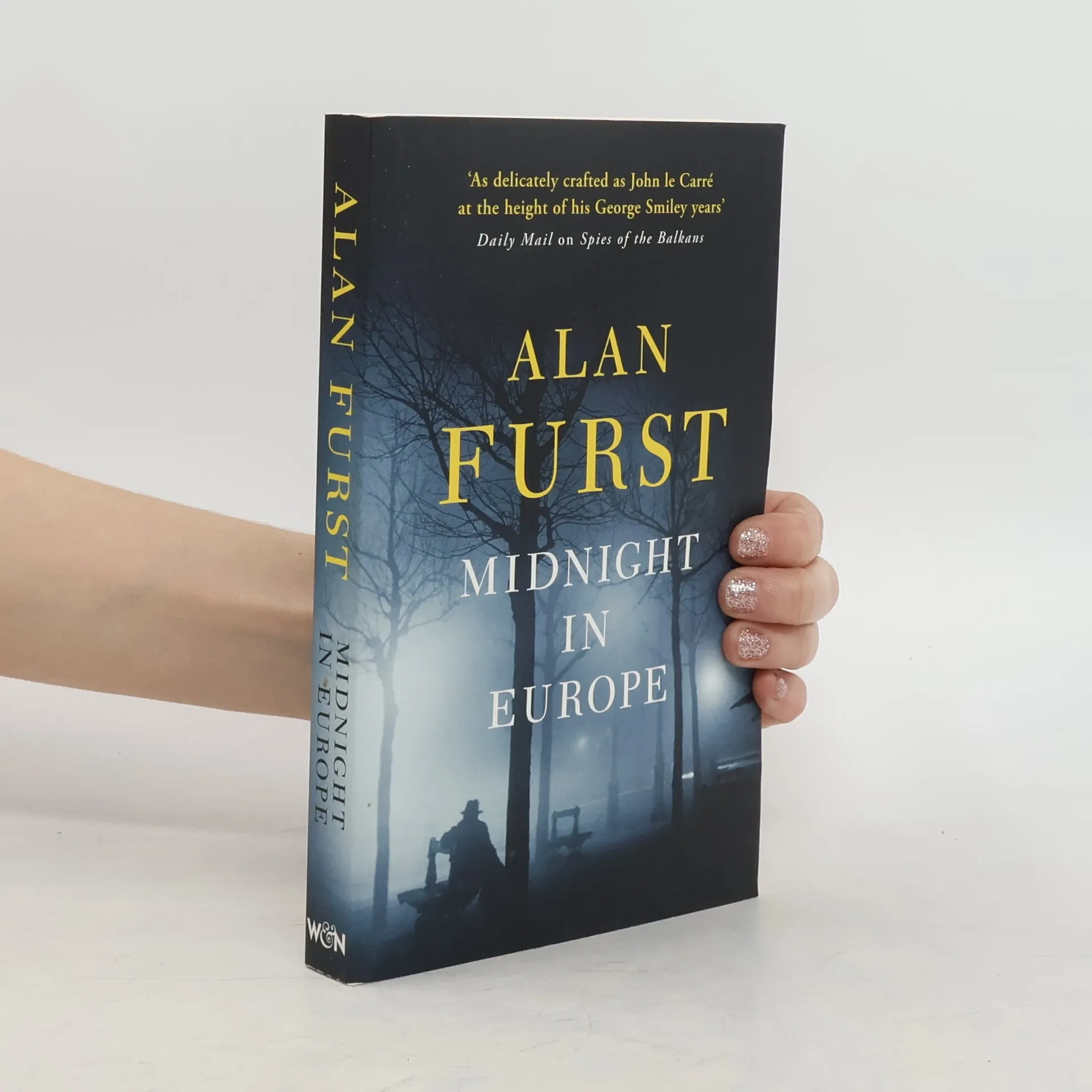
Alan Furst es ampliamente reconocido como el maestro indiscutible de la novela de espías histórica. Sus obras sumergen al lector en la tensa atmósfera de la Europa de preguerra y de guerra, donde personas comunes se ven arrastradas al peligroso mundo del espionaje. Furst capta hábilmente el suspense, las complejidades morales y el coraje silencioso de personajes que navegan por circunstancias peligrosas. Su evocadora prosa transporta a los lectores directamente a escenarios históricos meticulosamente investigados, convirtiéndolo en una voz destacada del género.
Spying and subterfuge in occupied Paris from one of the great masters of the
spy genre. Inspired by the true story of Polish prisoners in Nazi Germany, who
smuggled valuable intelligence to the French resistance.
Paris, 1938. Democratic forces are locked in struggle as the shadow of war edges over Europe. Cristián Ferrar, a handsome Spanish lawyer in Paris, is approached to help a clandestine agency supply weapons to beleaguered Republican forces. He agrees, putting his life on the line. Joining Ferrar in his mission is an unlikely group of allies: idealists and gangsters, arms dealers, aristocrats and spies. From libertine nightclubs in Paris to shady bars by the docks in Gdansk, Furst paints a spell-binding portrait of a continent marching into a nightmare - and the heroes and heroines who fought back.
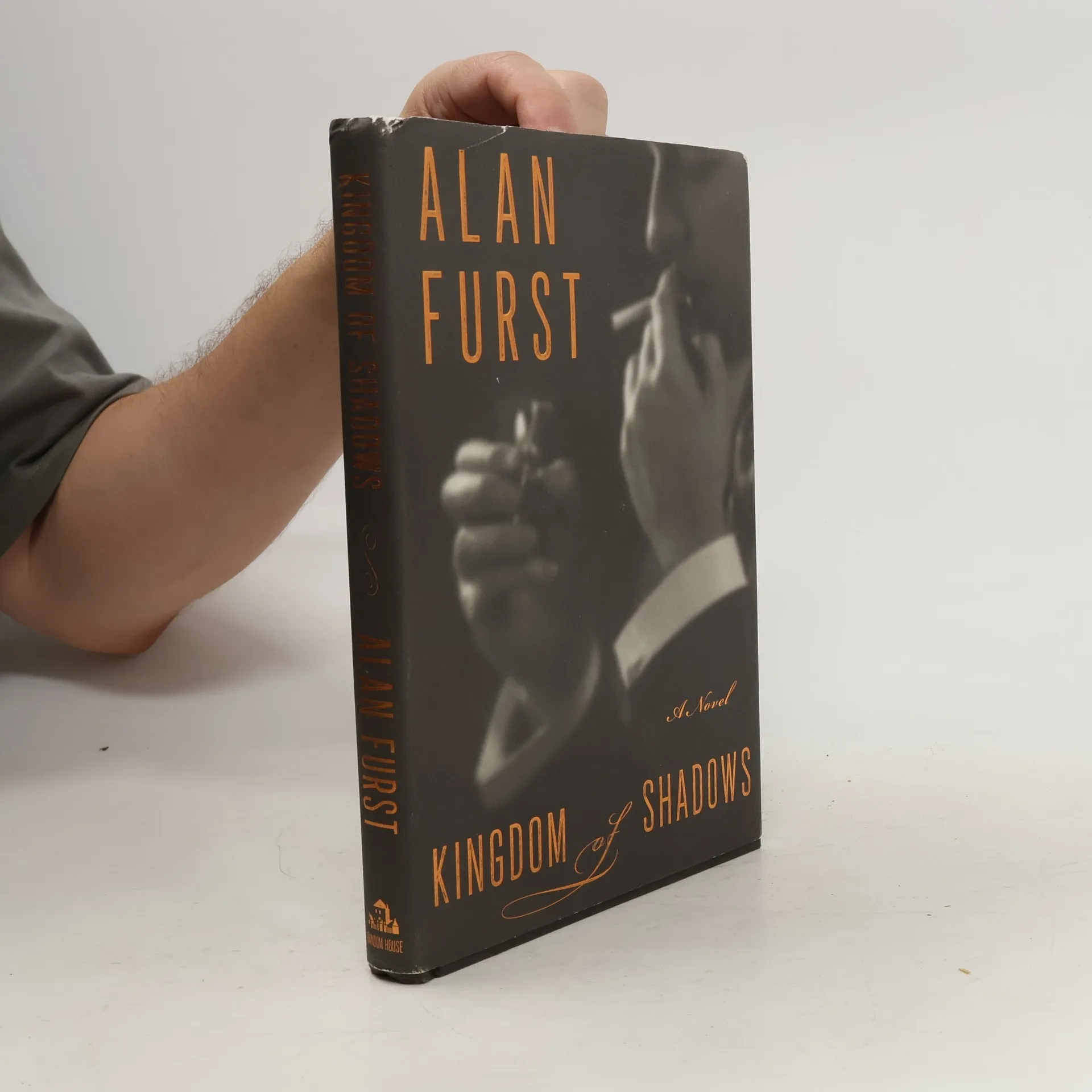
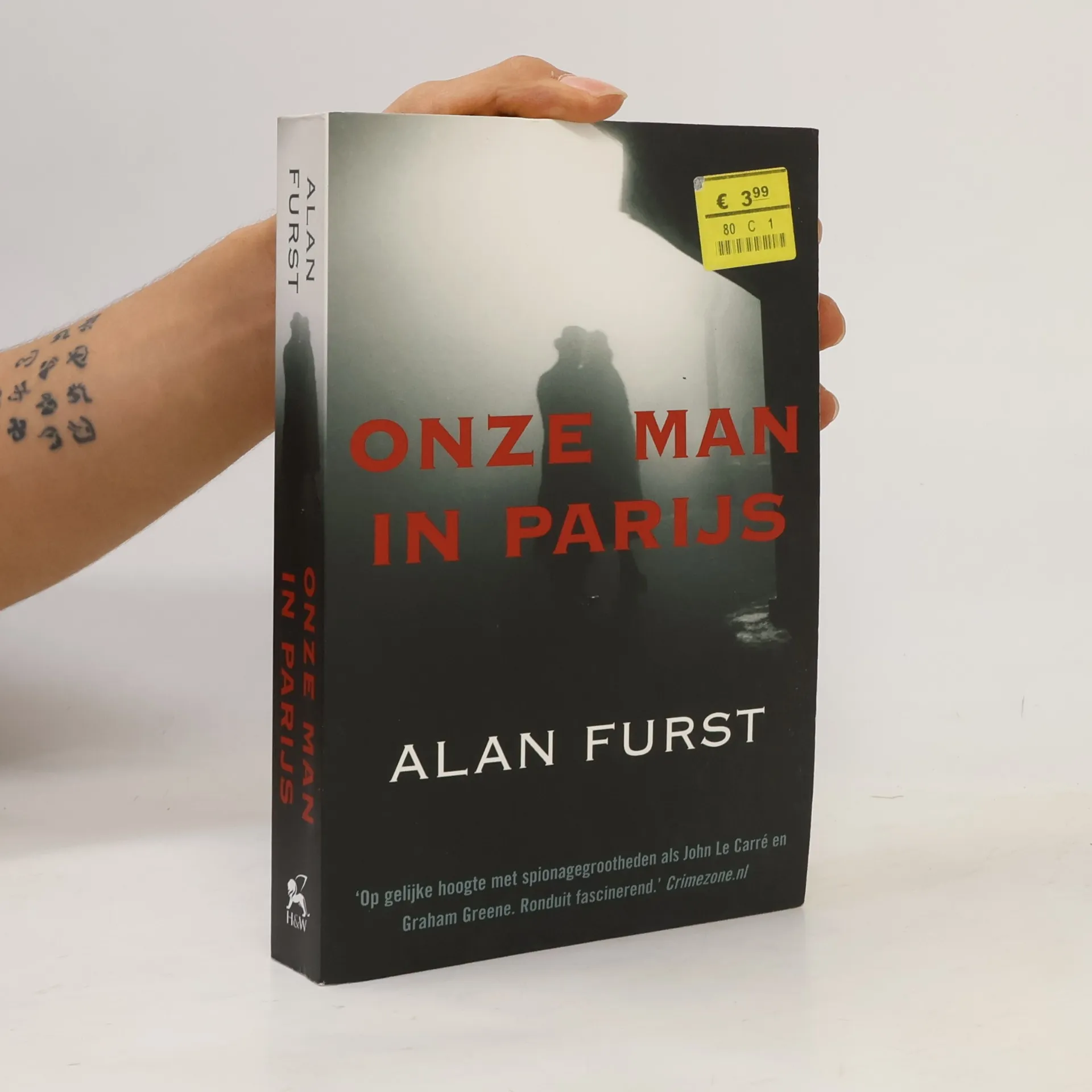
Autumn 1939. In Paris American motion picture producer Frederic Stahl is drawn into a clandestine world of foreign correspondents, exiled Spanish republicans, and spies of every sort. As a celebrity from neutral America -- who can travel across the continent freely -- Stahl could be very useful indeed.
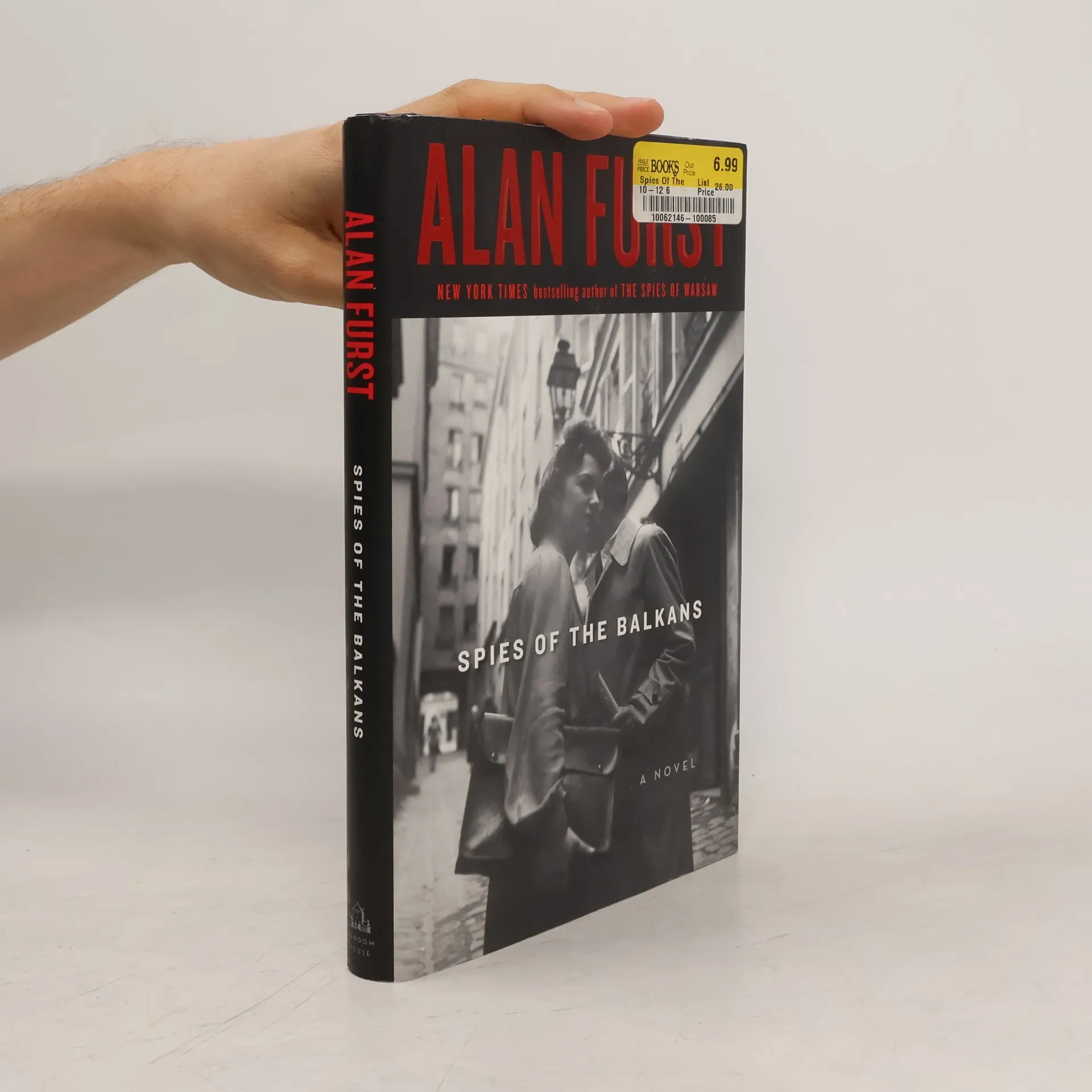
A tale set in World War II Macedonia finds senior police official Costa Zannis working with a resistance cell and secret operatives from various European regions to organize an escape route from Berlin to neutral Turkey. By the author of The Spies of Warsaw.
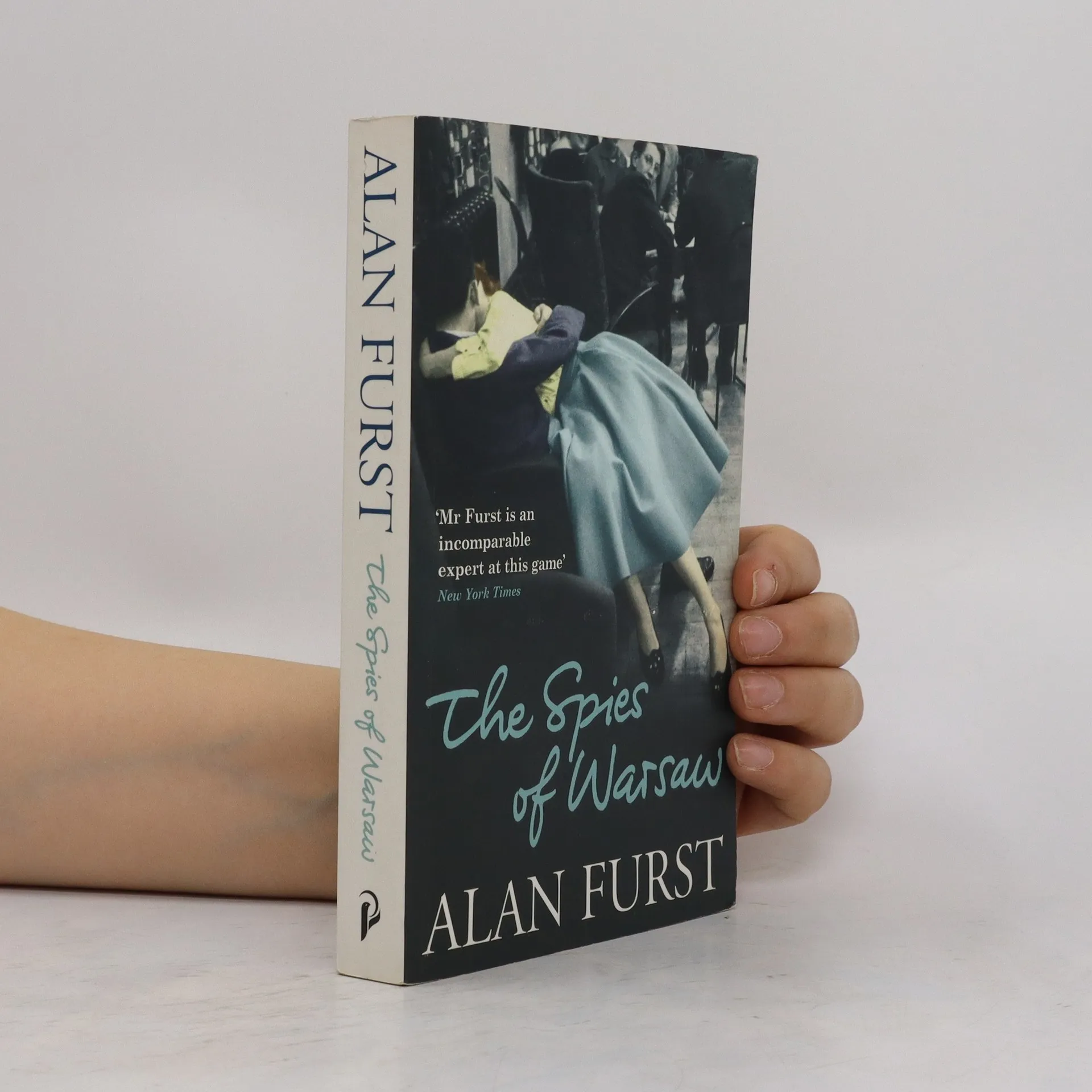
An Autumn evening in 1937. A German engineer arrives at the Warsaw railway station. Tonight, he will be with his Polish mistress; tomorrow, at a workers' bar in the city's factory district, he will meet with the military attaché from the French embassy. Information will be exchanged for money. So begins THE SPIES OF WARSAW, with war coming to Europe, and French and German operatives locked in a life-and-death struggle on the espionage battlefield. At the French embassy, the new military attaché, Colonel Jean-Francois Mercier, a decorated hero of the 1914 war, is drawn in to a world of abduction, betrayal and intrigue in the diplomatic salons and back alleys of Warsaw. At the same time, the handsome aristocrat finds himself in a passionate love affair with a Parisian woman of Polish heritage, a lawyer for the League of Nations. Colonel Mercier must work in the shadows, amidst an extraordinary cast of venal and dangerous characters - Colonel Anton Vyborg of Polish military intelligence, last seen in Furst's THE POLISH OFFICER; the mysterious and sophisticated Doctor Lapp, senior German Abwehr officer in Warsaw; Malka and Viktor Rozen, at work for the Russian secret service; and Mercier's brutal and vindictive opponent, Major August Voss of SS counterintelligence. And there are many more, some known to Mercier as spies, some never to be revealed.
Terwijl de Tweede Wereldoorlog aanstaande is, pleegt een Italiaanse journalist verzet tegen het fascisme van Mussolini door het uitgeven van een subversief blaadje.
From Alan Furst, hailed as “America’s preeminent spy novelist,” comes an epic tale of romantic love, patriotism, and the quest for freedom, set against the backdrop of a secret war fought in elegant hotel bars and first-class railway cars, from the mountains of Spain to the backstreets of Berlin. By 1938, many Italian intellectuals, lawyers, and journalists had fled Mussolini’s fascist regime for Paris, where they established an Italian resistance with an underground press that smuggled news back to Italy. This resistance fought fascism with typewriters, producing 512 clandestine newspapers.
The story begins on a winter night in Paris, where a murder/suicide at a discreet hotel is orchestrated by Mussolini’s OVRA, targeting the editor of a clandestine newspaper. Carlo Weisz, who has escaped from Trieste and become a foreign correspondent for Reuters, steps into this role. At that moment, he is in Spain, covering the final campaign of the Spanish Civil War. Upon his return to Paris, he finds himself pursued by the French Sûreté, OVRA agents, and British intelligence.
The narrative follows Weisz and a group of antifascists, including “Colonel Ferrara,” who fights in Spain, Arturo Salamone, a resistance leader in Paris, and Christa von Schirren, Weisz’s love, involved in a doomed Berlin underground. This gripping tale showcases Furst’s taut, powerful writing, leading readers through a world of darkness and intrigue to a stunn
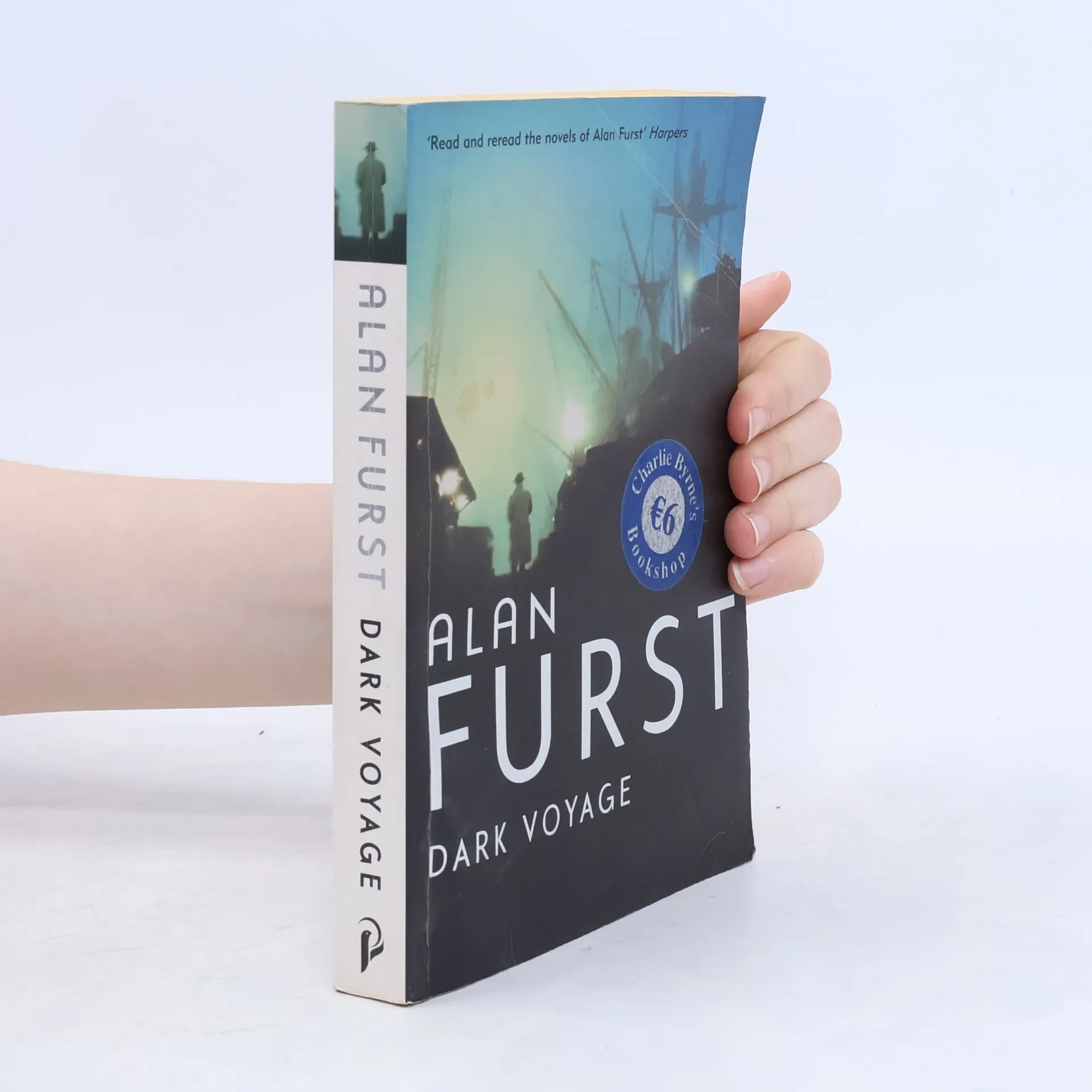
May, 1941. At four in the morning, a rust-streaked tramp freighter steams up the Tagus River to dock at the port of Lisbon. She is the Santa Rosa; she flies the flag of neutral Spain and is in Lisbon to load cork oak, tinned sardines, and drums of cooking oil bound for the Baltic port of Malmo.But she is not the Santa Rosa. She is the Noordendam, a Dutch freighter. Under the command of Captain Eric DeHaan, she sails for the Intelligence Division of the British Royal Navy, and she will load detection equipment for a clandestine operation on the Swedish coast - a secret mission, a dark voyage.A desperate voyage. One more battle in the spy wars that rage through the back alleys of the ports, from elegant hotels to abandoned piers, in lonely desert outposts, and in the souks and cafes of North Africa. A battle for survival, as the merchant ships die at sea and Britain - the last opposition to Nazi Germany - slowly begins to starve.A voyage of flight, a voyage of fugitives - for every soul aboard the Noordendam. The Polish engineer, the Greek stowaway, the Jewish medical officer, the British spy, the Spaniards who fought Franco, the Germans who fought Hitler, the Dutch crew itself. There is no place for them in Occupied Europe; they cannot go home.
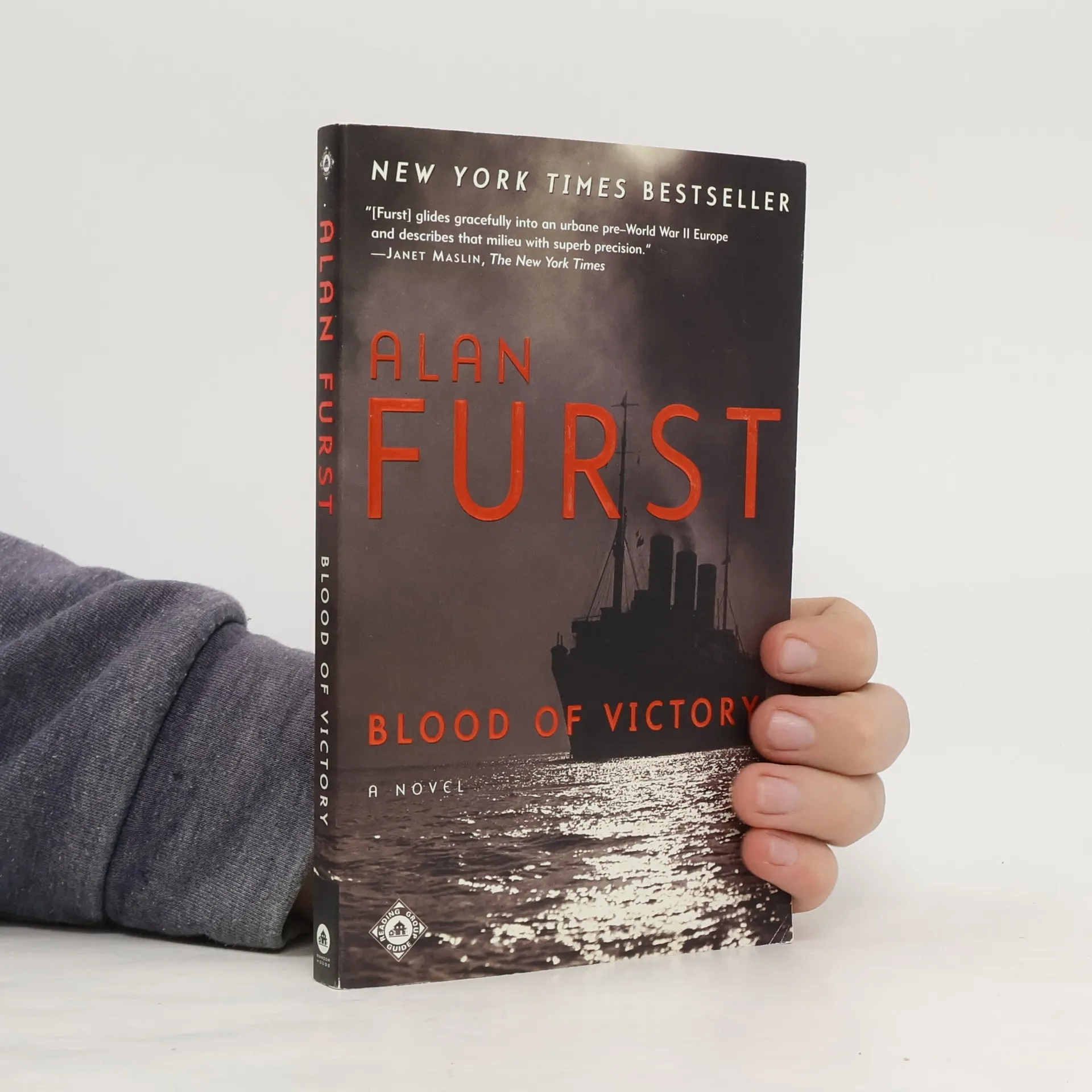
NEW YORK TIMES BESTSELLER • “[Furst] glides gracefully into an urbane pre–World War II Europe and describes that milieu with superb precision.” —Janet Maslin, The New York Times In the autumn of 1940, Russian émigré journalist I. A. Serebin is recruited in Istanbul by an agent of the British secret services for a clandestine operation to stop German importation of Romanian oil—a last desperate attempt to block Hitler’s conquest of Europe. Serebin’s race against time begins in Bucharest and leads him to Paris, the Black Sea, Beirut, and, finally, Belgrade; his task is to attack the oil barges that fuel German tanks and airplanes. Blood of Victory is a novel with the heart-pounding suspense, extraordinary historical accuracy, and narrative immediacy we have come to expect from Alan Furst. Praise for Blood of Victory “Densely atmospheric and genuinely romantic, the novel is most reminiscent of the Hollywood films of the forties, when moral choices were rendered not in black-and-white but in smoky shades of gray.”—The New Yorker “Furst’s achievement is a moral one, producing a powerful testament to fiction’s ability to re-create the experience of others, and why it is so deeply important to do so.” —Neil Gordon, The New York Times Book Review “Richly atmospheric and satisfying.” —Deirdre Donahue, USA Today
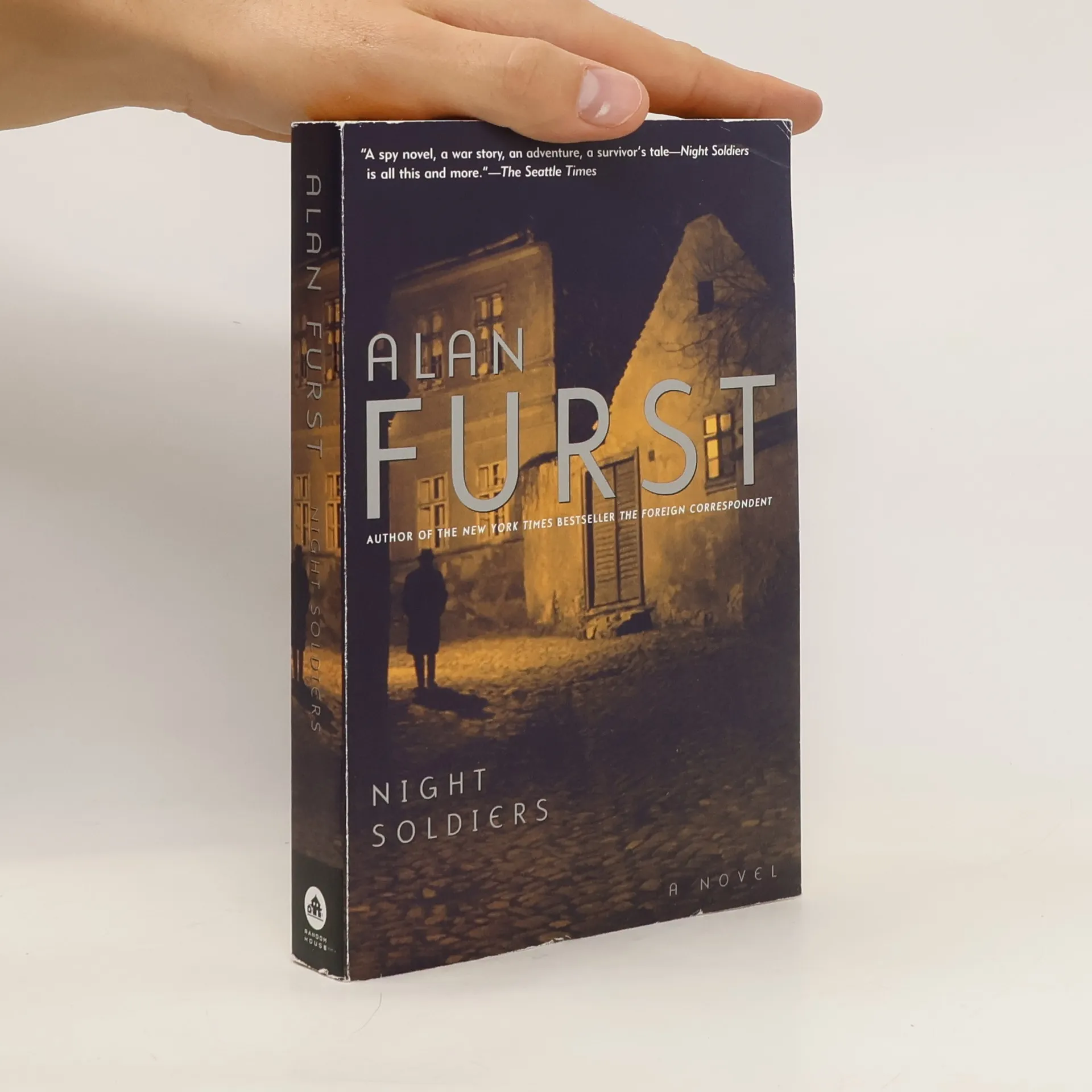
Bulgaria, 1934. A young man is murdered by the local fascists. His brother, Khristo Stoianev, is recruited into the NKVD, the Soviet secret intelligence service, and sent to Spain to serve in its civil war. Warned that he is about to become a victim of Stalin’s purges, Khristo flees to Paris. Night Soldiers masterfully re-creates the European world of 1934–45: the struggle between Nazi Germany and Soviet Russia for Eastern Europe, the last desperate gaiety of the beau monde in 1937 Paris, and guerrilla operations with the French underground in 1944. Night Soldiers is a scrupulously researched panoramic novel, a work on a grand scale.
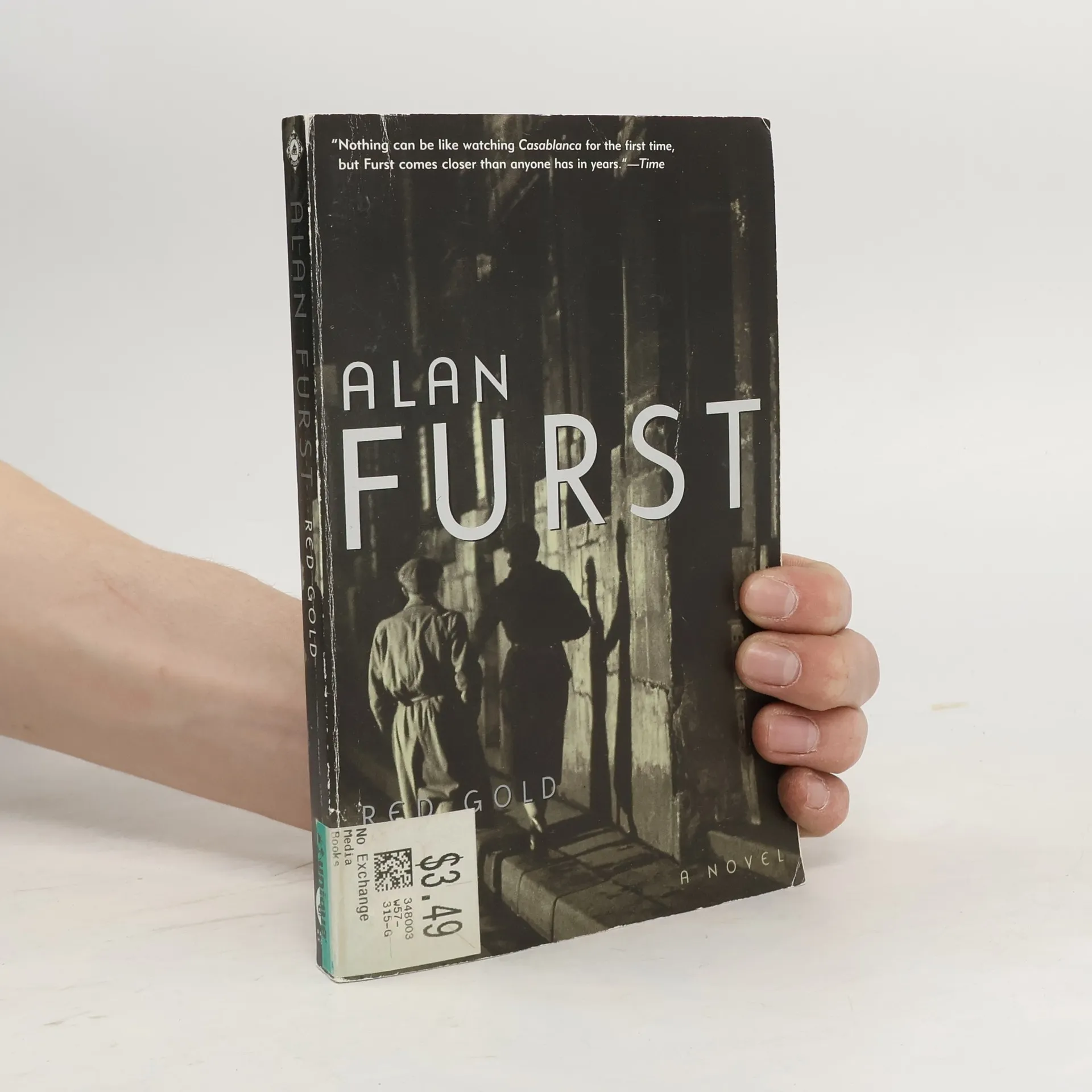
"Autumn 1941: In a shabby hotel off the place Clichy, the course of the war is about to change. German tanks are rolling toward Moscow. Stalin has issued a decree: All partisan operatives are to strike behind enemy lines--from Kiev to Brittany. Set in the back streets of Paris and deep in occupied France, Red Gold moves with quiet menace as predators from the dark edge of war--arms dealers, lawyers, spies, and assassins--emerge from the shadows of the Parisian underworld. In their midst is Jean Casson, once a well-to-do film producer, now a target of the Gestapo living on a few francs a day. As the occupation tightens, Casson is drawn into an ill-fated mission: running guns to combat units of the French Communist Party. Reprisals are brutal. At last the real resistance has begun. Red Gold masterfully re-creates the shadow world of French resistance in the darkest days of World War II."--Back cover
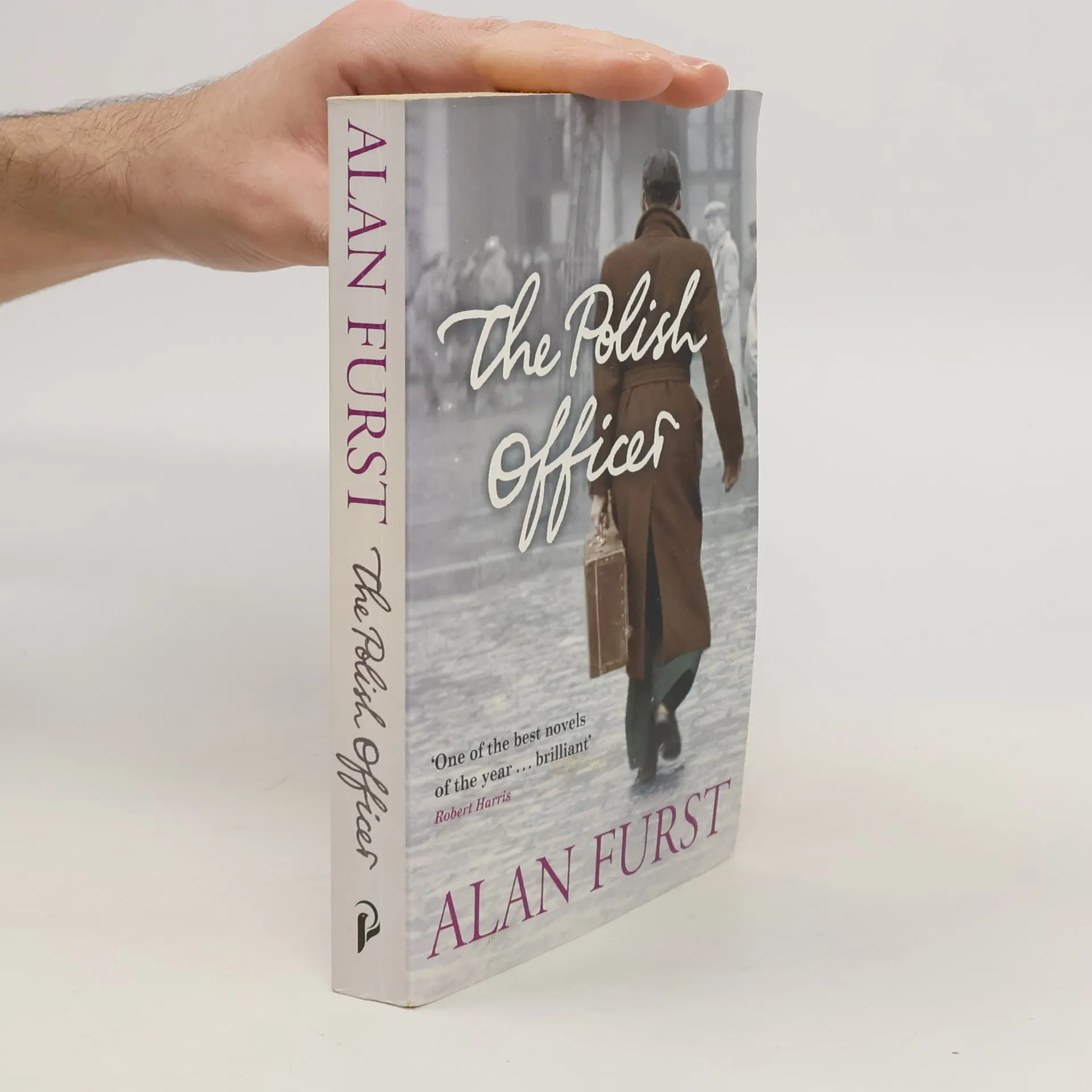
From the master of the historical spy thriller, a story set in the heart of the Polish resistance September, 1939. The invading Germans blaze a trail of destruction across Poland. France and Britain declare war, but do nothing to help. And a Polish resistance movement takes shape under the shadow of occupation, enlisting those willing to risk death in the struggle for their nation's survival. Among them is Captain Alexander de Milja, an officer in the Polish military intelligence service, a cartographer who now must learn a dangerous new role: spymaster in the anti-Nazi underground. Beginning with a daring operation to smuggle the Polish National Gold Reserve to the government in exile, he slips into the shadowy and treacherous front lines of espionage; he moves through Europe, changing identities and staying one step ahead of capture. In Warsaw, he engineers a subversive campaign to strengthen the people's will to resist. In Paris, he poses as a Russian poet, then as a Slovakian coal merchant, drinking champagne in black-market bistros with Nazis while uncovering information about German battle plans. And a love affair with a woman of the French Resistance leads him to make the greatest decision of his life.
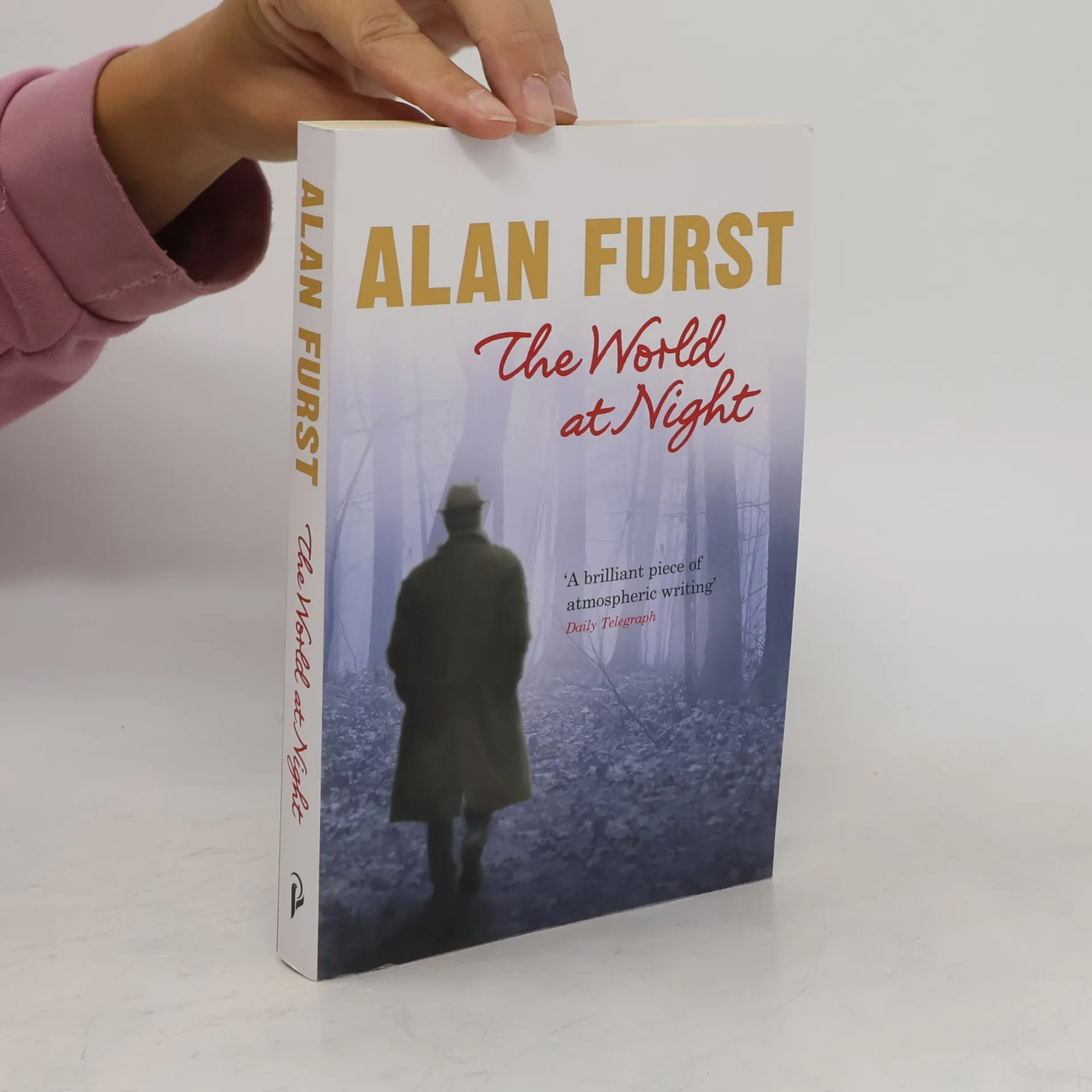
En los callejones y salones brillantes de la Europa nocturna, la guerra ya está en marcha mientras la inteligencia soviética y la Gestapo nazi se enfrentan en un intrincado duelo de espionaje. En la primera línea se encuentra André Szara, un sobreviviente nato: de los pogromos polacos, las purgas estalinistas y las guerras civiles rusas. Su único objetivo es seguir adelante en un mundo donde la traición puede llegar en cualquier momento. Pero poco a poco, de manera inextricable, se ve atraído hacia las oscuras intrigas de la Europa de antes de la guerra, donde la vida es una gris incertidumbre de habitaciones de hotel baratas, romances que no pueden durar y amigos que han dejado de existir…
Guyer, ein ehemaliger Geheimdienstoffizier, der von der Central Intelligence Agency entlassen wurde, gründet sein eigenes Unternehmen für geheime Operationen und gerät in die Intrigen, rücksichtslosen Politik, Doppelzüngigkeit und Machtspiele privater Geheimdienstunternehmen.