
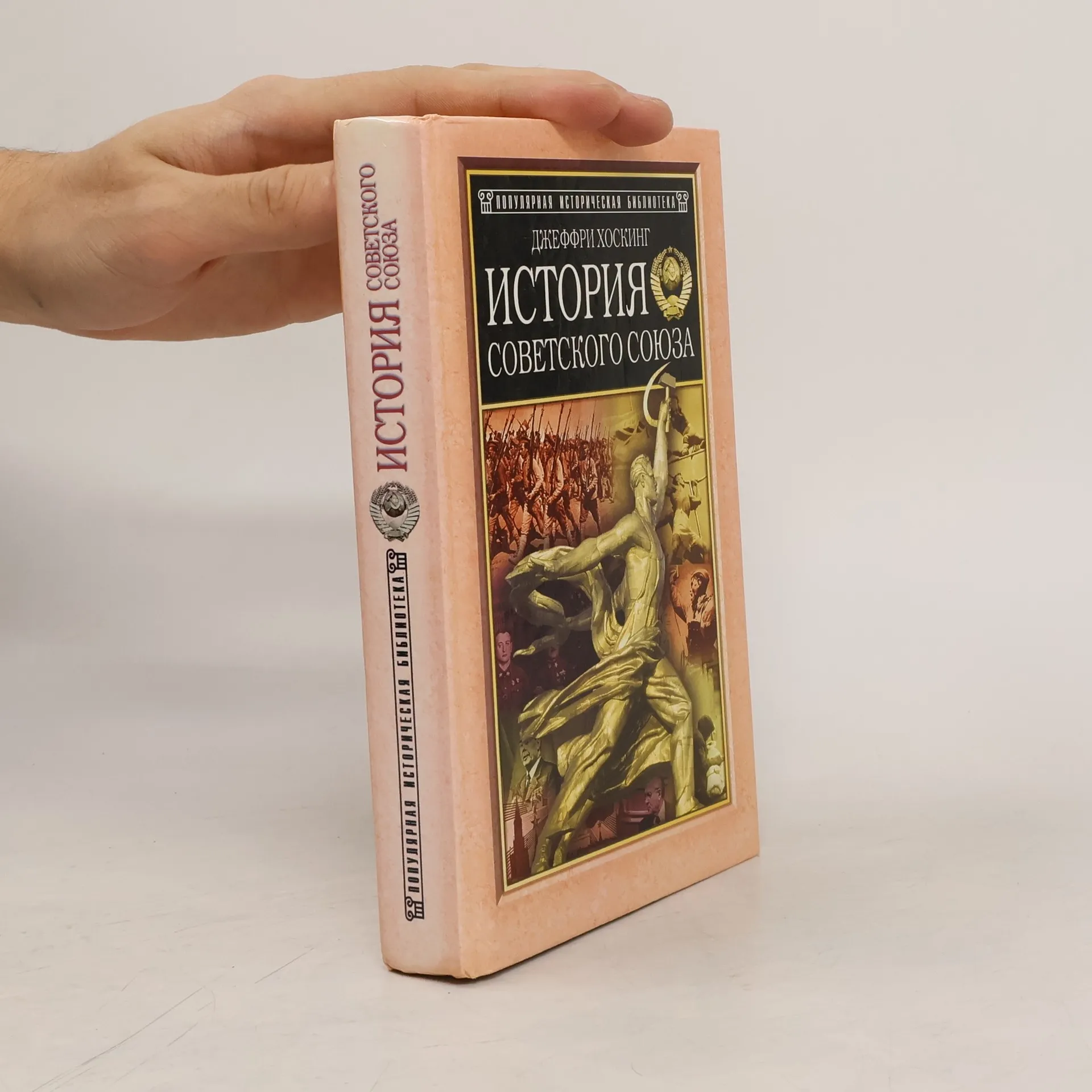
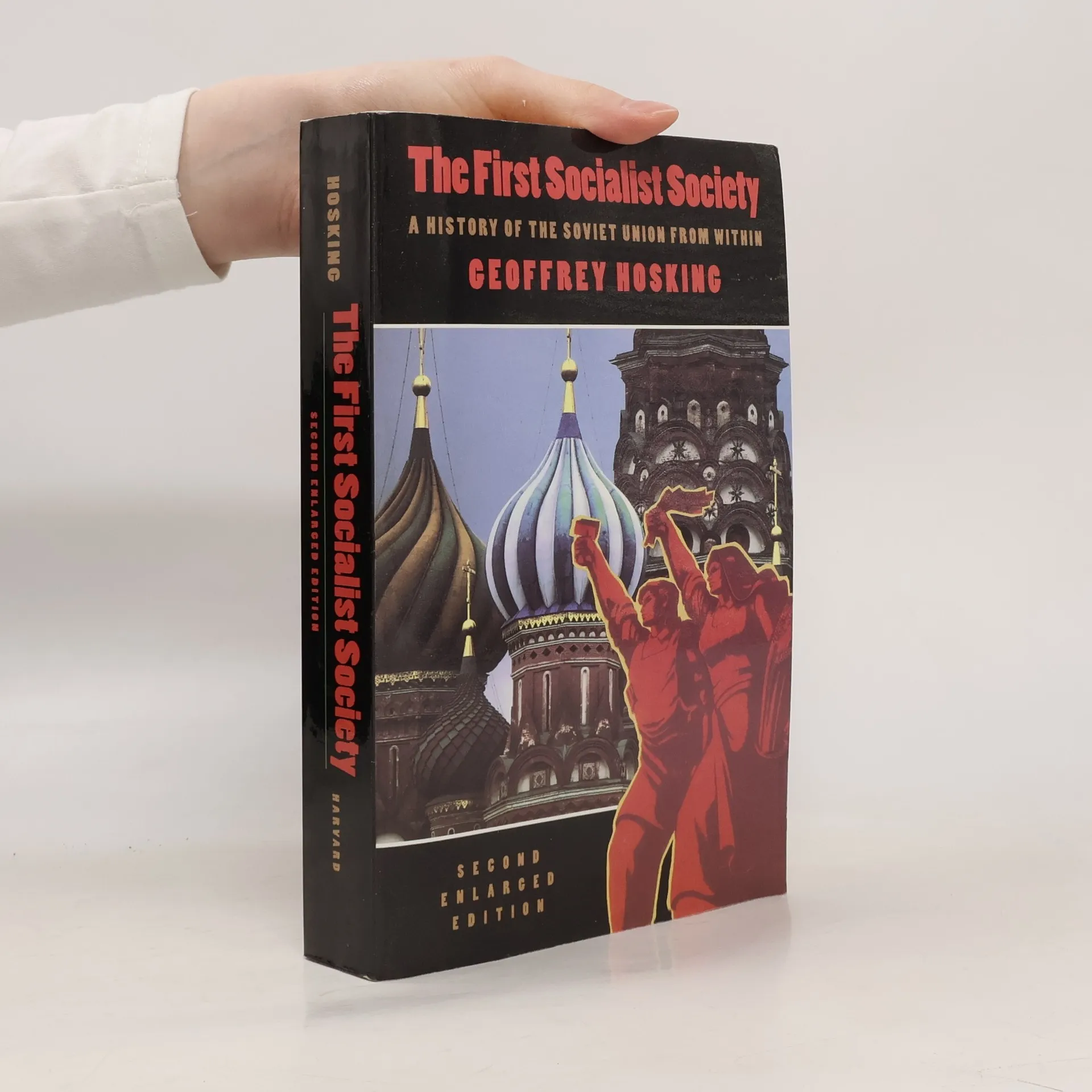


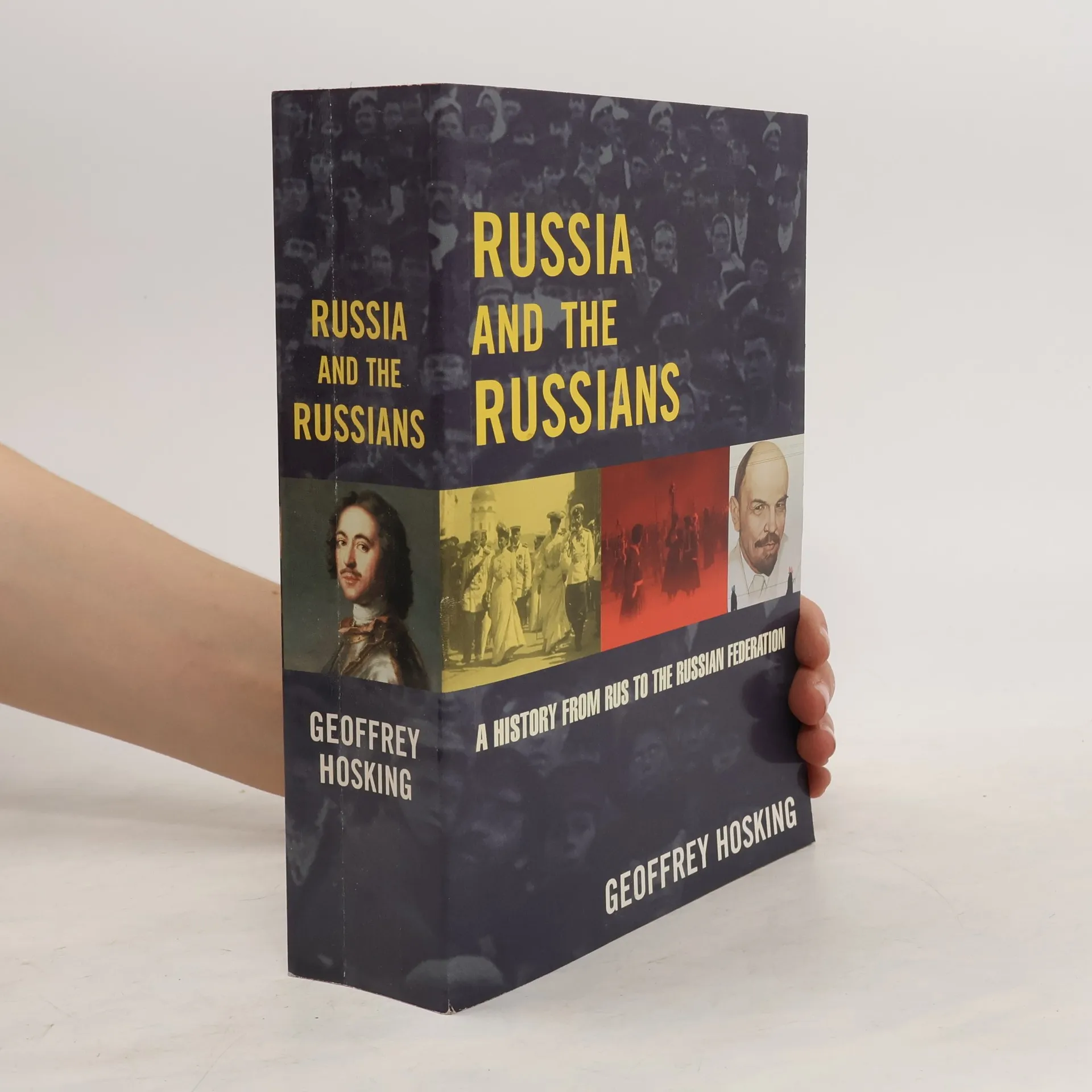
This work traces Russia's history from the settlement of Kiev through to the 21st century. It argues that two nation-building movements, one based on a messianic vision, the other a modernizing and expansive imperial project, have clashed since the rise of Tsarism.
Geoffrey A. Hosking Libros
Geoffrey Hosking es un historiador de Rusia y la Unión Soviética. Su obra se centra en comprender los procesos a largo plazo que han dado forma a la historia y la identidad rusas. Explora las profundas corrientes culturales y políticas que influyen en la sociedad rusa. Sus análisis ofrecen valiosas perspectivas sobre las complejidades del desarrollo ruso.


Geoffrey Hosking's landmark work provides a new prism through which to view Russian history by asking the question, 'What is Russia's national identity?'.
The First Socialist Society presents a compelling and often tragic history of Soviet citizens from 1917 to the present, told with deep sympathy and insight. It explores the evolving lives of peasants, urban workers, and professionals, the interactions between Soviet autocrats and the populace, and the roles of religion, law, education, and literature in Soviet society, as well as the fate of various national groups. The narrative reveals how Marxism's ideas transformed under unique political and economic conditions. The analysis begins by examining how the first socialist revolution occurred in autocratic Russia and why the Bolsheviks succeeded in seizing and maintaining power. A significant focus is on Stalin's rule, exploring how he wielded such absolute power and how different societal groups coped with his tyranny. Later chapters discuss Khrushchev's attempts to reform Stalinism and the unpredictable consequences of these efforts in Eastern European satellite countries, highlighting aspects of socialism that had been obscured in the Soviet Union. Finally, the book addresses the aftermath of Brezhnev's stagnation and corruption, questioning whether Soviet society can adapt to overcome the rigidities inherited from its Stalinist past.
„Vom Sozialismus lernen, heißt siegen lernen“ – diese Devise wird klarer, wenn man sie um eine Ergänzung erweitert: „Von der Sowjetunion lernen, heißt Sozialismus lernen“. Zehn Jahre nach dem Zerfall des sowjetischen Imperiums steht Russland vor der Herausforderung, von wem es lernen kann, um die Anarchie zu überwinden. In Krisenzeiten scheint die Antwort naheliegend: von der eigenen Geschichte. Doch existiert überhaupt eine einheitliche russische Geschichte? Geoffrey Hosking unterscheidet zwischen dem russischen Imperium und der russischen Nation, was die Frage nach der russischen Geschichte komplex macht. Das Imperium war expansiv und vereinnahmte andere Ethnien, bevor die russische Nation ihre Identität entwickeln konnte. Authentische russische Traditionen wurden durch imperialistische Politik unterdrückt. Der Verwaltungsapparat des Imperiums hatte die Aufgabe, große Territorien und diverse Völker zu kontrollieren, während der Einsatz für die russische Nation oft als Chauvinismus angesehen wurde. Die russisch-orthodoxe Kirche war zu schwach, ein Bürgertum fehlte, und die Intelligenz war entwurzelt. Ohne ein gemeinsames Wir-Gefühl gab es keine kollektiven Fortschritte. So entstand ein mächtiges Reich ohne Seele und eine schwache Nation ohne Nationalgefühl. Hoskings Diagnose lautet: Die russische Nationalgeschichte liegt in der Zukunft.