

Más información sobre el libro
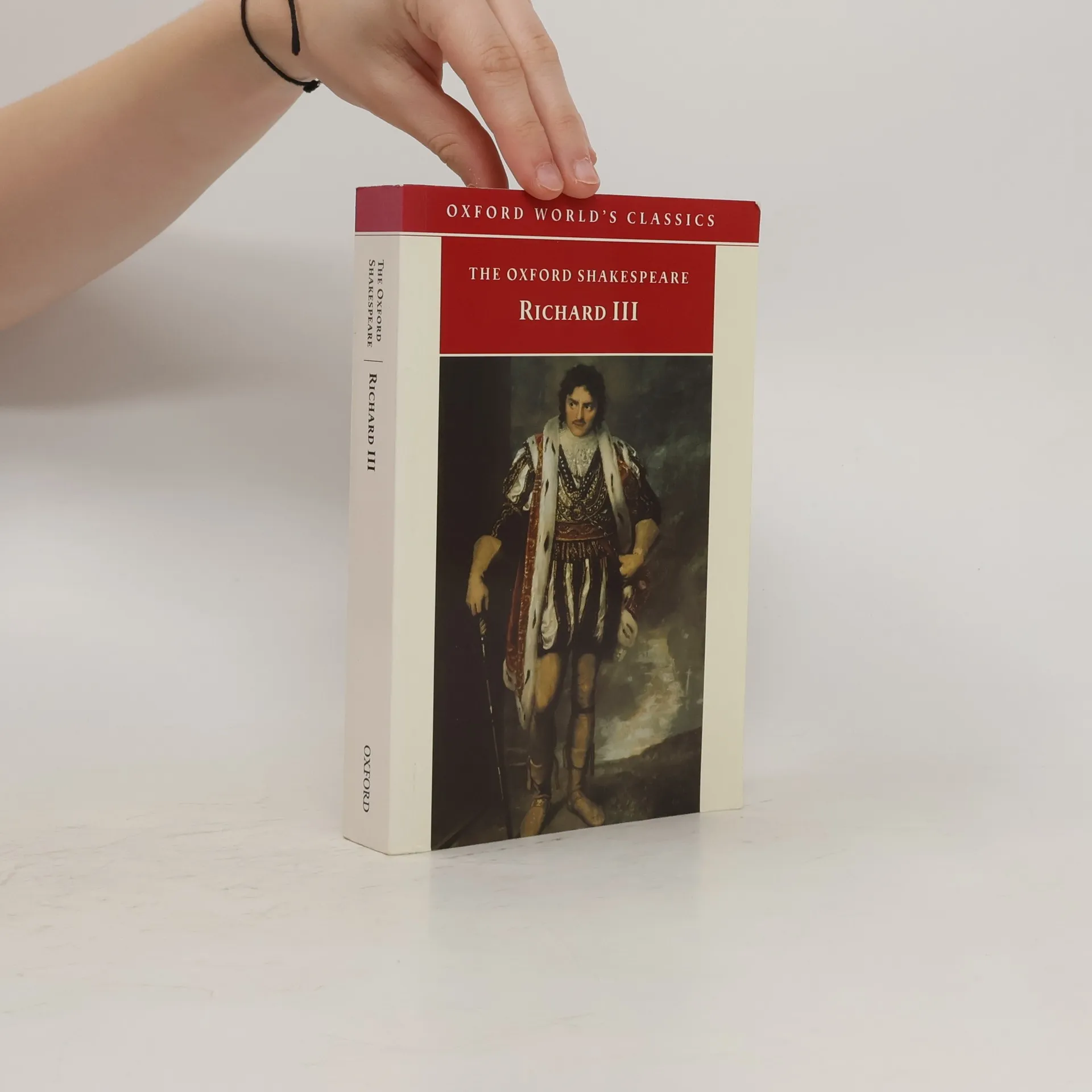
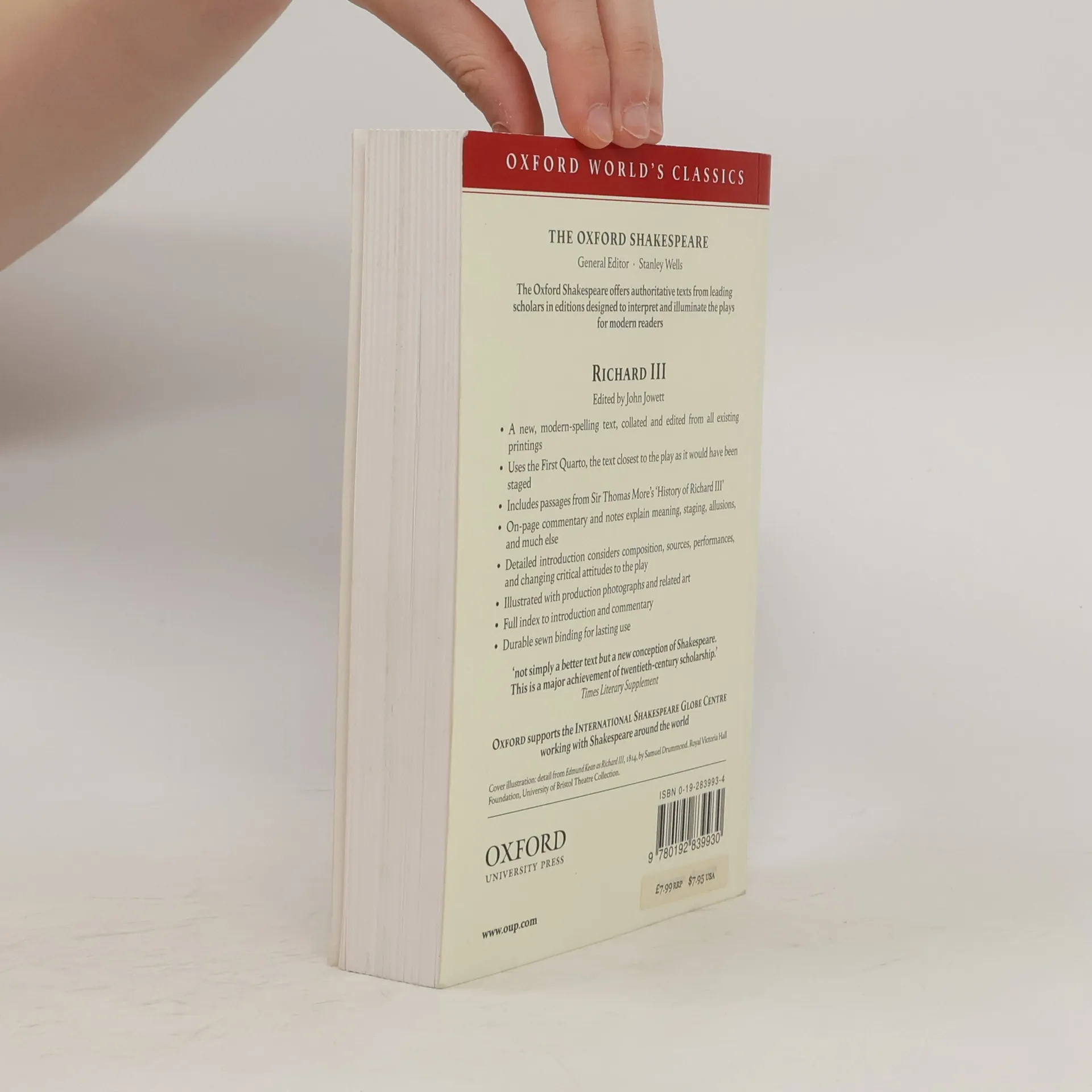
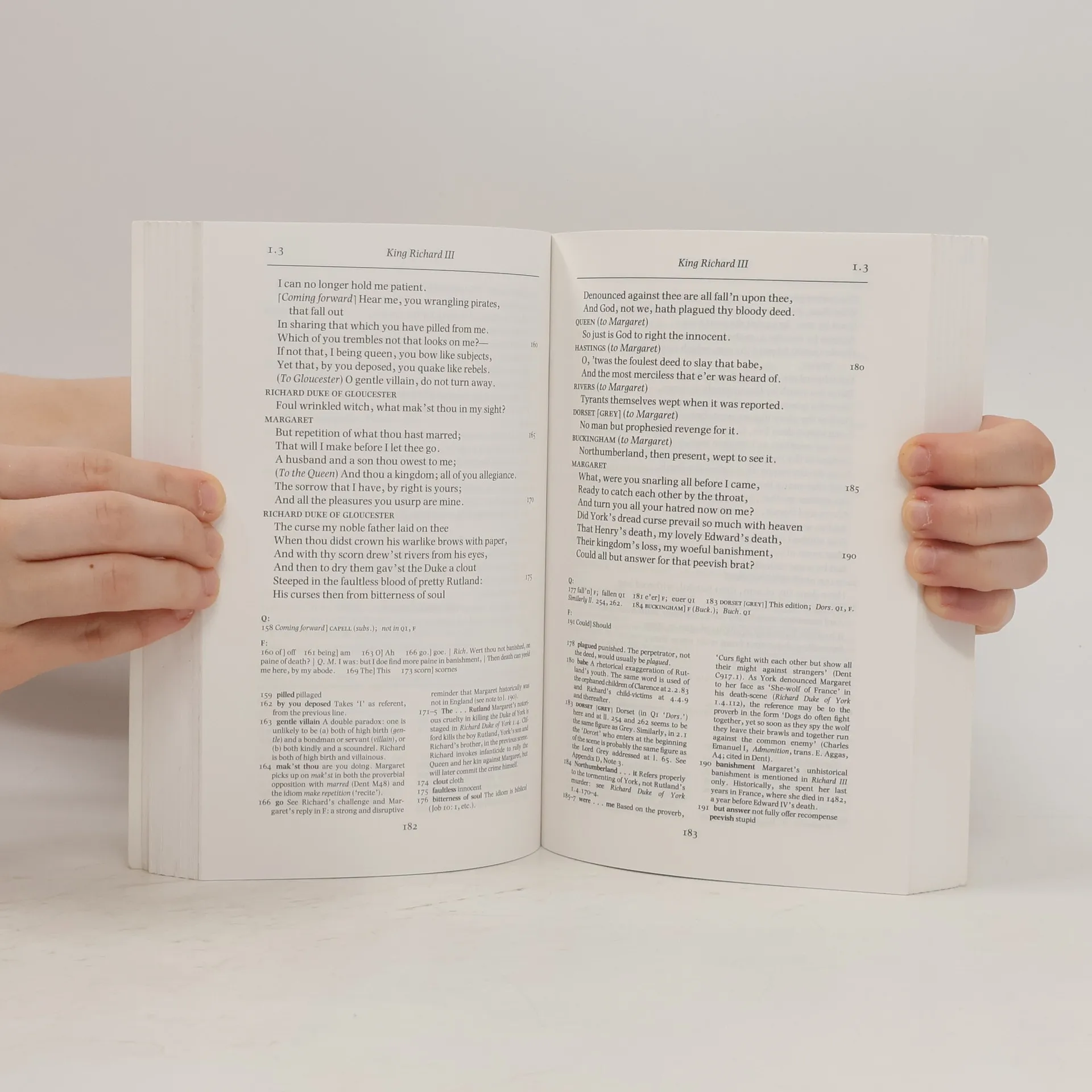
Richard III is one of Shakespeare's most popular plays on the stage and has been adapted successfully for film. This new and innovative edition recognizes the play's pre-eminence as a performance work: a perspective that informs every aspect of the editing. Challenging traditional practice,the text is based on the 1597 Quarto which, it is argued, brings us closest to the play as it would have been staged in Shakespeare's theatre. The introduction, which is illustrated, explores the long performance history from Shakespeare's time to the present. Its critical engagement with the playresponds to recent historicist and gender-based approaches. The commentary gives detailed explication of matters of language, staging, text, and historical and cultural contexts, providing coverage that is both carefully balanced and alert to nuance of meaning. Documentation of the extensive textual variants is organized for maximum clarity: the readings of the Folio and the Quarto are presented in separate banks, and more specialist information is given at the back of the book. Appendices also include selected passages from the main source and a specialindex of actors and other theatrical personnel.




Compra de libros
Richard III, William Shakespeare
- Idioma

- Publicado en
- 2000
- product-detail.submit-box.info.binding
- (Tapa blanda)
Métodos de pago
Nos falta tu reseña aquí
- Título
- Richard III
- Idioma
- Inglés
- Autores
- William Shakespeare
- Editorial
- Oxford University Press, USA
- Publicado en
- 2000
- Formato
- Tapa blanda
- Páginas
- 414
- ISBN10
- 0192839934
- ISBN13
- 9780192839930
- Serie
- Etiquetas
- Ficción, Clásicos, Obras de teatro
- Primera publicación
- 1591
- Título original
- The Tragedy of King Richard the III
- Calificación
- 3,9 de 5
- Descripción
- Richard III is one of Shakespeare's most popular plays on the stage and has been adapted successfully for film. This new and innovative edition recognizes the play's pre-eminence as a performance work: a perspective that informs every aspect of the editing. Challenging traditional practice,the text is based on the 1597 Quarto which, it is argued, brings us closest to the play as it would have been staged in Shakespeare's theatre. The introduction, which is illustrated, explores the long performance history from Shakespeare's time to the present. Its critical engagement with the playresponds to recent historicist and gender-based approaches. The commentary gives detailed explication of matters of language, staging, text, and historical and cultural contexts, providing coverage that is both carefully balanced and alert to nuance of meaning. Documentation of the extensive textual variants is organized for maximum clarity: the readings of the Folio and the Quarto are presented in separate banks, and more specialist information is given at the back of the book. Appendices also include selected passages from the main source and a specialindex of actors and other theatrical personnel.