

Series
Más información sobre el libro
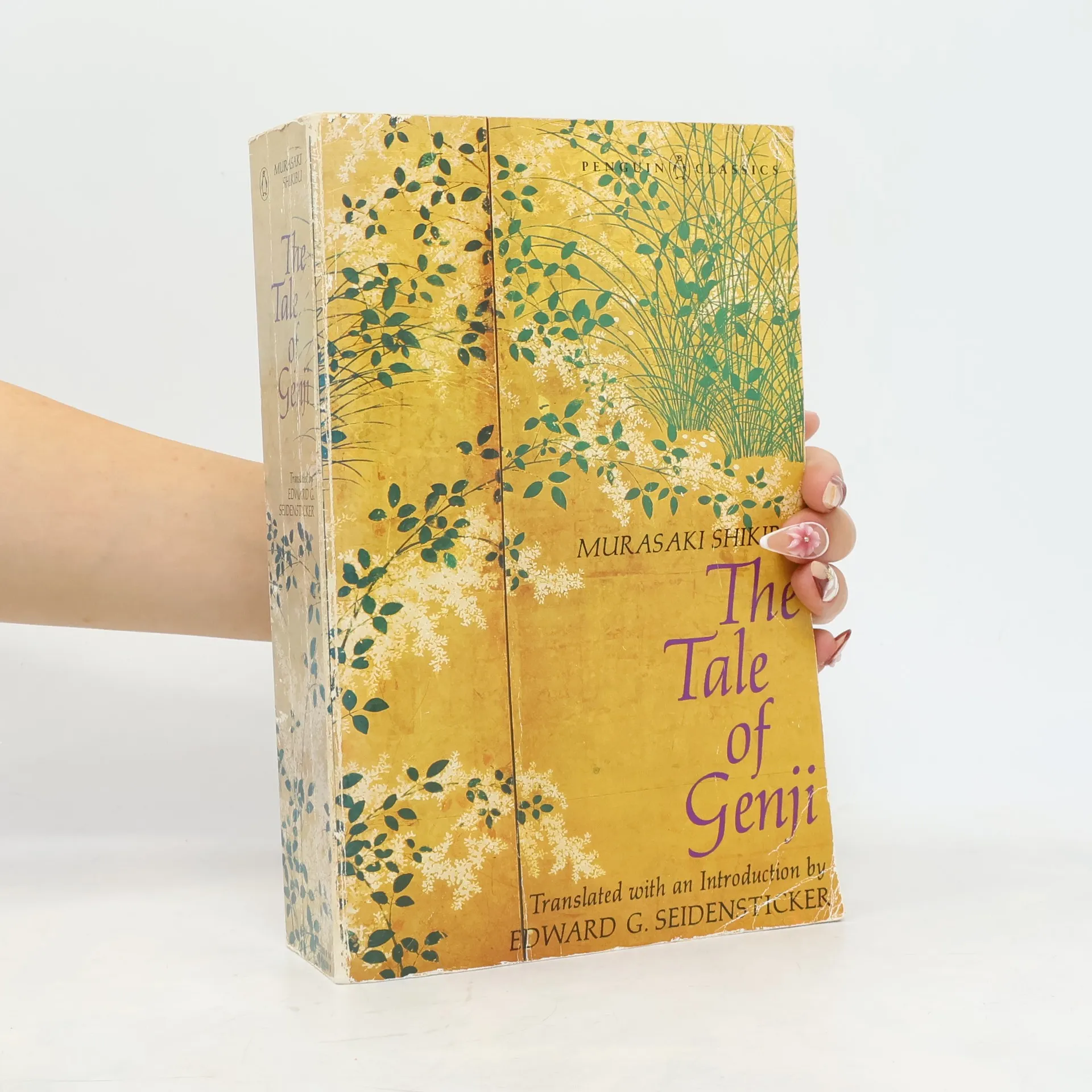
In the eleventh century Murasaki Shikibu, a lady in the Heian court of Japan, wrote the world's first novel. But The Tale of Genji is no mere artifact. It is, rather, a lively and astonishingly nuanced portrait of a refined society where every dalliance is an act of political consequence, a play of characters whose inner lives are as rich and changeable as those imagined by Proust. Chief of these is "the shining Genji," the son of the emperor and a man whose passionate impulses create great turmoil in his world and very nearly destroy him. This edition, recognized as the finest version in English, contains a dozen chapters from early in the book, carefully chosen by the translator, Edward G. Seidensticker, with an introduction explaining the selection. It is illustrated throughout with woodcuts from a seventeenth-century edition.




Compra de libros
The Tale of Genji, Murasaki Šikibu
- Idioma

- Publicado en
- 1976
- product-detail.submit-box.info.binding
- (Tapa blanda)
Métodos de pago
Nos falta tu reseña aquí
- Título
- The Tale of Genji
- Idioma
- Inglés
- Autores
- Murasaki Šikibu
- Editorial
- Penguin
- Publicado en
- 1976
- Formato
- Tapa blanda
- Páginas
- 1090
- ISBN10
- 0140443908
- ISBN13
- 9780140443905
- Serie
- La Historia de Genji
- Etiquetas
- Ficción, Novelas históricas, Clásicos, Japón, Literatura japonesa
- Calificación
- 3,7 de 5
- Descripción
- In the eleventh century Murasaki Shikibu, a lady in the Heian court of Japan, wrote the world's first novel. But The Tale of Genji is no mere artifact. It is, rather, a lively and astonishingly nuanced portrait of a refined society where every dalliance is an act of political consequence, a play of characters whose inner lives are as rich and changeable as those imagined by Proust. Chief of these is "the shining Genji," the son of the emperor and a man whose passionate impulses create great turmoil in his world and very nearly destroy him. This edition, recognized as the finest version in English, contains a dozen chapters from early in the book, carefully chosen by the translator, Edward G. Seidensticker, with an introduction explaining the selection. It is illustrated throughout with woodcuts from a seventeenth-century edition.