

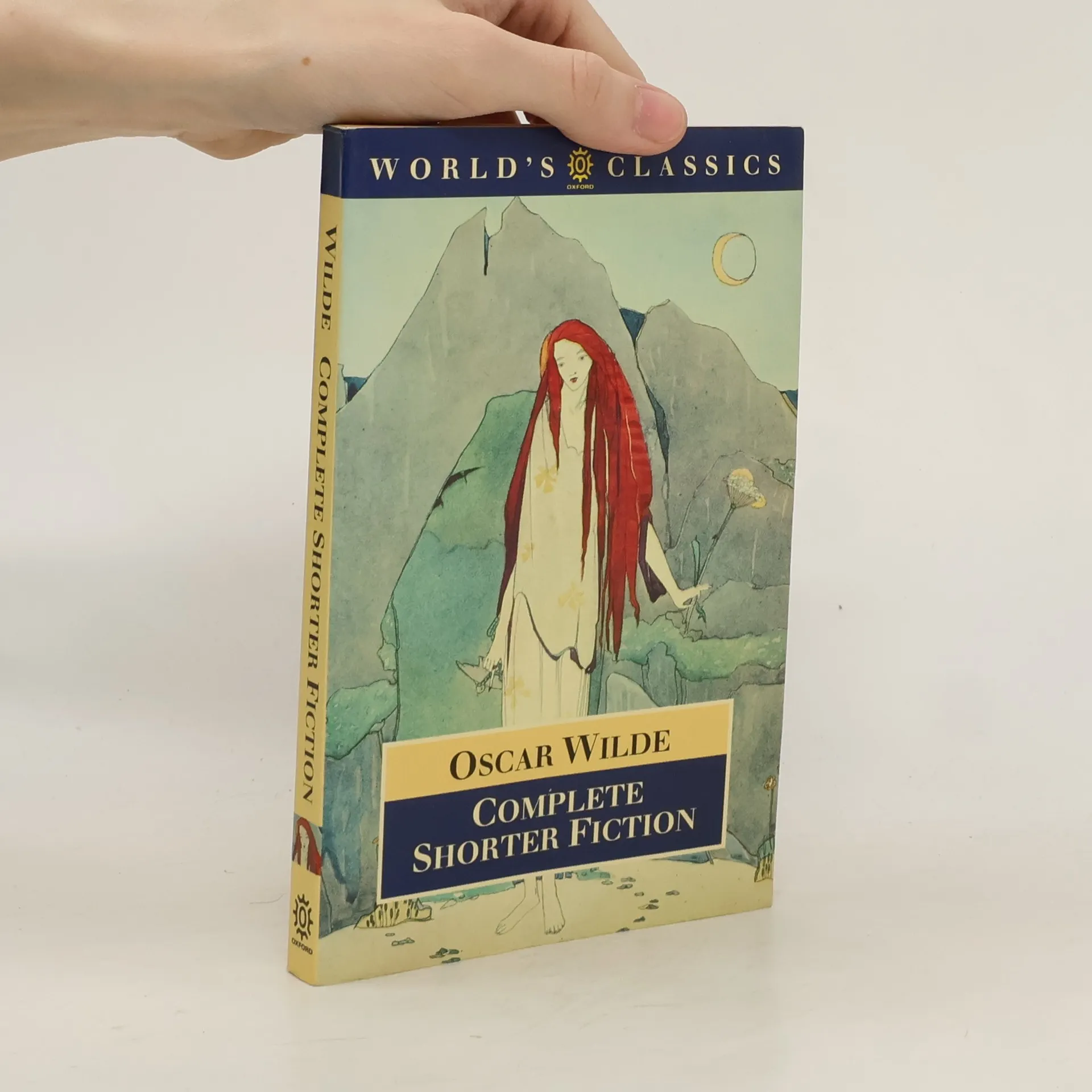
Más información sobre el libro
‘I can not think otherwise than in stories.’ By all accounts the stories we know today represent only a fraction of those with which Oscar Wilde enchanted his listeners. Now for the first time in one volume we have a complete collection of all the short fiction he published and it clearly shows his versatility and skill as a storyteller, too often overshadowed by his reputation as dramatist, critical theorist, and novelist. This new edition includes contains such well-known fairy tales as 'The Happy Prince,' 'The Young King', and 'The Fisherman and his Soul'; witty social and literary parody in 'Lord Arthur Savile's Crime' and identification of the mysterious dedicatee of Shakespeare's Sonnets, and some of the parables he most characteristically delivered, which he called 'Poems in Prose'.


Compra de libros
Oscar Wilde, Oscar Wilde
- Idioma

- Publicado en
- 1982
- product-detail.submit-box.info.binding
- (Tapa blanda)
Métodos de pago
Nos falta tu reseña aquí
- Título
- Oscar Wilde
- Subtítulo
- Complete Shorter Fiction
- Idioma
- Inglés
- Autores
- Oscar Wilde
- Editorial
- Oxford University Press
- Publicado en
- 1982
- Formato
- Tapa blanda
- Páginas
- 271
- ISBN10
- 0192815008
- ISBN13
- 9780192815002
- Serie
- Etiquetas
- Ficción, Fantasía, Novelas históricas, Poesía, Clásicos, Cuentos cortos, Siglo XIX
- Calificación
- 4,15 de 5
- Descripción
- ‘I can not think otherwise than in stories.’ By all accounts the stories we know today represent only a fraction of those with which Oscar Wilde enchanted his listeners. Now for the first time in one volume we have a complete collection of all the short fiction he published and it clearly shows his versatility and skill as a storyteller, too often overshadowed by his reputation as dramatist, critical theorist, and novelist. This new edition includes contains such well-known fairy tales as 'The Happy Prince,' 'The Young King', and 'The Fisherman and his Soul'; witty social and literary parody in 'Lord Arthur Savile's Crime' and identification of the mysterious dedicatee of Shakespeare's Sonnets, and some of the parables he most characteristically delivered, which he called 'Poems in Prose'.