

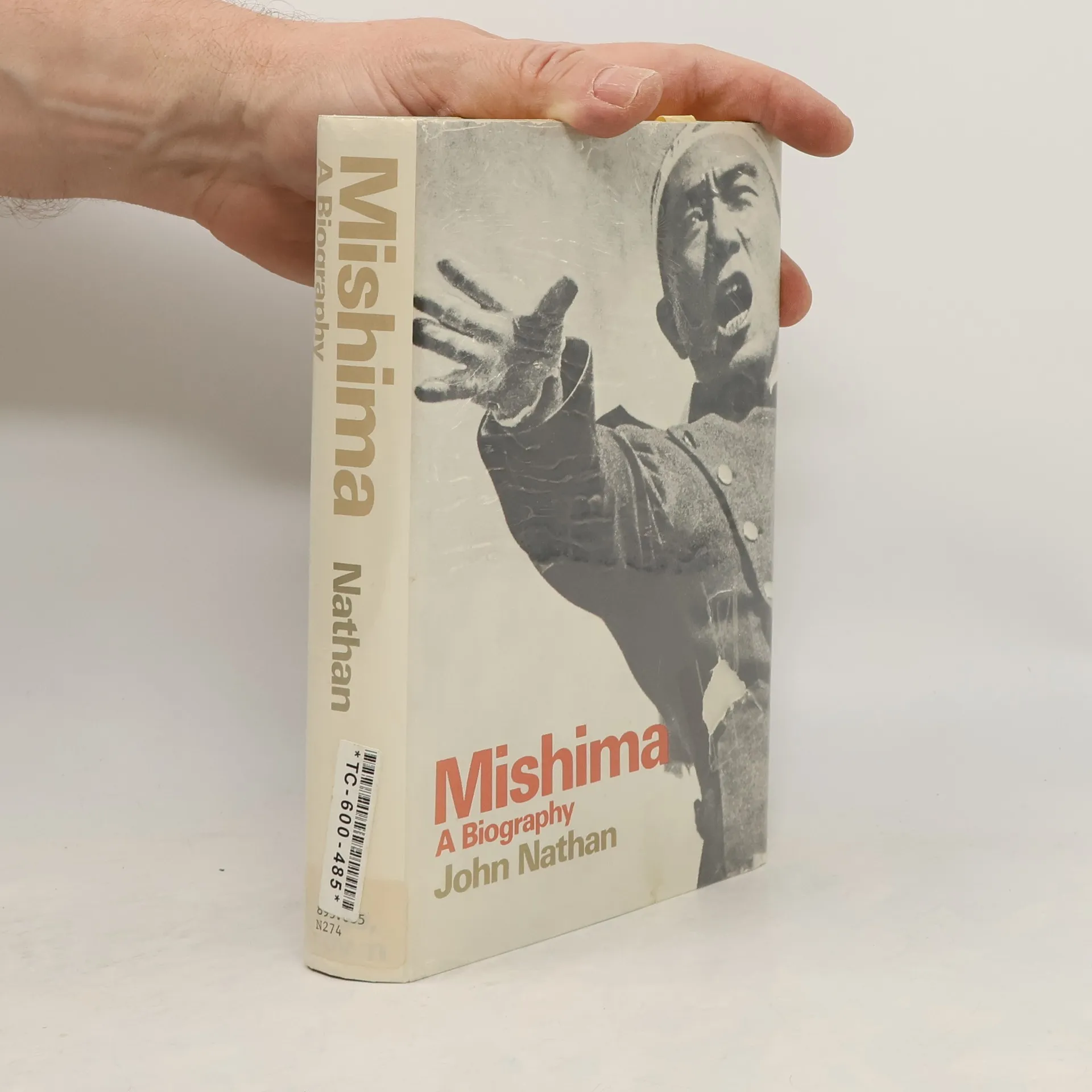
Más información sobre el libro
In 1970, at the age of forty-five, Kimitake Hiranka, known as Yukio Mishima, was a preeminent Japanese writer, having produced forty novels, eighteen plays, and numerous volumes of short stories and essays. That November, he executed a meticulously planned ritual suicide, marking a horrifying yet inevitable climax to his life—a life characterized by a relentless pursuit of beauty. John Nathan’s biography delves into Mishima’s troubled childhood, dominated by a sickly grandmother who instilled in him a longing for an irretrievable past, alongside a mother whose jealousy and a father’s opposition shaped his ambitions. It explores his early fixation on purity and beauty, leading to a later embrace of erotic nihilism, and the tension between his conventional life as a husband and father and his homosexual and sadomasochistic tendencies. Ultimately, it reveals his growing obsession with death as both a dramatic act and a form of ultimate beauty.


Compra de libros
Mishima: A Biography, John Nathan
- Idioma

- Publicado en
- 1974
- Encuadernación
- (Tapa dura)
Métodos de pago
Nos falta tu reseña aquí
- Título
- Mishima: A Biography
- Idioma
- Inglés
- Autores
- John Nathan
- Editorial
- Little, Brown
- Publicado en
- 1974
- Formato
- Tapa dura
- Serie
- Etiquetas
- Siglo XX, Japón, Literatura japonesa
- Calificación
- 4,25 de 5
- Descripción
- In 1970, at the age of forty-five, Kimitake Hiranka, known as Yukio Mishima, was a preeminent Japanese writer, having produced forty novels, eighteen plays, and numerous volumes of short stories and essays. That November, he executed a meticulously planned ritual suicide, marking a horrifying yet inevitable climax to his life—a life characterized by a relentless pursuit of beauty. John Nathan’s biography delves into Mishima’s troubled childhood, dominated by a sickly grandmother who instilled in him a longing for an irretrievable past, alongside a mother whose jealousy and a father’s opposition shaped his ambitions. It explores his early fixation on purity and beauty, leading to a later embrace of erotic nihilism, and the tension between his conventional life as a husband and father and his homosexual and sadomasochistic tendencies. Ultimately, it reveals his growing obsession with death as both a dramatic act and a form of ultimate beauty.