


Parámetros
- 482 páginas
- 17 horas de lectura
Más información sobre el libro
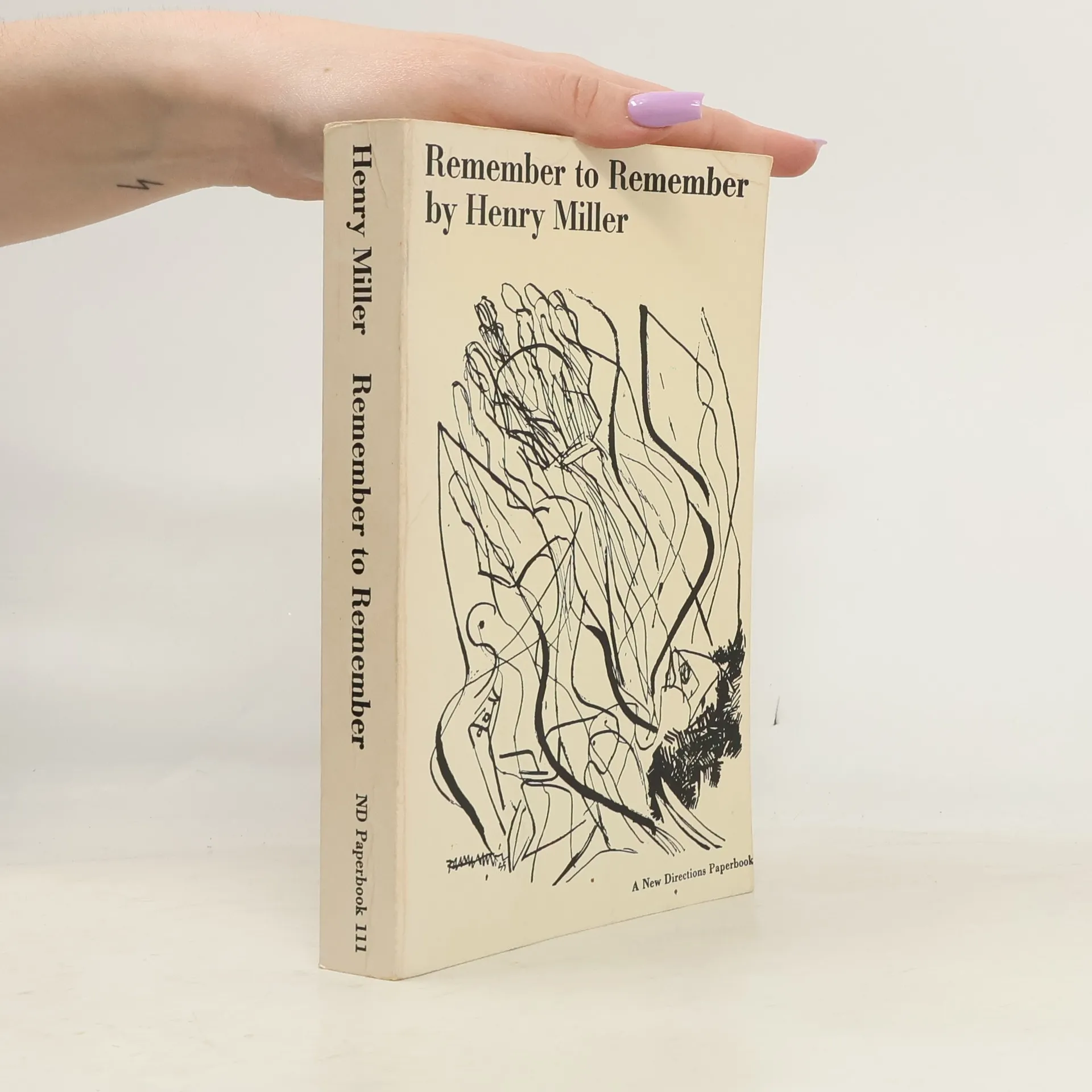
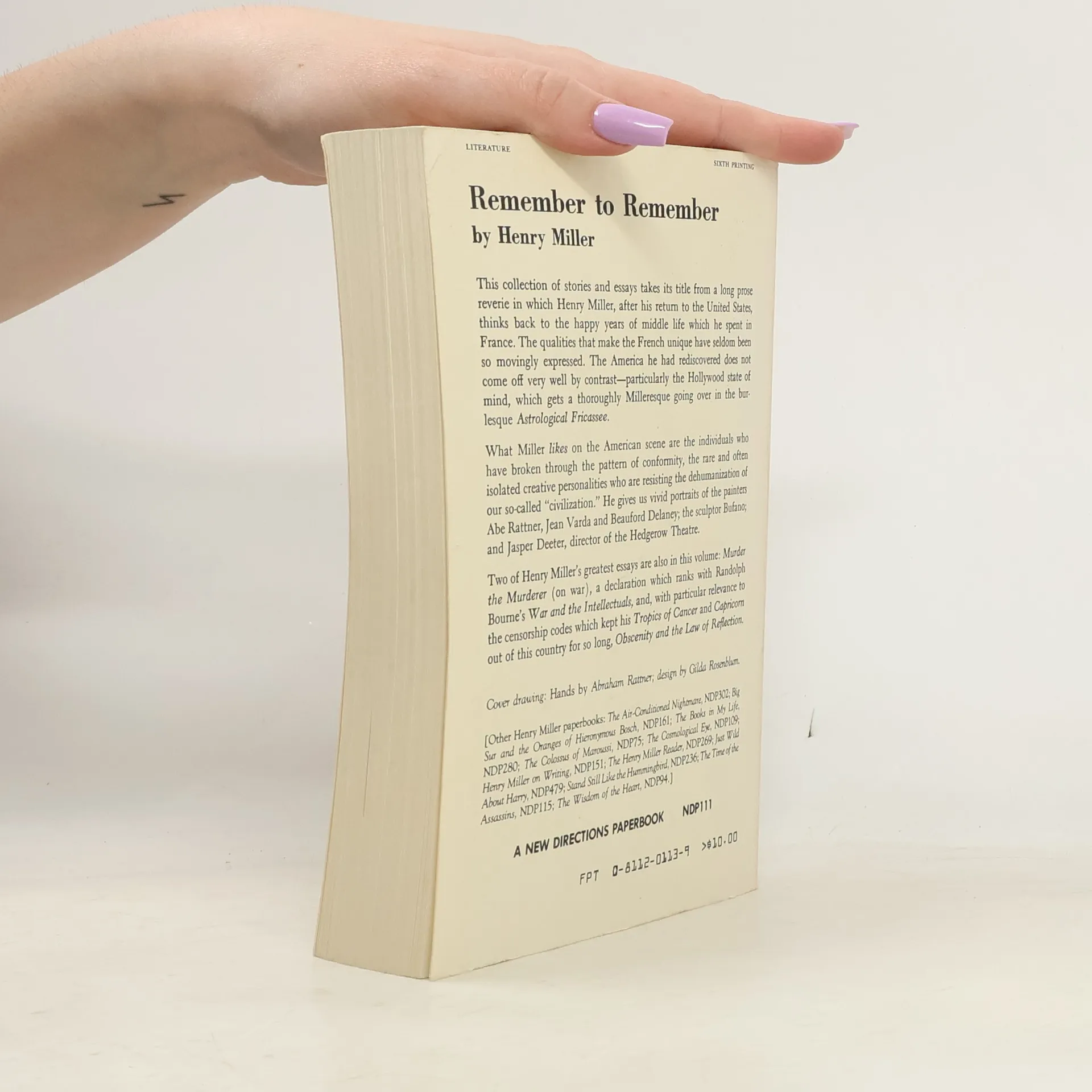
This collection of stories and essays takes its title from a long prose reverie in which Henry Miller, after his return to the United States, thinks back to the happy years of middle life which he spent in France. The qualities that make the French unique have seldom been so movingly expressed. The America he had rediscovered does not come off very well by contrast—particularly the Hollywood state of mind, which gets a thoroughly Milleresque going over in the burlesque "Astrological Fricassee." What Miller likes on the American scene are the individuals who have broken through the pattern of conformity, the rare and often isolated creative personalities who are resisting the dehumanization of our so-called “civilization.” He gives us vivid portraits of the painters Abe Rattner, Jean Varda and Beauford Delaney; the sculptor Bufano; and Jasper Deeter, director of the hedgerow Theatre. Two of Henry Miller’s greatest essays are also in this volume: "Murder the Murderer" (on war), a declaration which ranks with Randolph Bourne’s War and the Intellectuals, and, with particular relevance to the censorship codes which kept his Tropics of Cancer and Capricorn out of this country for so long, "Obscenity and the Law of Reflection."

Compra de libros
New Directions Paperbook - 111: Remember to Remember, Henry Miller
- Idioma

- Publicado en
- 1986
- Encuadernación
- (Tapa blanda)
Métodos de pago
Nos falta tu reseña aquí
- Título
- New Directions Paperbook - 111: Remember to Remember
- Idioma
- Inglés
- Autores
- Henry Miller
- Publicado en
- 1986
- Formato
- Tapa blanda
- Páginas
- 482
- ISBN10
- 0811201139
- ISBN13
- 9780811201131
- Serie
- Categorías
- Etiquetas
- Francia
- Título original
- Remember to remember
- Calificación
- 4 de 5
- Descripción
- This collection of stories and essays takes its title from a long prose reverie in which Henry Miller, after his return to the United States, thinks back to the happy years of middle life which he spent in France. The qualities that make the French unique have seldom been so movingly expressed. The America he had rediscovered does not come off very well by contrast—particularly the Hollywood state of mind, which gets a thoroughly Milleresque going over in the burlesque "Astrological Fricassee." What Miller likes on the American scene are the individuals who have broken through the pattern of conformity, the rare and often isolated creative personalities who are resisting the dehumanization of our so-called “civilization.” He gives us vivid portraits of the painters Abe Rattner, Jean Varda and Beauford Delaney; the sculptor Bufano; and Jasper Deeter, director of the hedgerow Theatre. Two of Henry Miller’s greatest essays are also in this volume: "Murder the Murderer" (on war), a declaration which ranks with Randolph Bourne’s War and the Intellectuals, and, with particular relevance to the censorship codes which kept his Tropics of Cancer and Capricorn out of this country for so long, "Obscenity and the Law of Reflection."