

Compra 10 libros por 10 € aquí!
Bookbot

Aprendizaje, Desarrollo y Cambio Conceptual

Esta serie profundiza en las preguntas fundamentales sobre la cognición humana y el aprendizaje. Explora cómo se transforma nuestra comprensión del mundo y cómo evolucionan nuestros procesos de pensamiento con el tiempo. La colección ofrece ideas profundas en psicología cognitiva y teoría educativa. Está dirigida a lectores interesados en la configuración de la mente.

Beginning to Read
Words, Thoughts, and Theories
How Children Learn the Meanings of Words
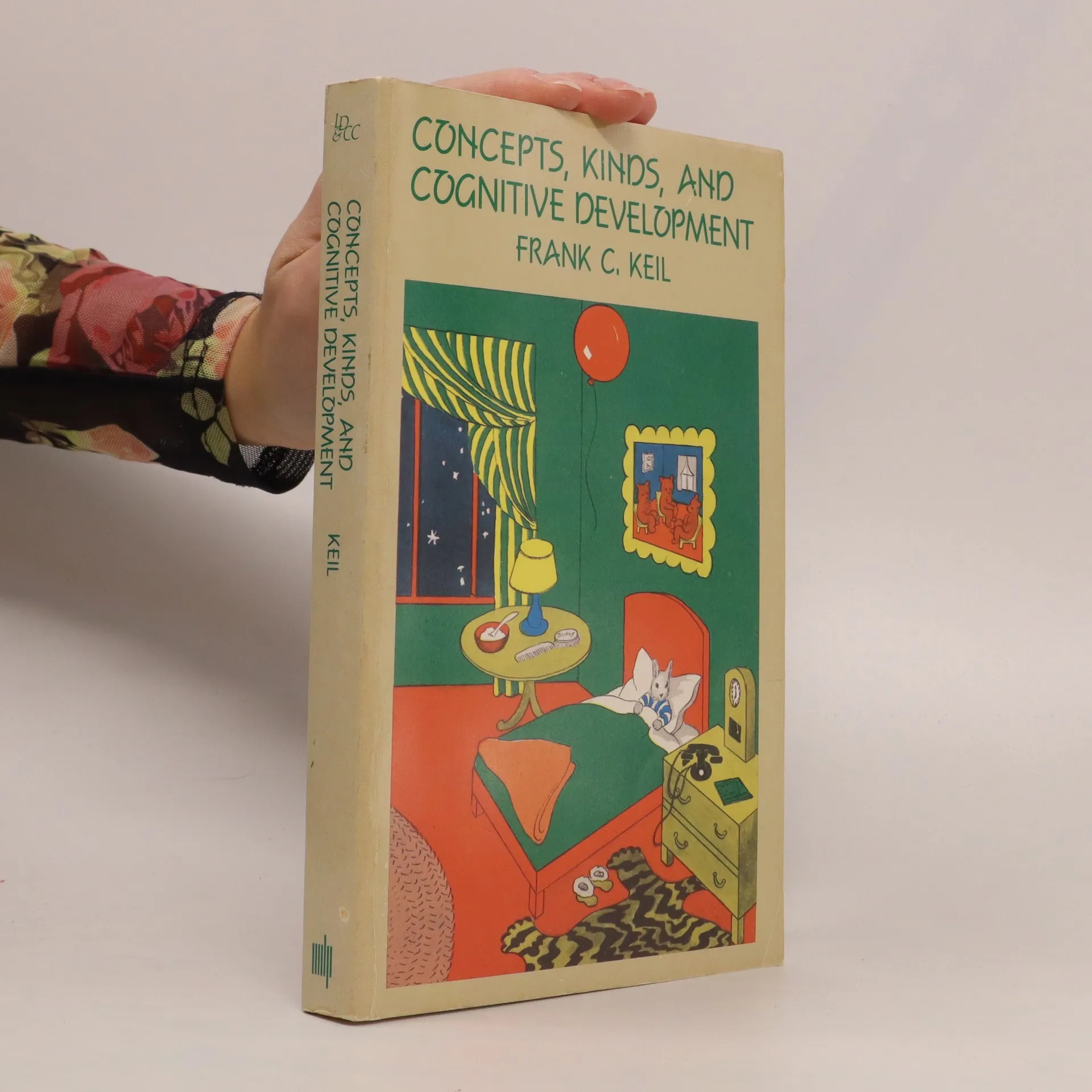
Concepts, Kinds, and Cognitive Development
Making Space
Learnability and Cognition
  • Learnability and Cognition

    • 512 páginas
    • 18 horas de lectura

    Before Steven Pinker became known for his bestsellers on language and human nature, he authored several influential technical monographs on language acquisition. His 1989 work, which integrates two significant topics—how children learn their mother tongue and how the mind categorizes fundamental concepts like space, time, causality, agency, and goals—has become a classic in cognitive science. Children exhibit remarkable subtlety in language use; for instance, phrases like "pour water into the glass" sound natural, while "pour the glass with water" does not. This raises the question of how children make these distinctions without consistent correction or merely mimicking their parents. Pinker addresses this paradox through a theory on how children grasp the meanings and applications of verbs, delving into its implications for language, thought, and their interrelation. In a new preface, he reflects on how the ideas explored in this work inspired his later bestseller, which examines language as a lens into human nature. He emphasizes that these technical discussions offer valuable insights into not only language acquisition but also literary metaphor, scientific understanding, political discourse, and societal views on sexuality and obscenity.

    Learnability and Cognition
  • Making Space

    • 276 páginas
    • 10 horas de lectura

    Argues for an interactionist approach to spatial development that incorporates and integrates essential insights of the Piaget, Nativist, and Vygotskyan approaches.

    Making Space
  • In Concepts, Kinds, and Cognitive Development, Frank Keil develops a coherent account of how concepts and word meanings develop in children, adding to our understanding of the representational nature of concepts and word meanings at all ages.

    Concepts, Kinds, and Cognitive Development
  • How do children learn that the word dog refers not to all four-legged animals, and not just to Ralph, but to all members of a particular species? How do they learn the meanings of verbs like think, adjectives like good, and words for abstract entities such as mortgage and story? The acquisition of word meaning is one of the fundamental issues in the study of mind. According to Paul Bloom, children learn words through sophisticated cognitive abilities that exist for other purposes. These include the ability to infer others' intentions, the ability to acquire concepts, an appreciation of syntactic structure, and certain general learning and memory abilities. Although other researchers have associated word learning with some of these capacities, Bloom is the first to show how a complete explanation requires all of them. The acquisition of even simple nouns requires rich conceptual, social, and linguistic capacities interacting in complex ways.This book requires no background in psychology or linguistics and is written in a clear, engaging style. Topics include the effects of language on spatial reasoning, the origin of essentialist beliefs, and the young child's understanding of representational art. The book should appeal to general readers interested in language and cognition as well as to researchers in the field.

    How Children Learn the Meanings of Words
  • Words, Thoughts, and Theories

    • 288 páginas
    • 11 horas de lectura

    The book presents and defends the "theory theory" of cognitive and semantic development, suggesting that infants and young children learn about their environment by forming and adjusting theories, akin to scientific inquiry. This perspective offers significant insights into the origins of knowledge and meaning, influencing the field of cognitive science and reshaping our understanding of child development.

    Words, Thoughts, and Theories
  • The Algebraic Mind

    Integrating Connectionism and Cognitive Science

    • 242 páginas
    • 9 horas de lectura

    The book explores the integration of two theories of mind: one viewing it as a computer-like symbol manipulator and the other as a network of neurons. Gary Marcus challenges the prevailing notion that these concepts are mutually exclusive, proposing that neural systems can be structured to effectively manipulate symbols. He argues that such systems are better suited for language and cognition. The work concludes with insights on the evolutionary development of symbol manipulation in neural systems, shaping the future direction of cognitive neuroscience.

    The Algebraic Mind